Close-ups
Framed and on the wall
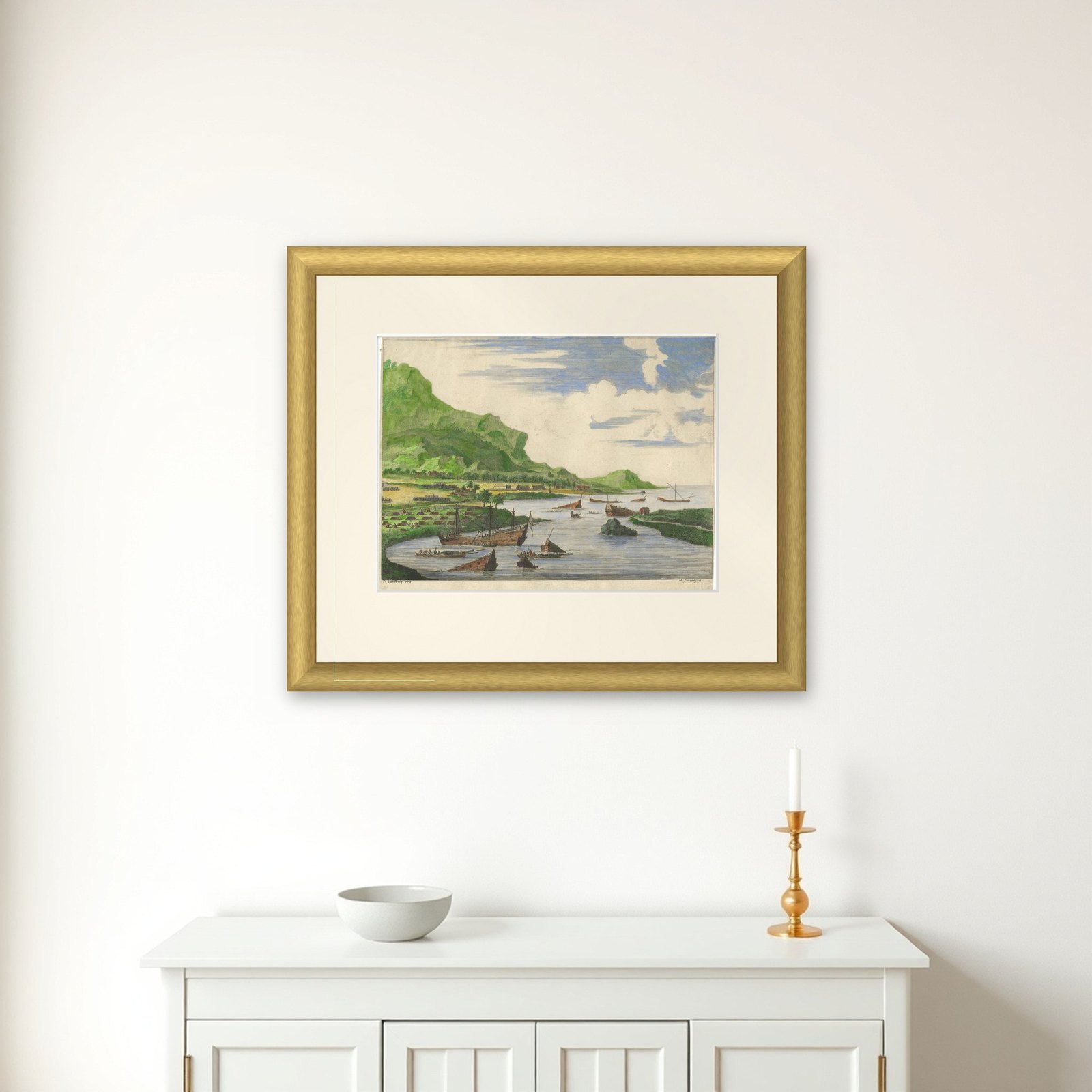

Frame and rooms are illustrations of how the piece could look; it is sold unframed unless the description says otherwise.
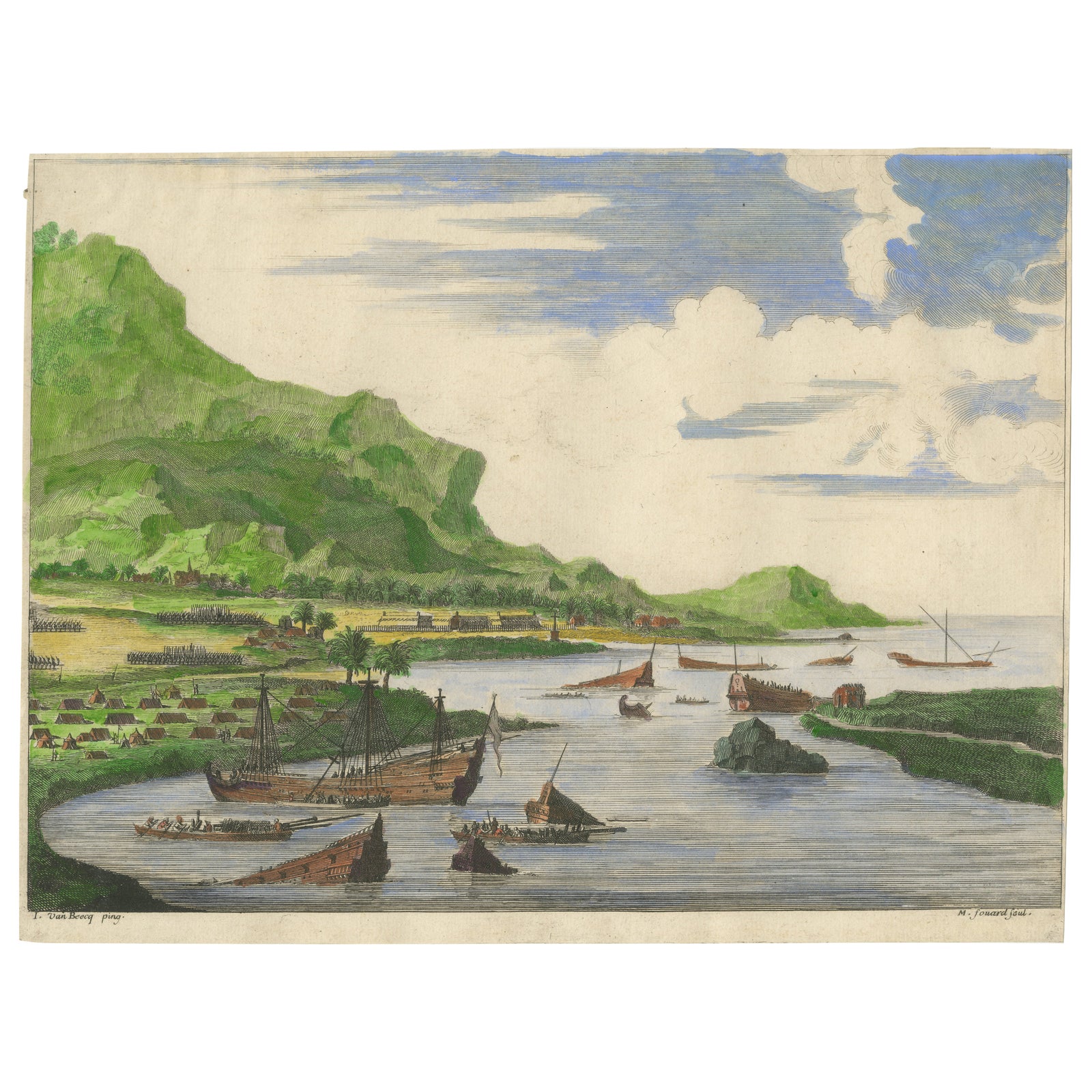
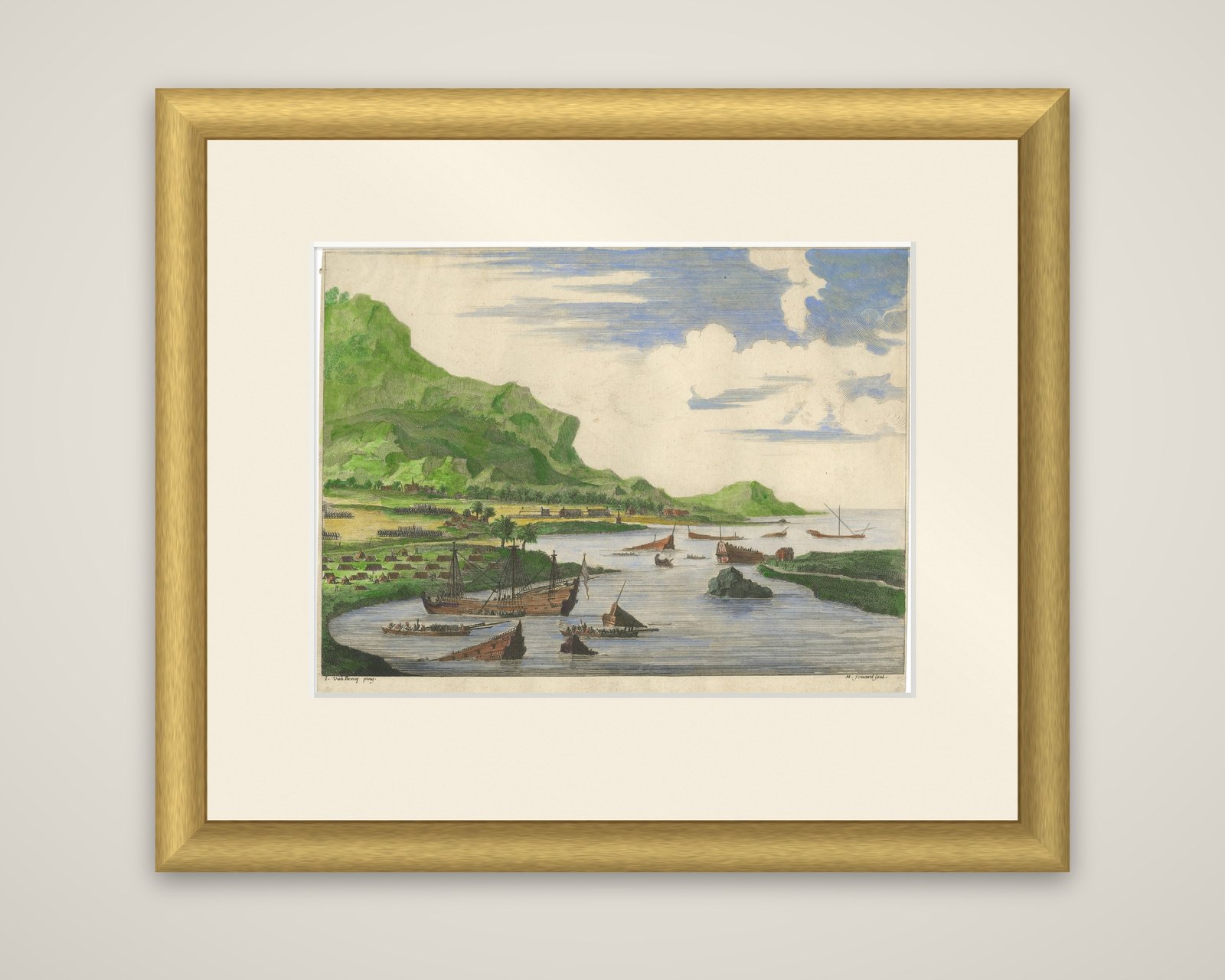
Cortés Scuttling Ships at Veracruz, Hand-Colored Engraving by Van Beecq, c.1690
£305
$405 · €360
Original print, not a reproduction.
Ships worldwide from the Netherlands, flat, insured and tracked. 14-day returns. To buy, use Ask a question and we will reserve it for you.
- Date
- 1690
- Sheet size
- 8.7 × 11.4 in (22 × 29 cm)
- Condition
- Good. Impression with fine hand-coloring. Tight borders, but otherwise well-preserved.
- Collection
- Ships & sea battles
- Era
- Before 1700, Dutch Golden Age
- Stock no.
- f_47116032
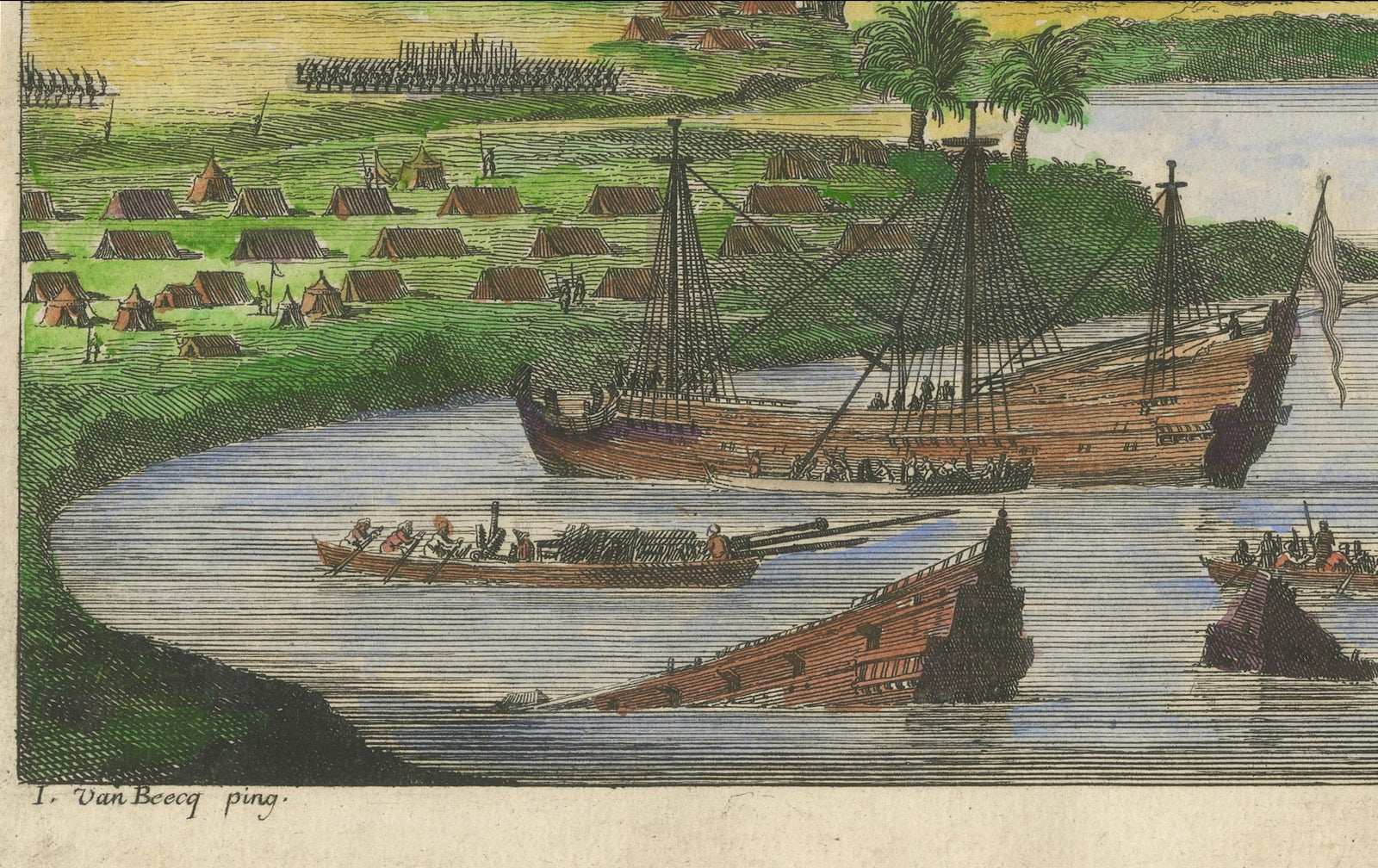
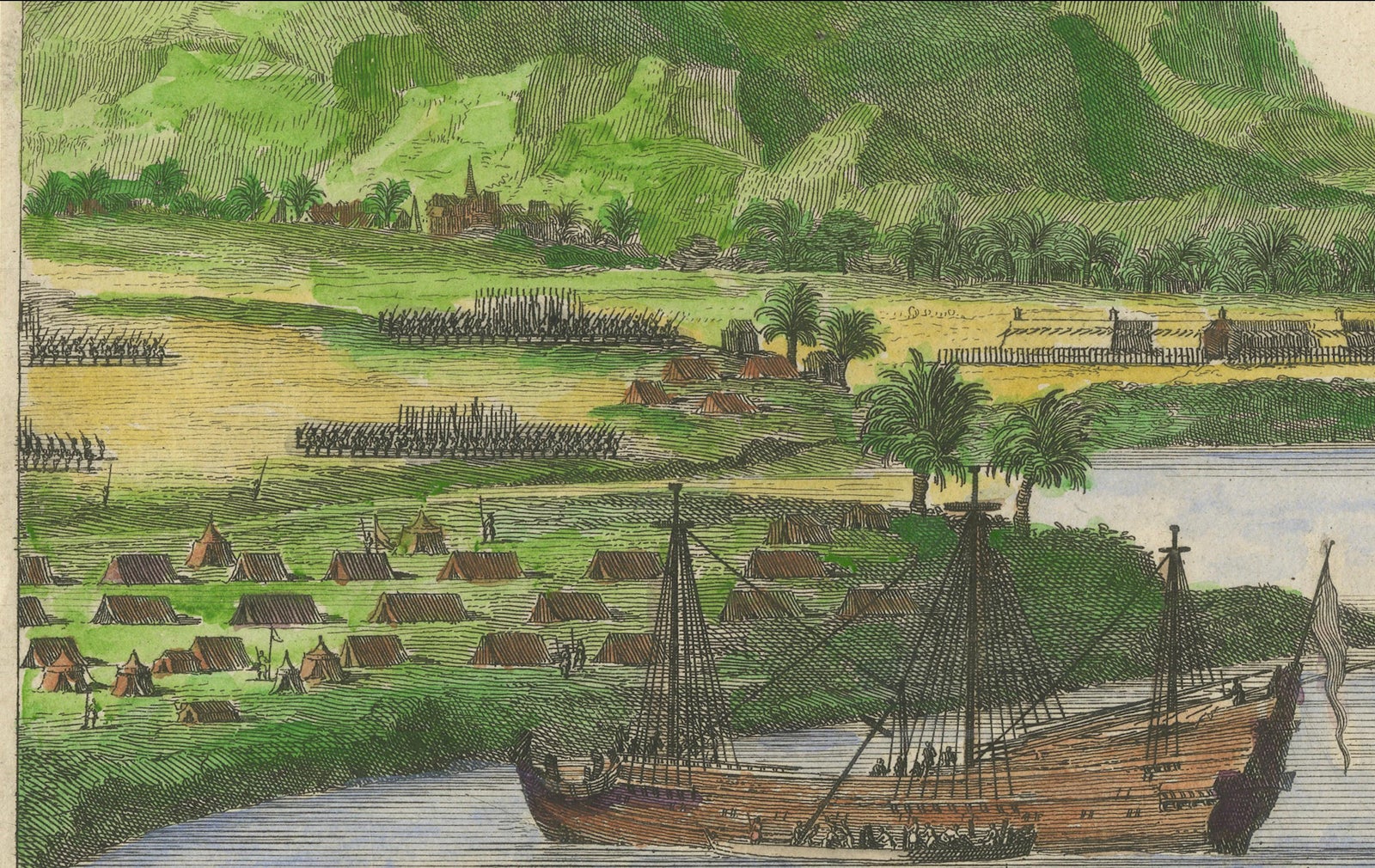
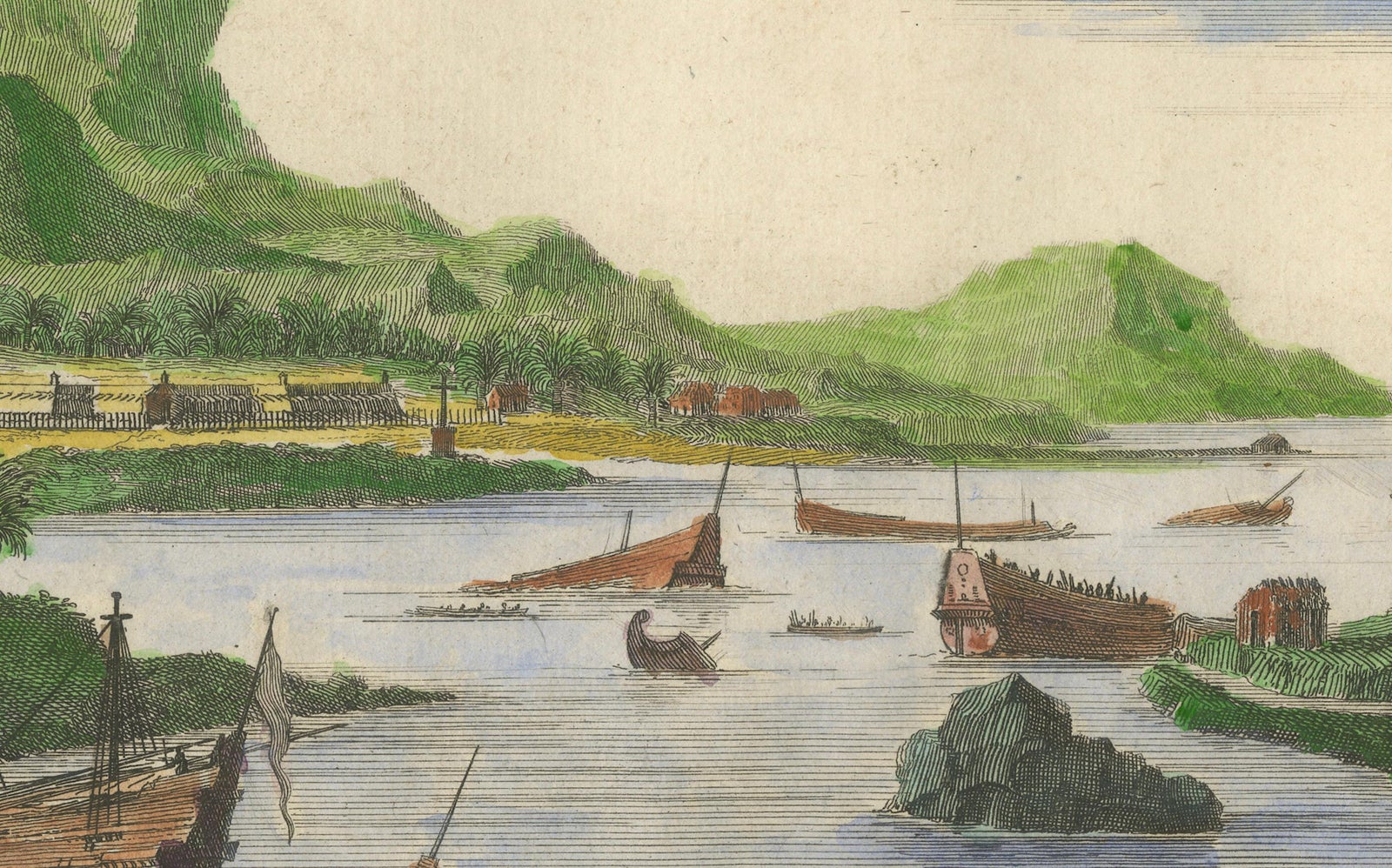
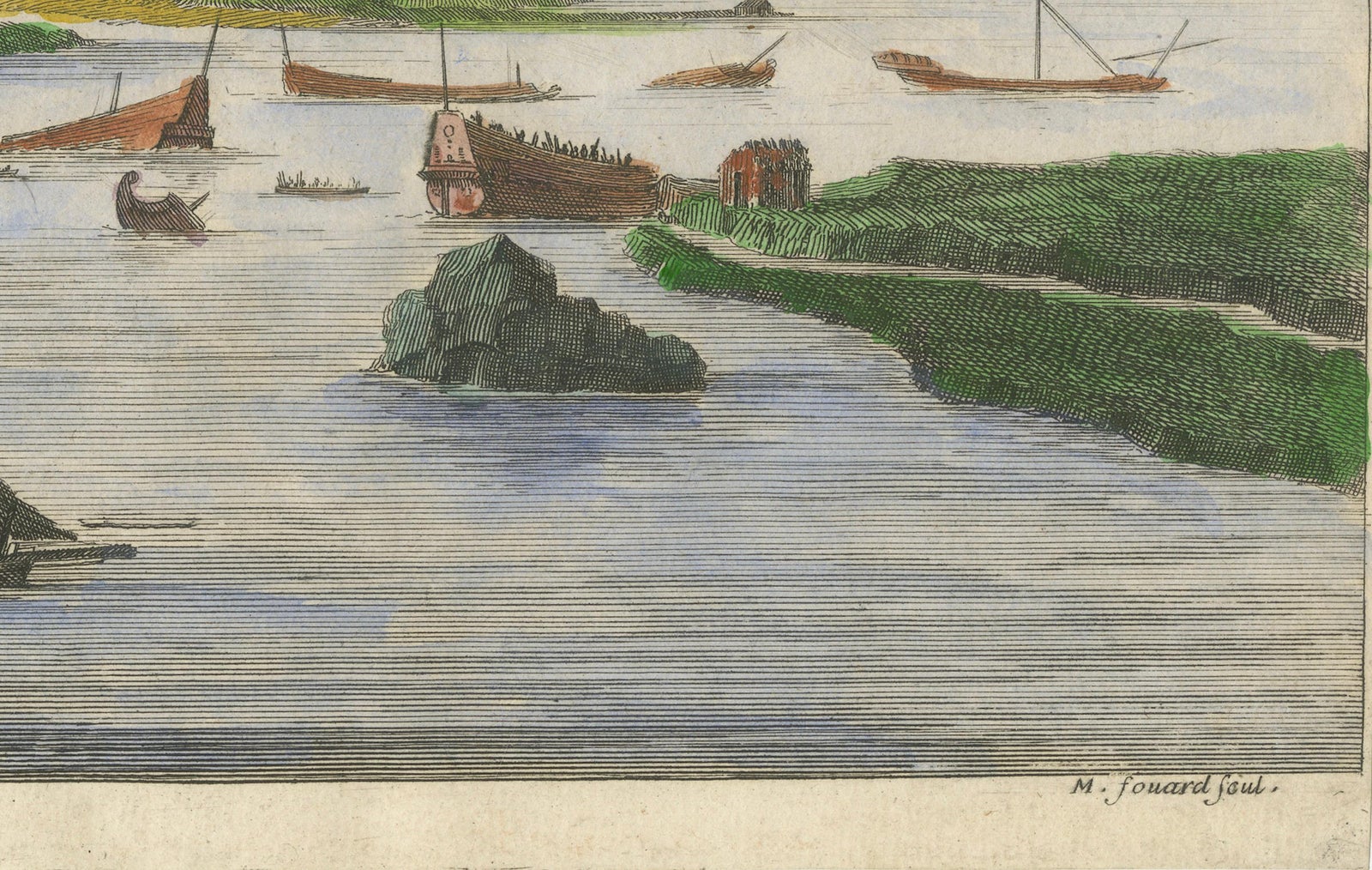
Hernan Cortes scuttling his ships at Veracruz in 1519, an original hand-colored copperplate engraving published in France around 1690. The lettering at the lower margin credits the design to "I. Van Beecq pinx." (Isaac van Beecq, painter) and the engraving to "M. Fouard sculp." (Michel Fouard).
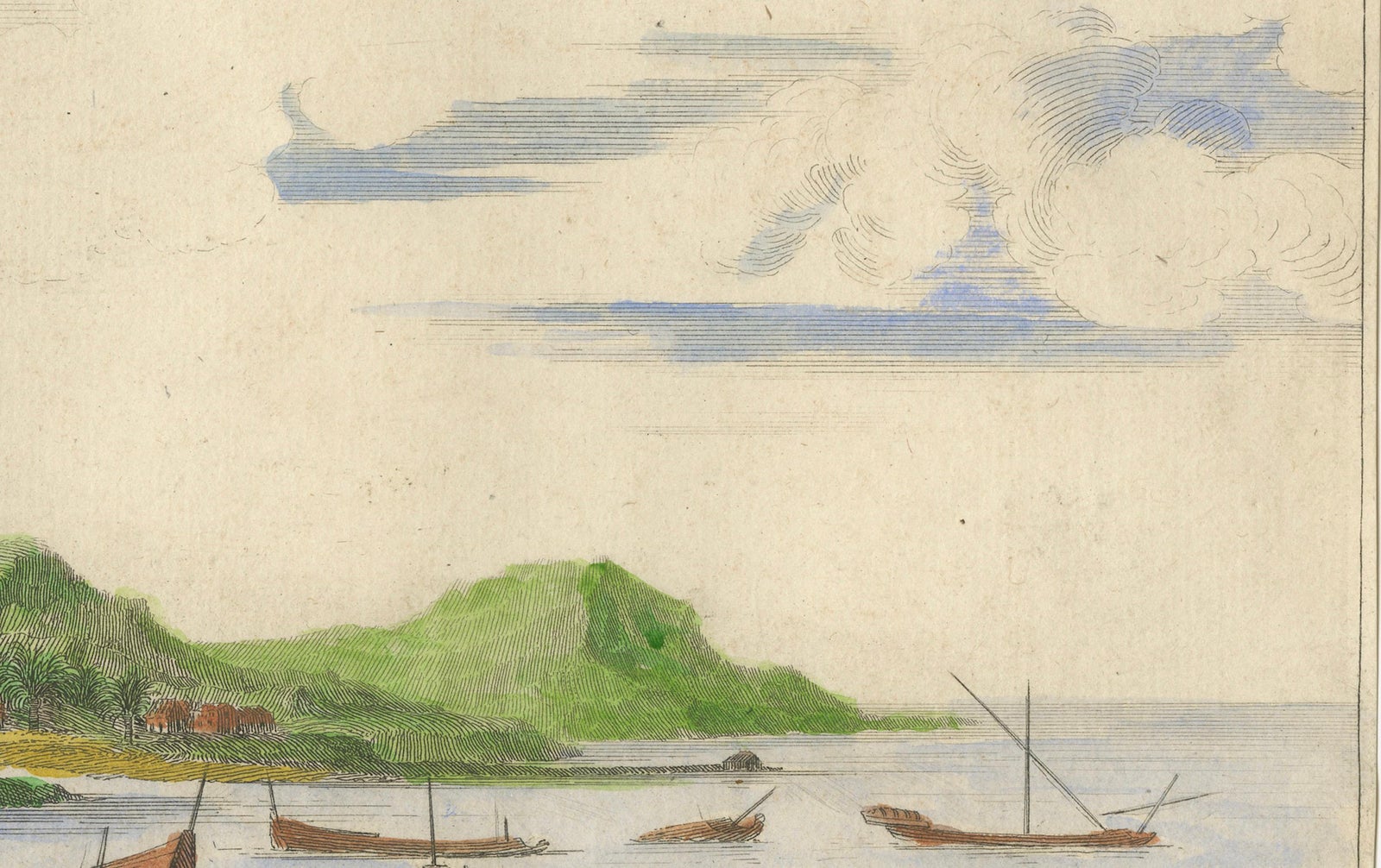
The view looks across a curved bay on a tropical coast. A large green mountain rises at the left and slopes down to a low shoreline, where tents and ranks of soldiers are drawn up on the grass beside palms and a small settlement. In the water, a Spanish ship lies at anchor in the foreground, small boats carry men back and forth, and several vessels lie heeled over and wrecked, their masts and hulls breaking the surface. Further out, other craft and a rock stand in the water under a wide sky of blue and white clouds. The coloring is applied in green, blue, brown and ochre washes over the engraved lines.
According to the traditional account, Cortes had his fleet destroyed after landing on the Mexican coast so that his men had no choice but to march inland toward the Aztec capital of Tenochtitlan. The episode became a byword for committing to a course with no retreat, and it was illustrated repeatedly in European histories of the conquest of Mexico.