Close-ups
Framed and on the wall
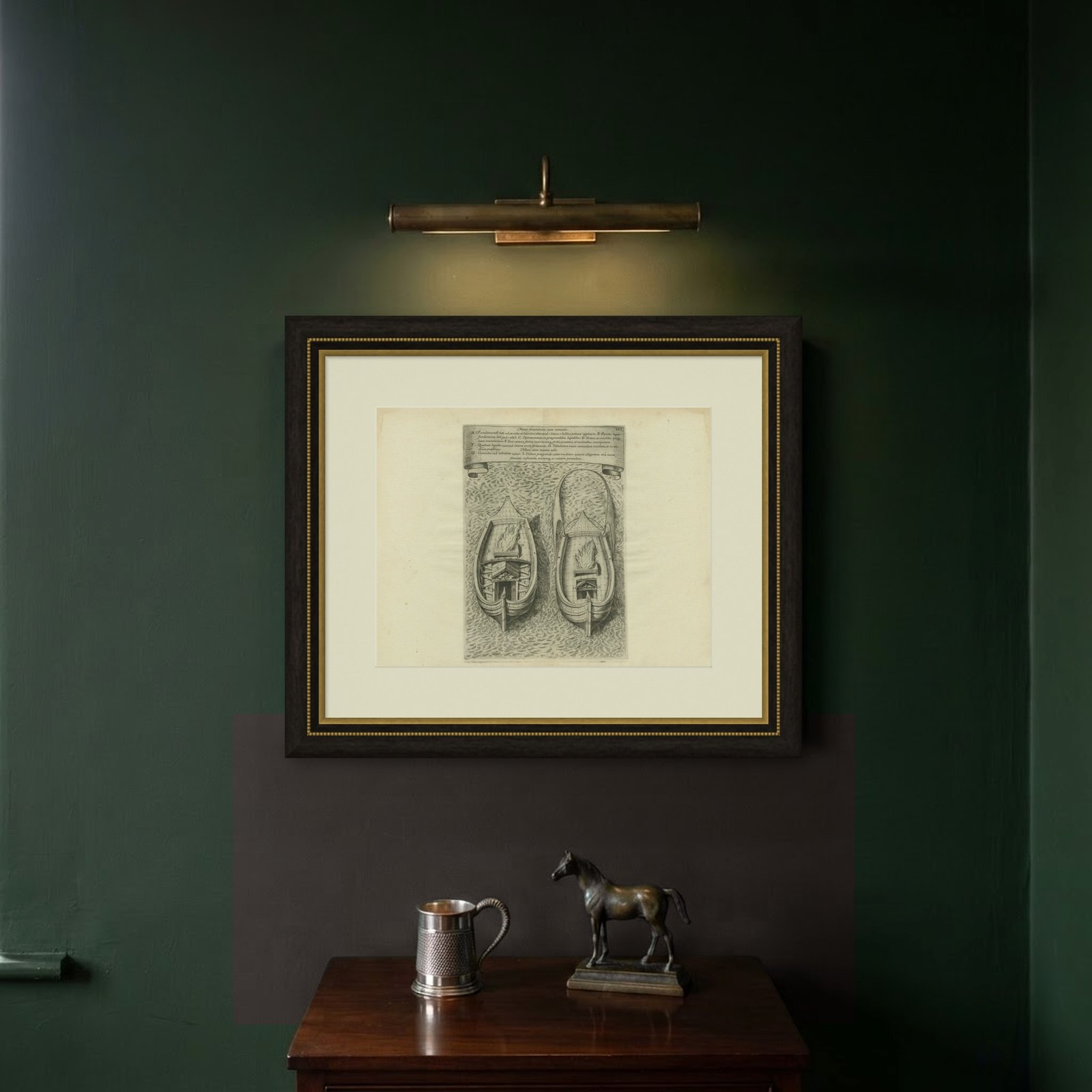
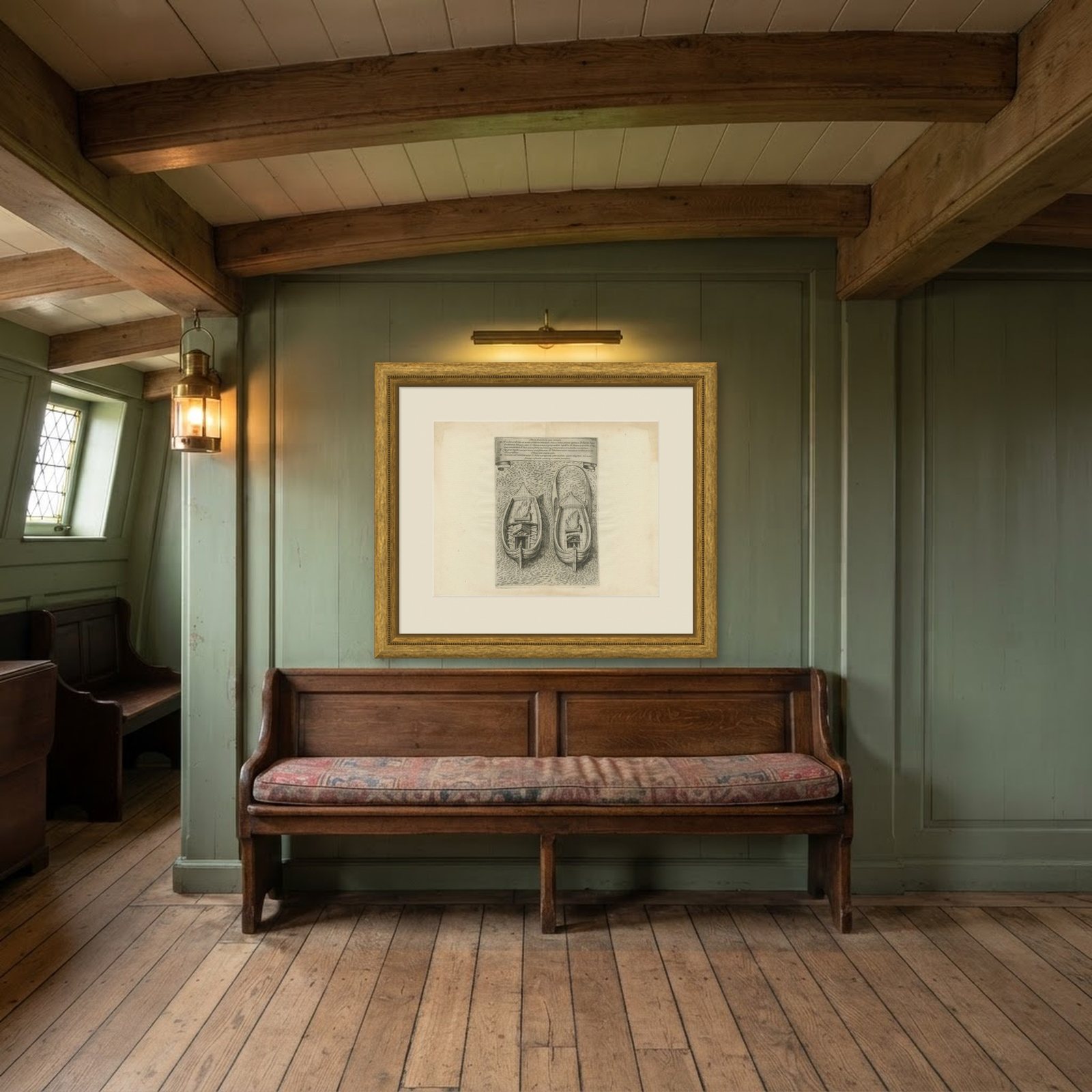
Frame and rooms are illustrations of how the piece could look; it is sold unframed unless the description says otherwise.
Ingenious Destruction: Fire Ship Design of the Eighty Years' War, 1632
€740€51830% off
$570 · £435
Original print, not a reproduction.
Ships worldwide from the Netherlands, flat or rolled, insured and tracked. 14-day returns.
- Date
- 1632
- Sheet size
- 13.9 × 17.9 in (35.3 × 45.5 cm)
- Condition
- Good. Good, given age. General age-related toning, creasing and/or occasional minor defects from handling. Middle fold line as issued, slightly brownish. Please study scan carefully.
- Collection
- Ships & sea battles
- Era
- Before 1700, Dutch Golden Age
- Stock no.
- BG-13637-13
What the condition grades mean
- Excellent
- Bright and clean, with no faults worth mentioning.
- Very good
- Only light signs of age, such as faint toning.
- Good
- Normal signs of age for a sheet of this period: toning, some foxing, small marks or neat old repairs.
- Fair
- Clear faults such as staining, tears or repairs, priced to match.
Every fault we see is written in the condition note, and the whole sheet is shown uncropped in the photos.
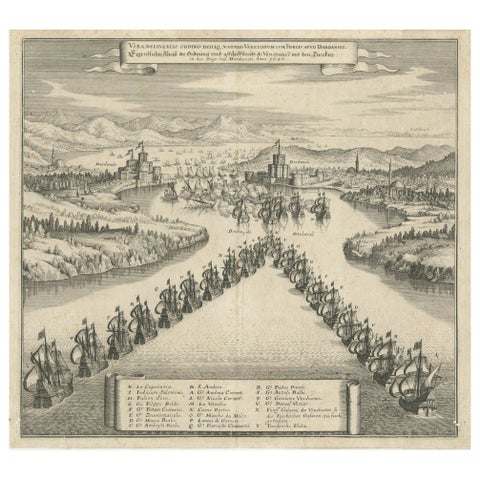
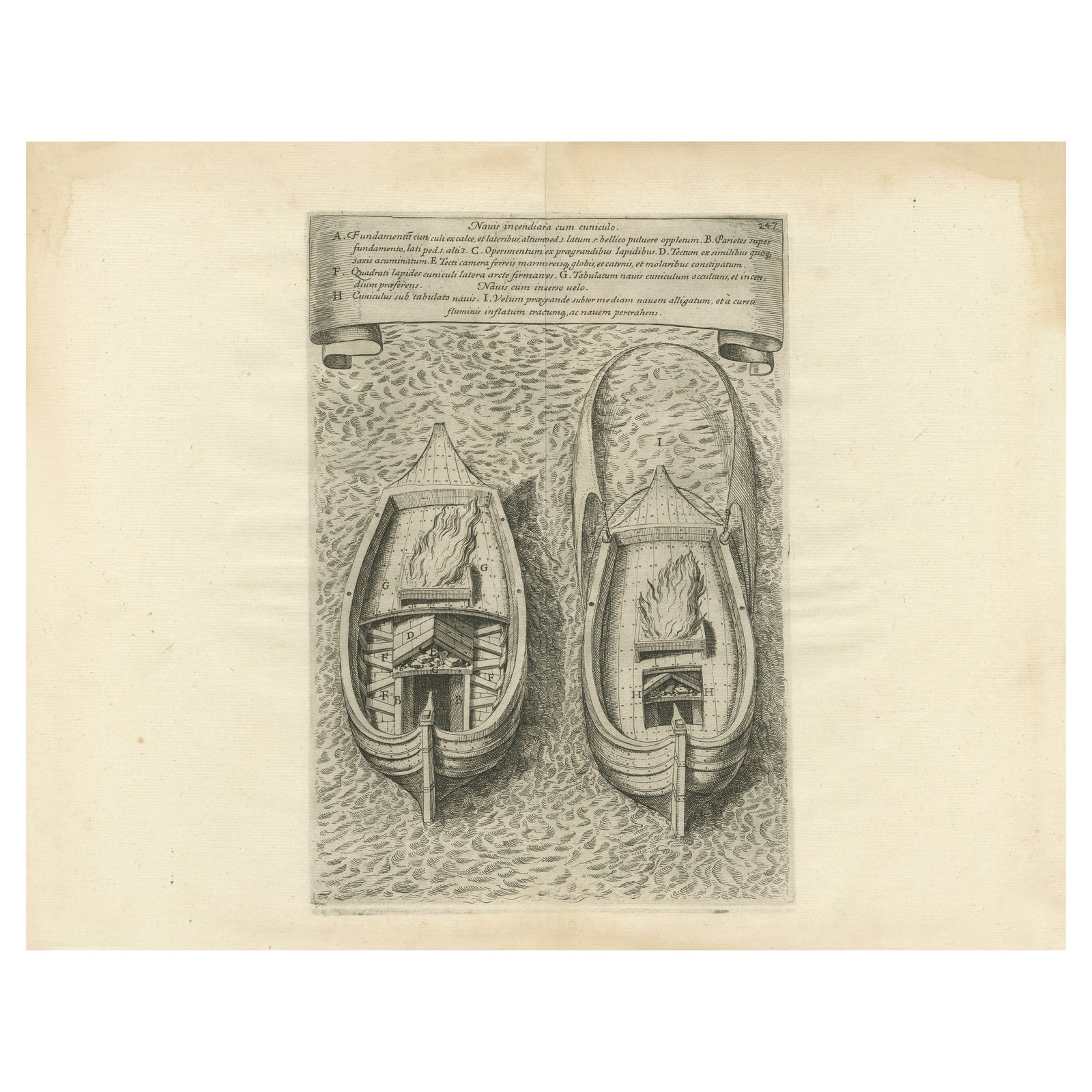
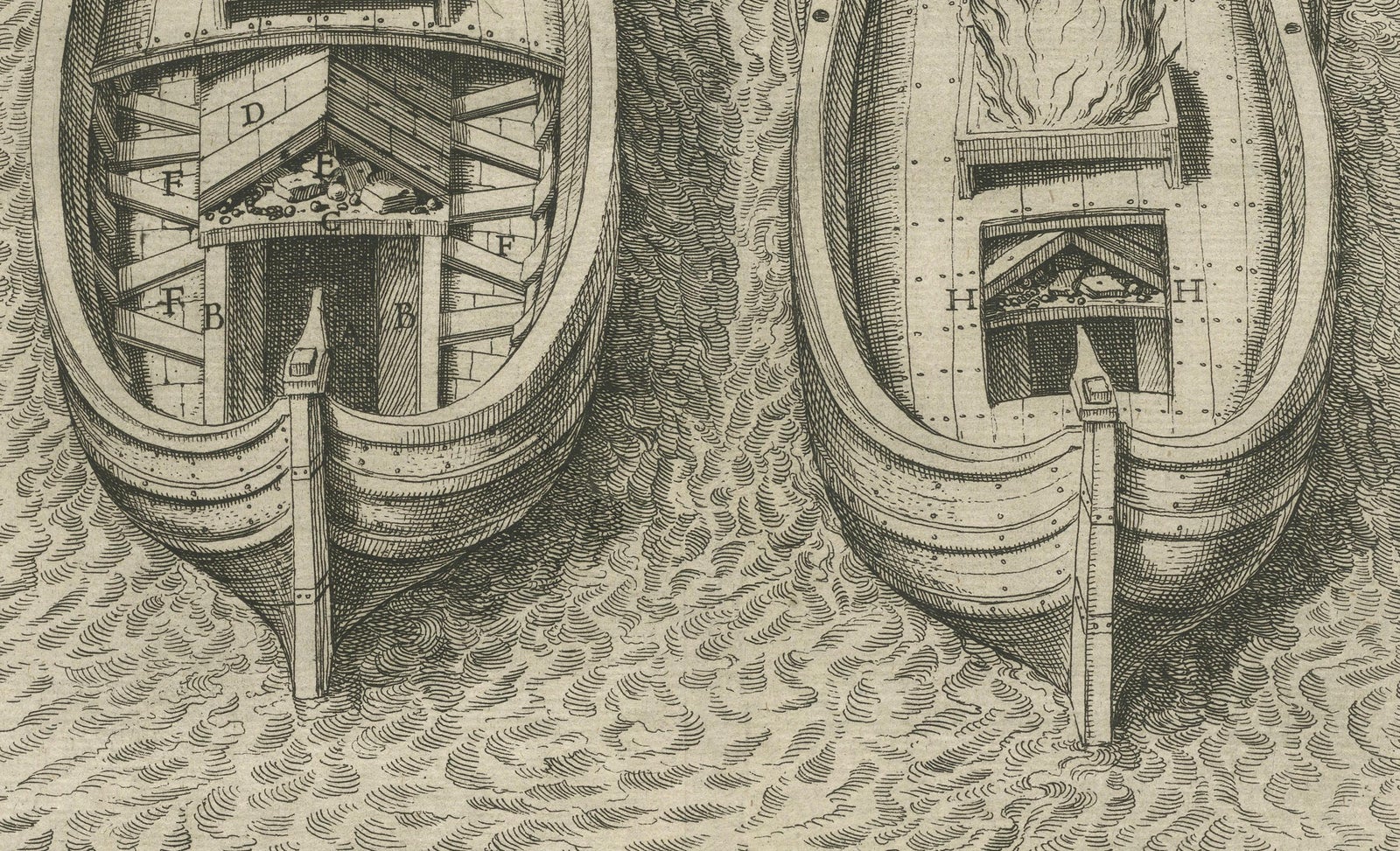
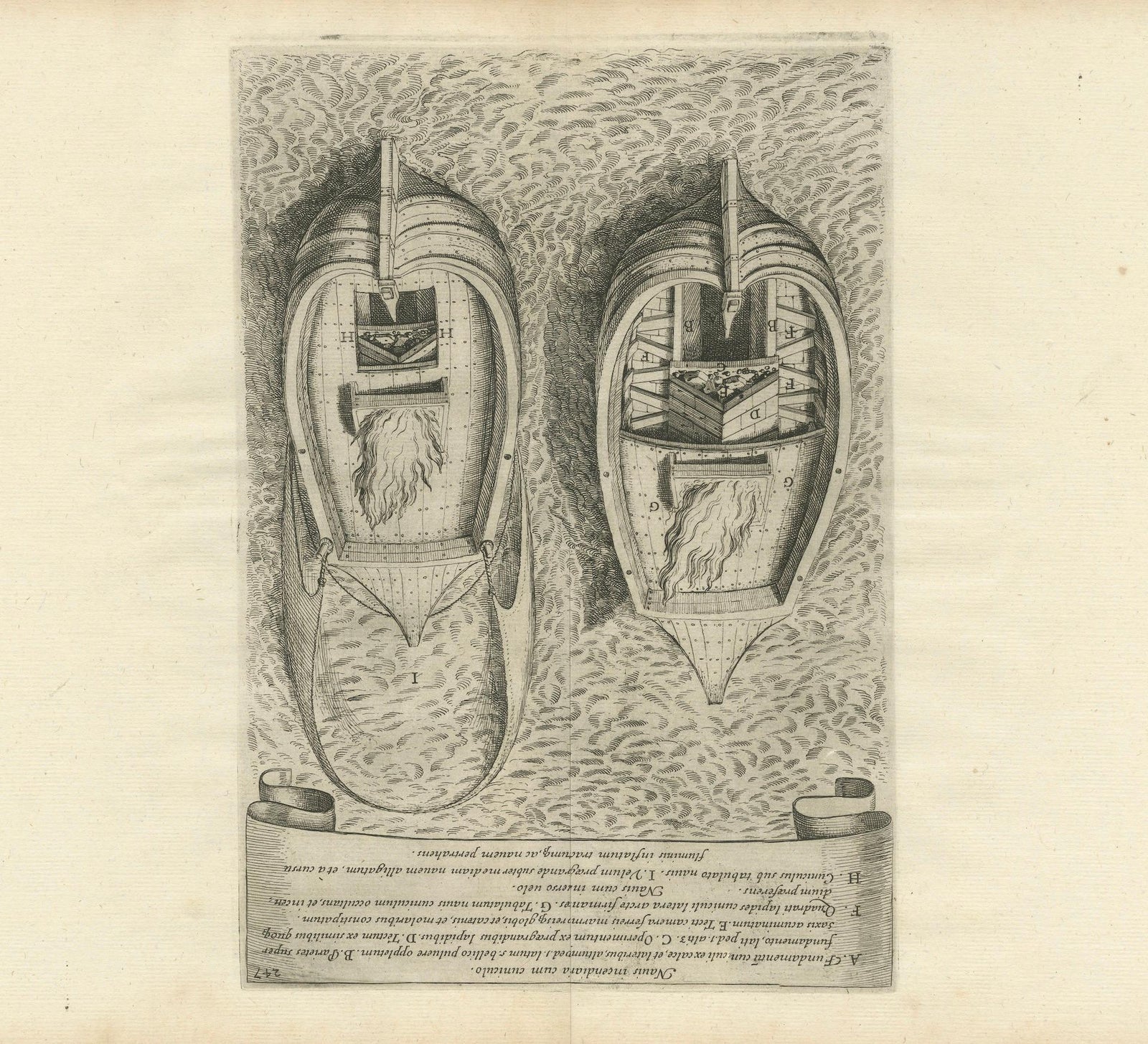
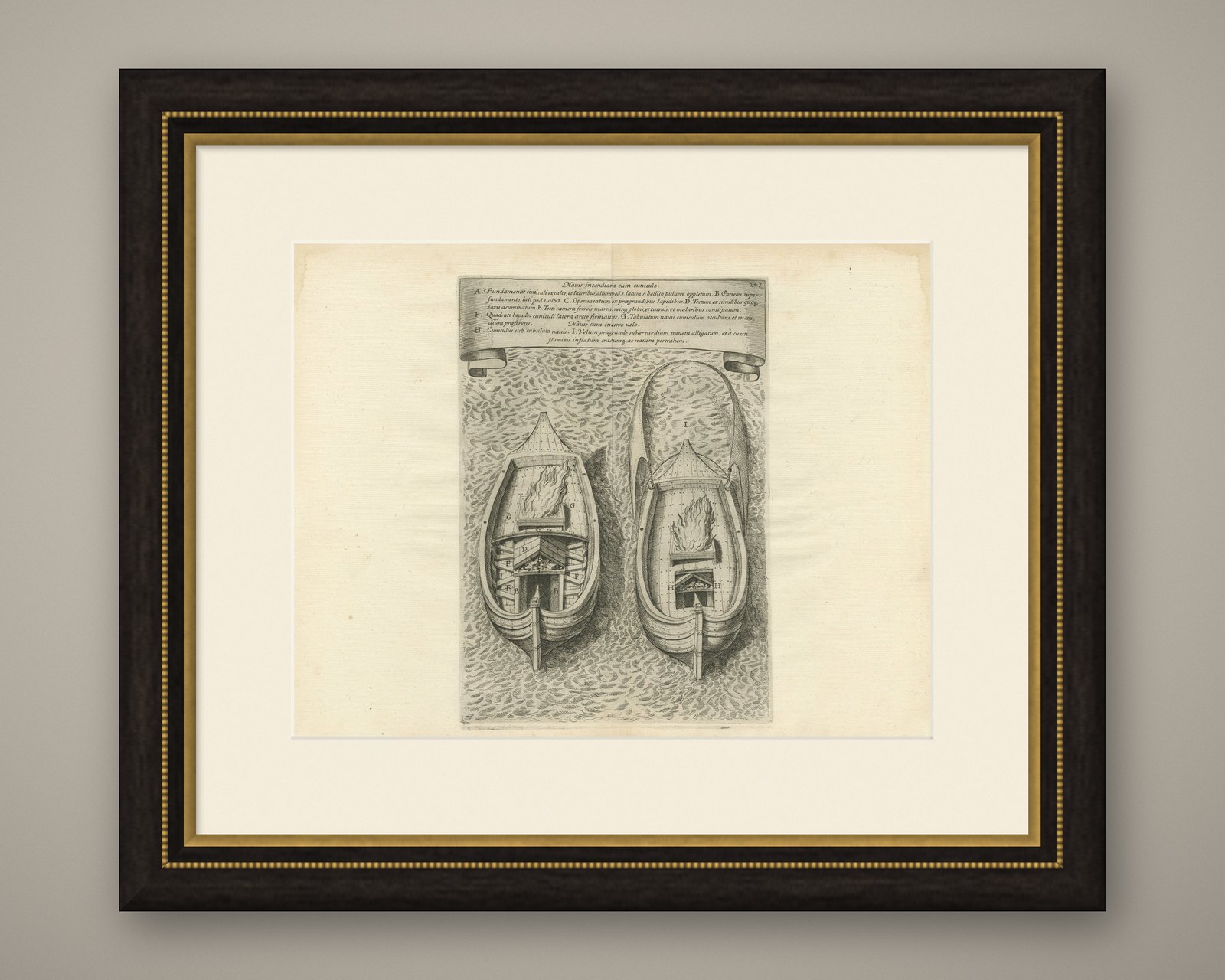
This original engraving is referring depicting a detailed illustration of a fire ship, a type of naval vessel used as a weapon during the Eighty Years' War.
Fire ships were essentially floating bombs, filled with combustibles and explosives, and set ablaze before being directed towards enemy ships or fortifications in an attempt to cause significant damage.
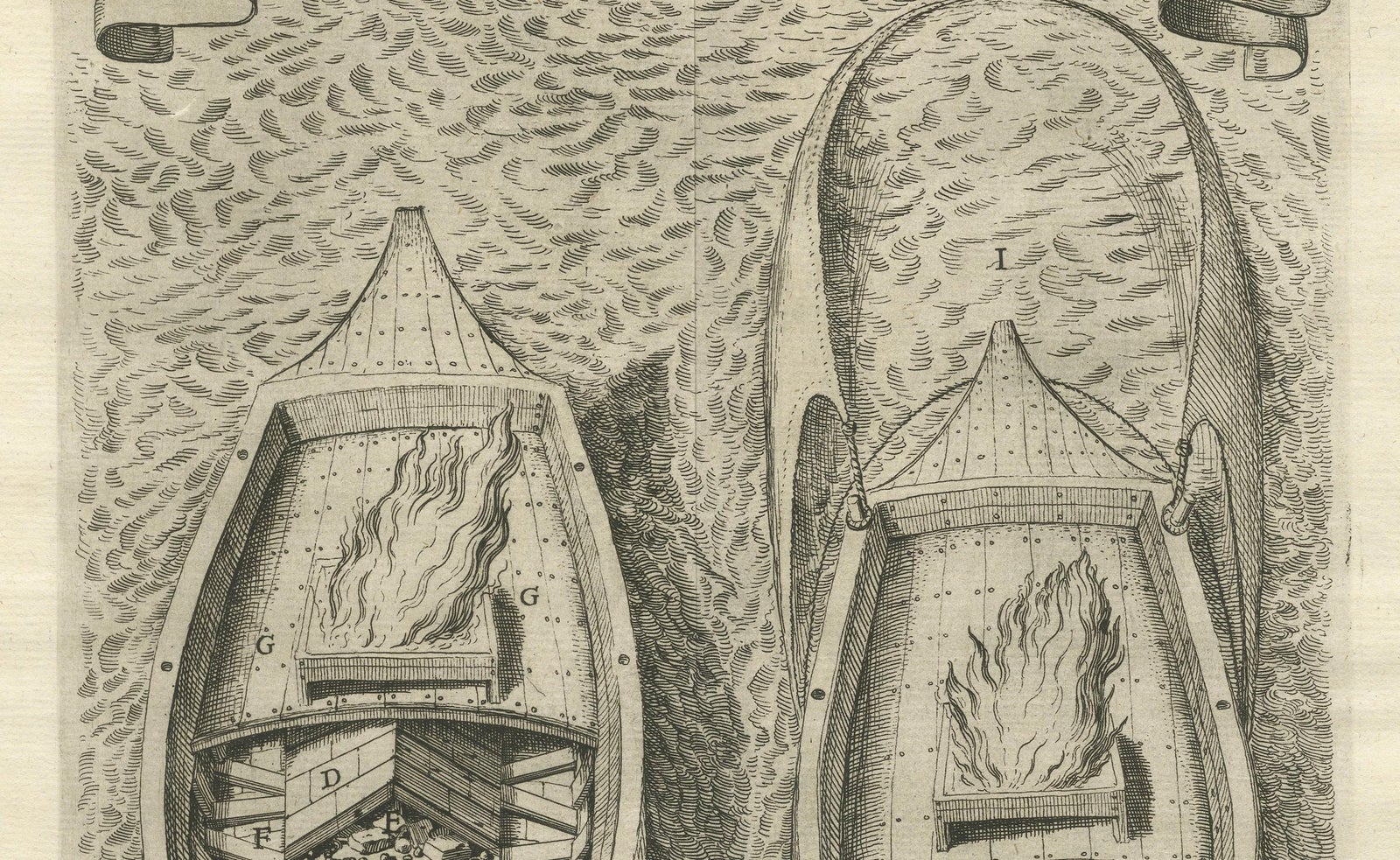
In this rare original print, the ship is shown in a cross-sectional view, allowing the viewer to understand the internal structure and components of the vessel. The image likely includes annotations corresponding to various parts of the ship, such as the location where the combustible materials were stored, details about the construction that facilitated the ship’s ability to carry and release the materials effectively, and possibly the mechanisms for steering the ship towards its target.
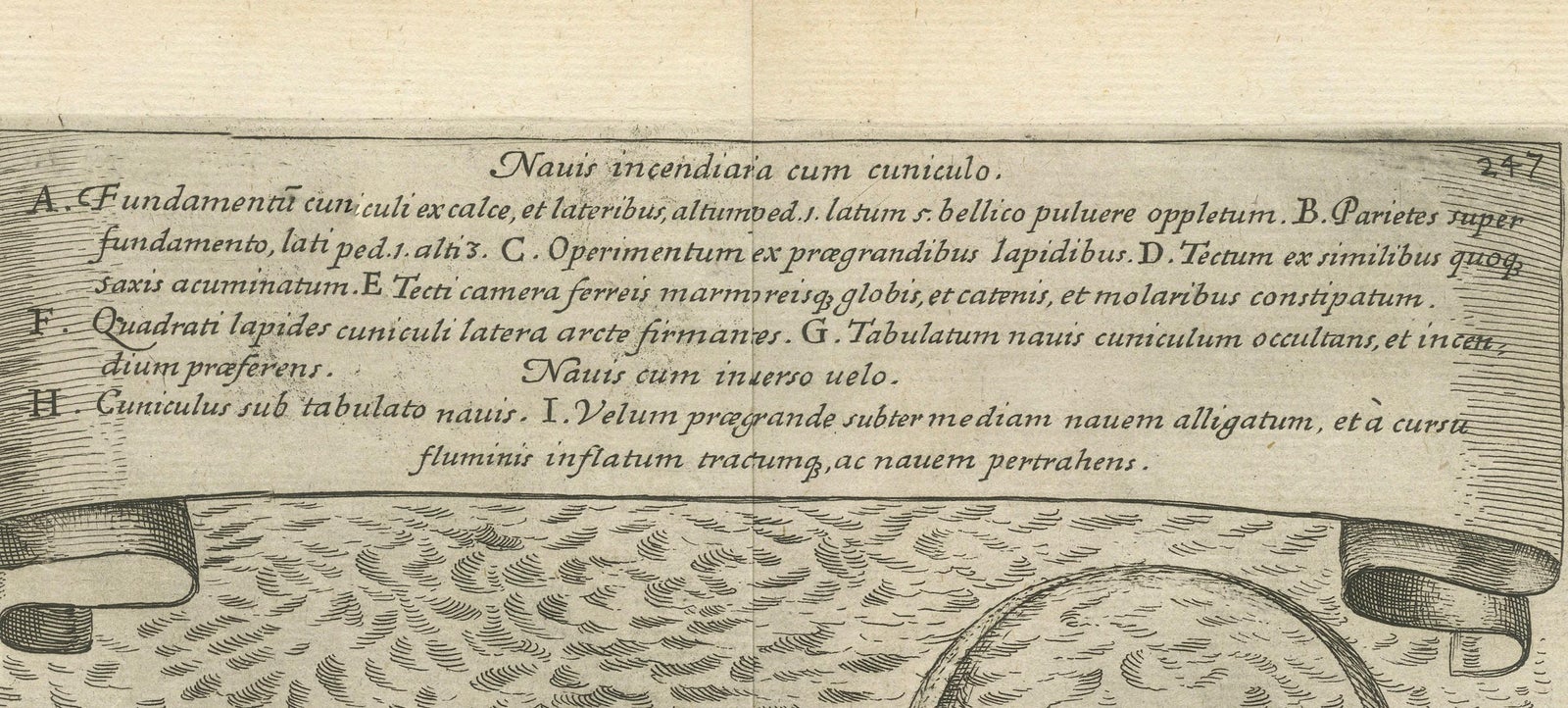
The Latin text on this print seems to describe technical aspects of a ship, detailing its construction or features. Here is the translation of the Latin text:
A. Foundation of the turret raised and strengthened by a base, one foot wide and three feet high, filled with war powder.
B. Walls above the foundation extended outward nearly touching the water, strengthened by two anchors.
C. Oppressed by stones thrown.
D. Roof made of similar materials as stones.
E. Ceiling of the turret made of iron, marble balls, and chains, and millstones arranged.
F. Square stones preferred to be used for the walls of the turret.
G. The deck of the ship hiding the turret and opening inwards.
H. Tunnel under the deck of the ship.
I. Sail to be spread under the middle of the ship tied, and carried by the current of the river inflated downward, and dragging the ship.
This text describes the structure of a fire ship (navis incendiaria cum cuniculo) and seems to be a detailed instruction on how to construct and utilize it, likely for military purposes. These ships could be used as weapons, set alight, and sent in the direction of the enemy to cause destruction, especially during naval battles. The precise measurements and the mention of "war powder" (bellico pulvere) suggest that this was a vessel intended to be filled with explosives. The specific terms used in the text, such as "cuniculo" (tunnel) and "velum" (sail), provide technical details on how the ship was engineered for its destructive purpose.
EXPLORE