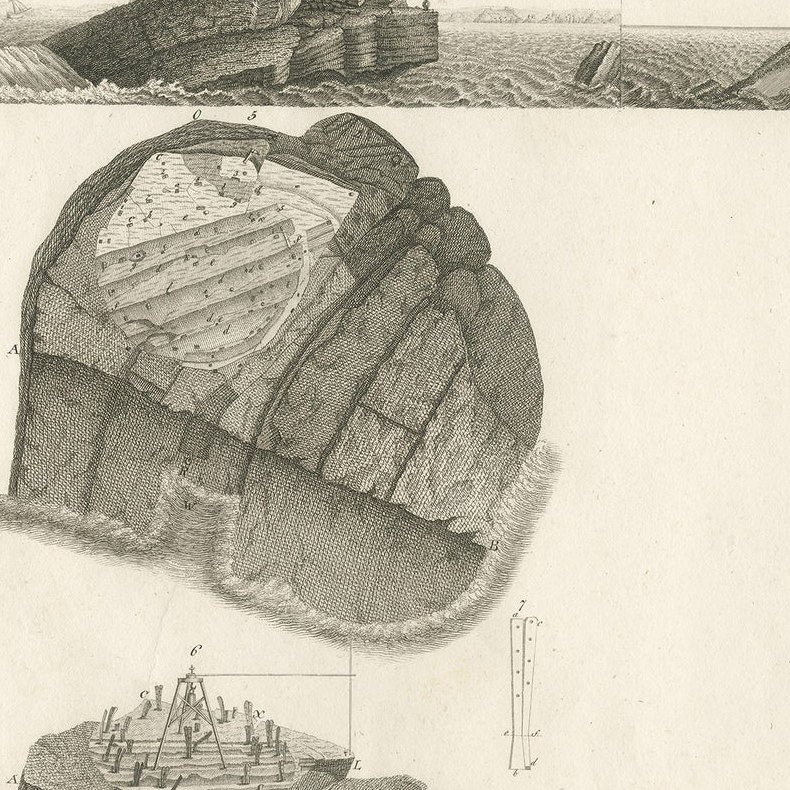
Close-ups
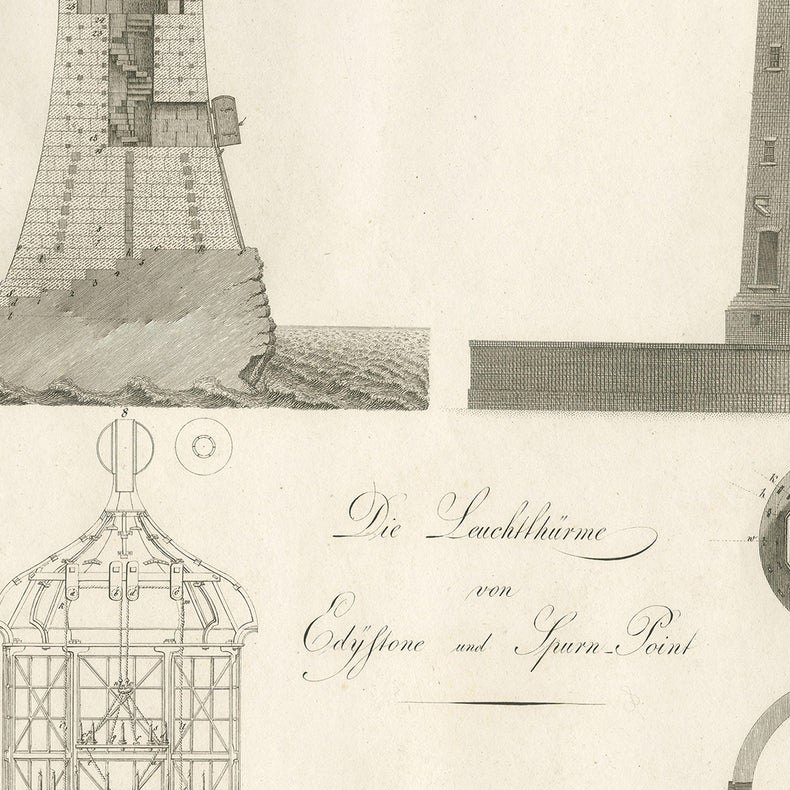
Framed and on the wall
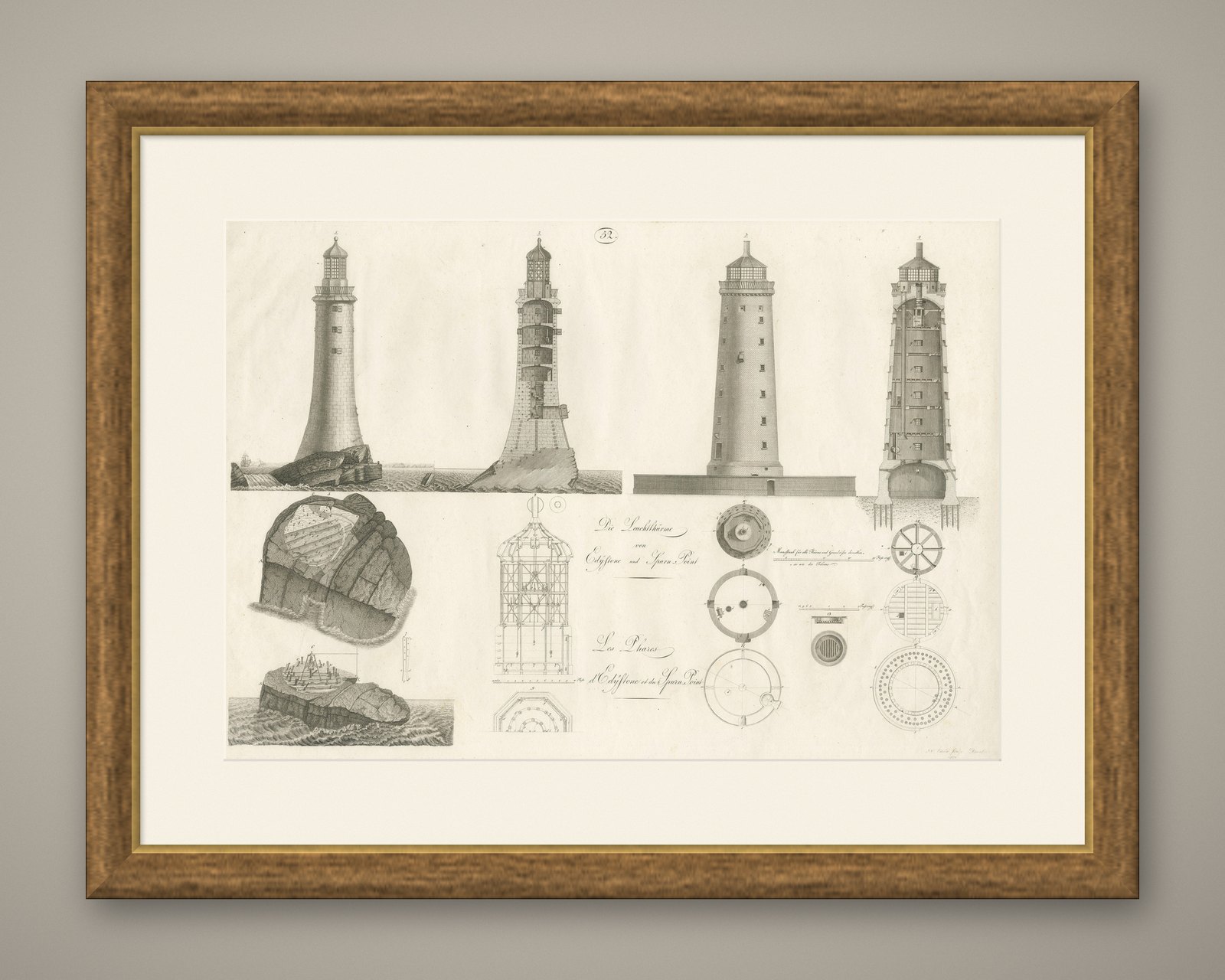
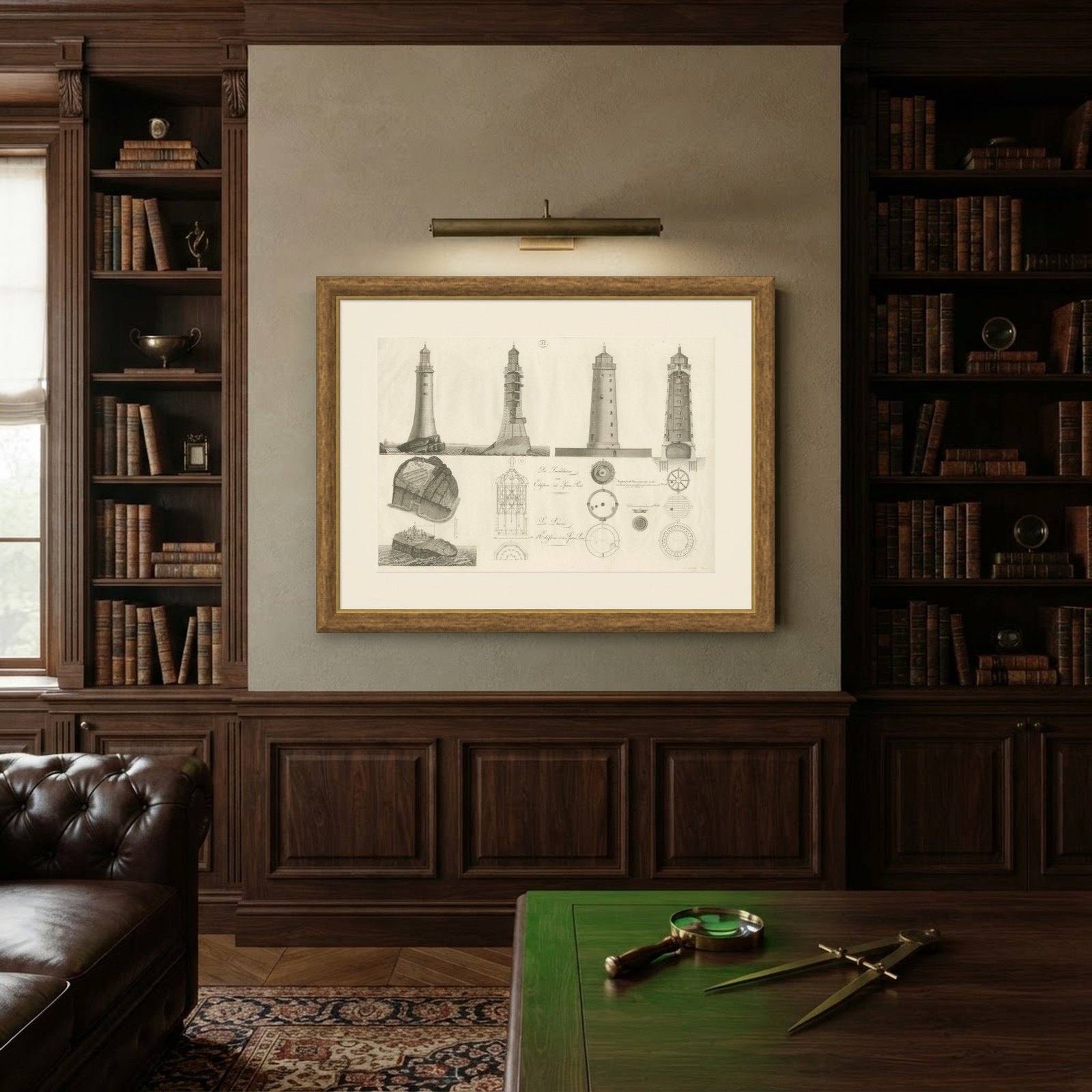
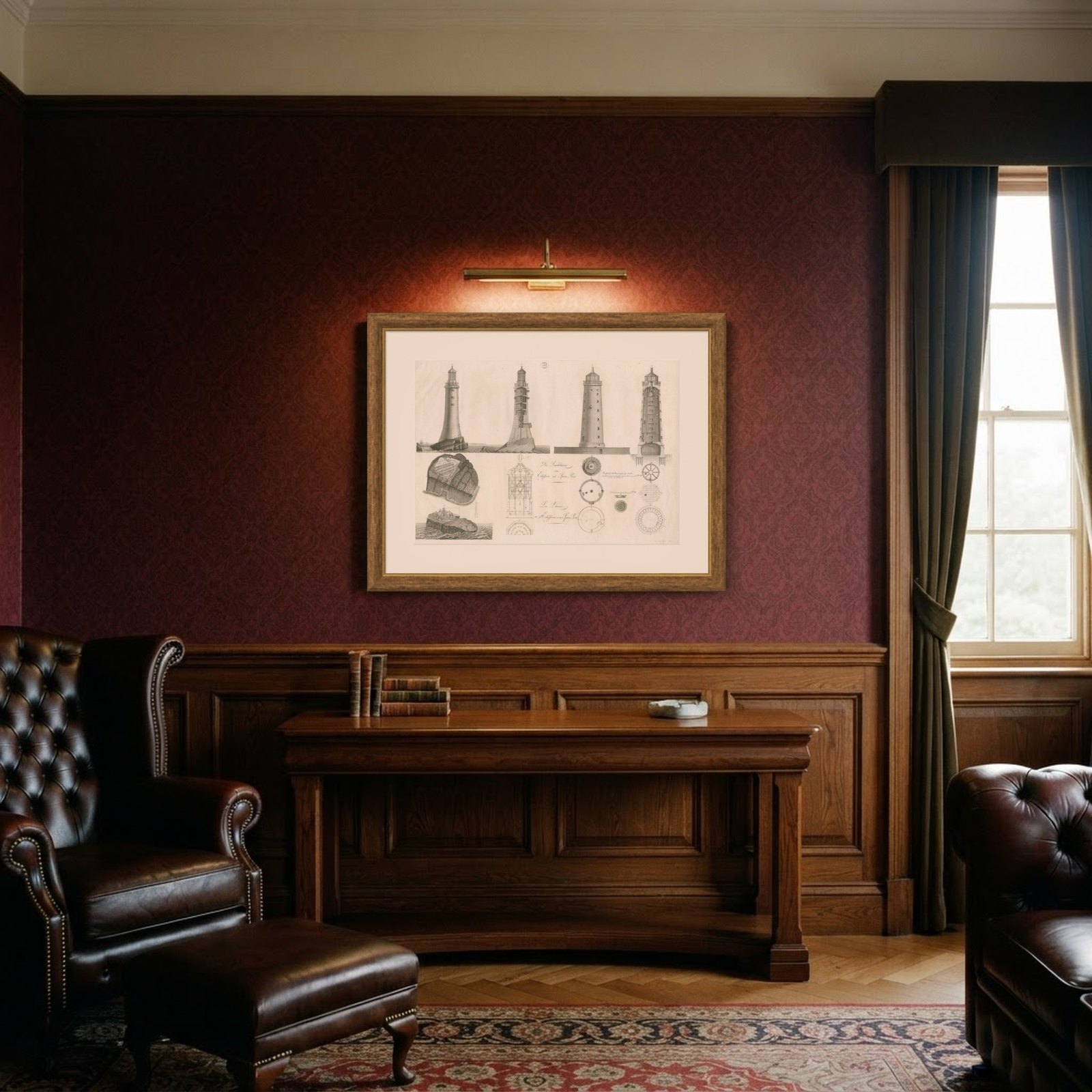
Frame and rooms are illustrations of how the piece could look; it is sold unframed unless the description says otherwise.
Lighthouse Architecture & Engineering Engravings, Set of 3, c. 1800
€1,850
$2,085 · £1,570
Original print, not a reproduction.
Ships worldwide from the Netherlands, flat, insured and tracked. 14-day returns.
- Date
- 1800
- Sheet size
- 20.1 × 28 in (51 × 71 cm)
- Condition
- Good. Consistent across the set, with light age-related toning and minor handling wear typical for engravings of this period. Plate impressions remain clear and well defined.
- Collection
- Harbours & ports
- Era
- 1790 to 1849, Age of sail
- Stock no.
- f_48072162
Antique Lighthouse Engineering Engravings, Set of 3, c.1800
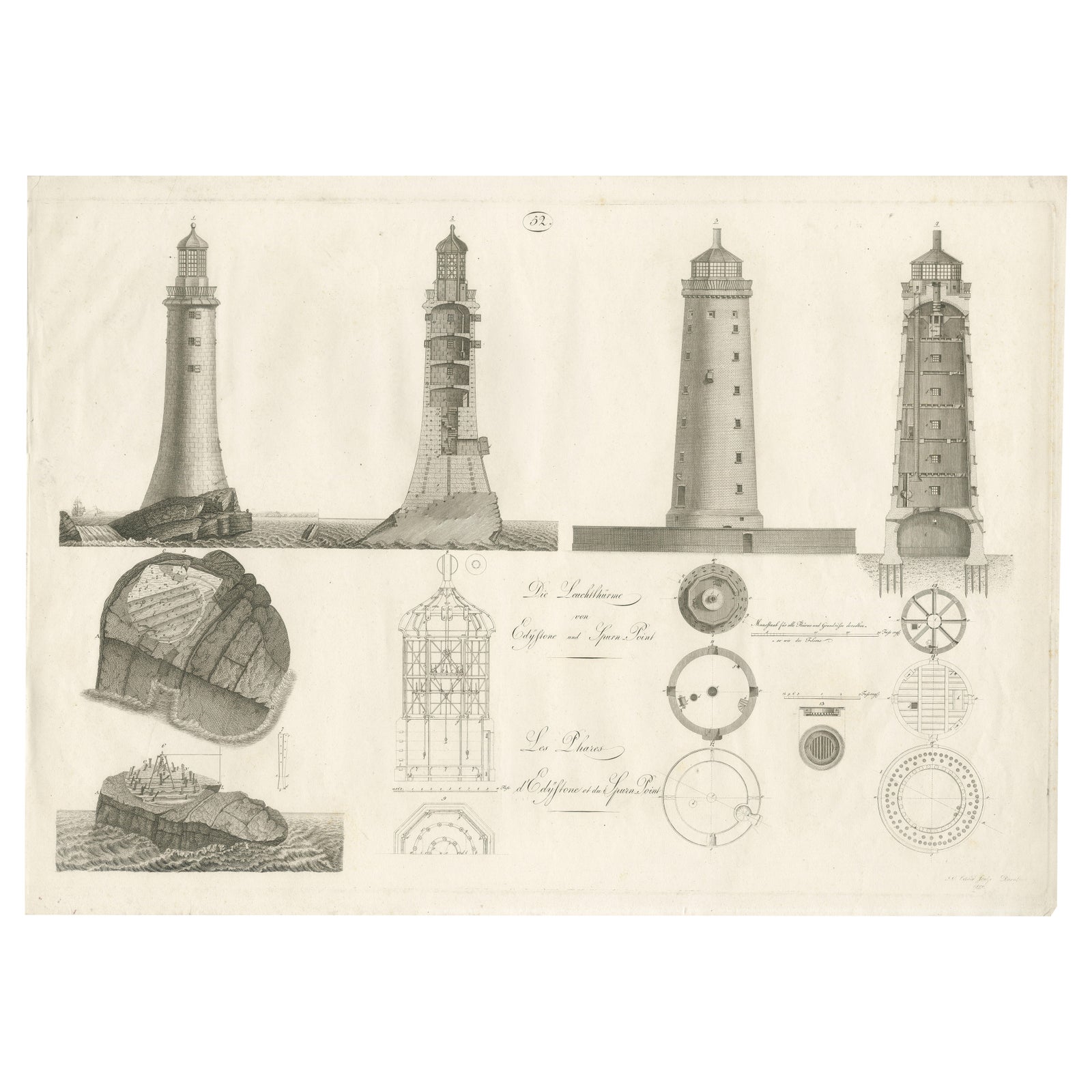
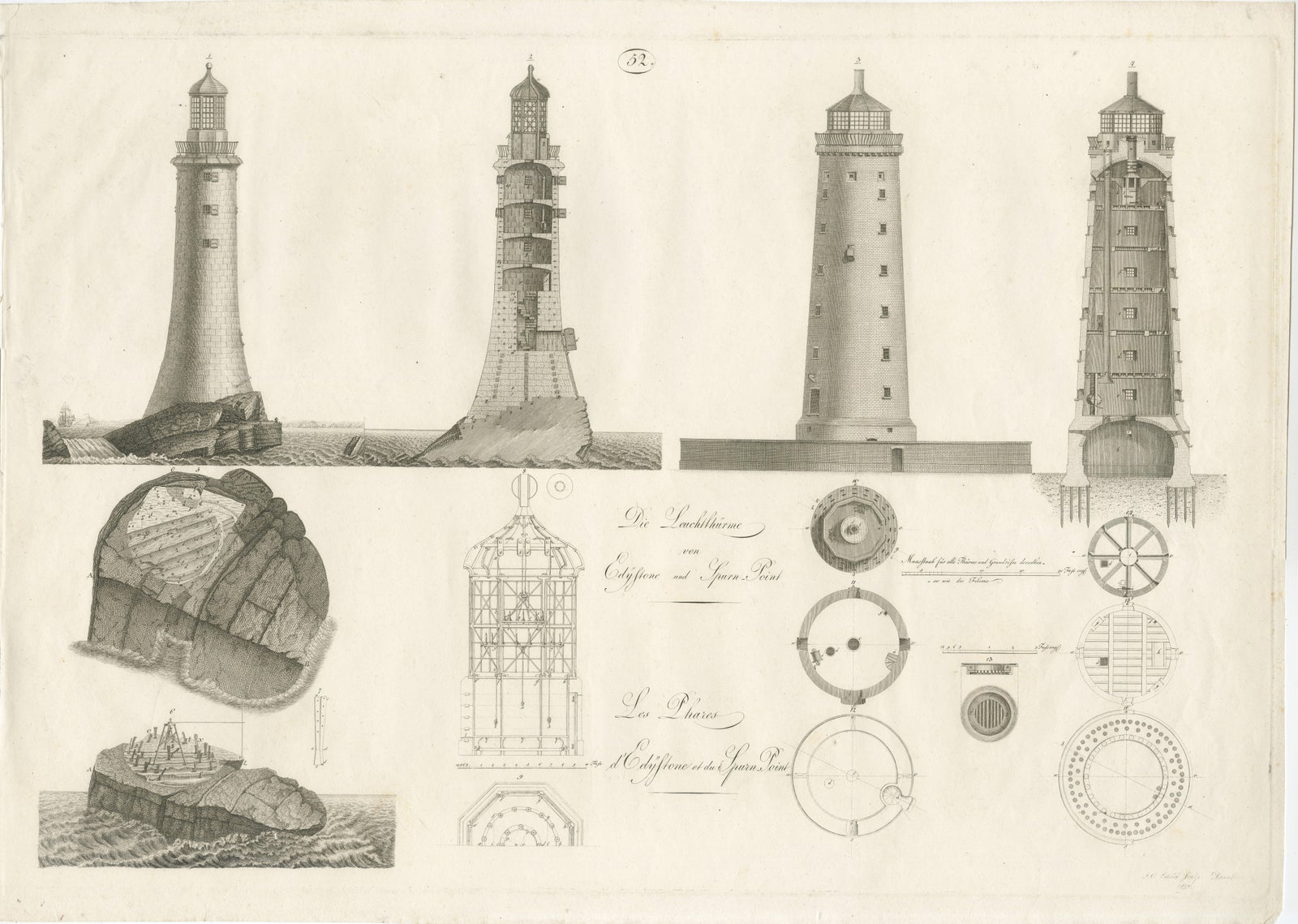
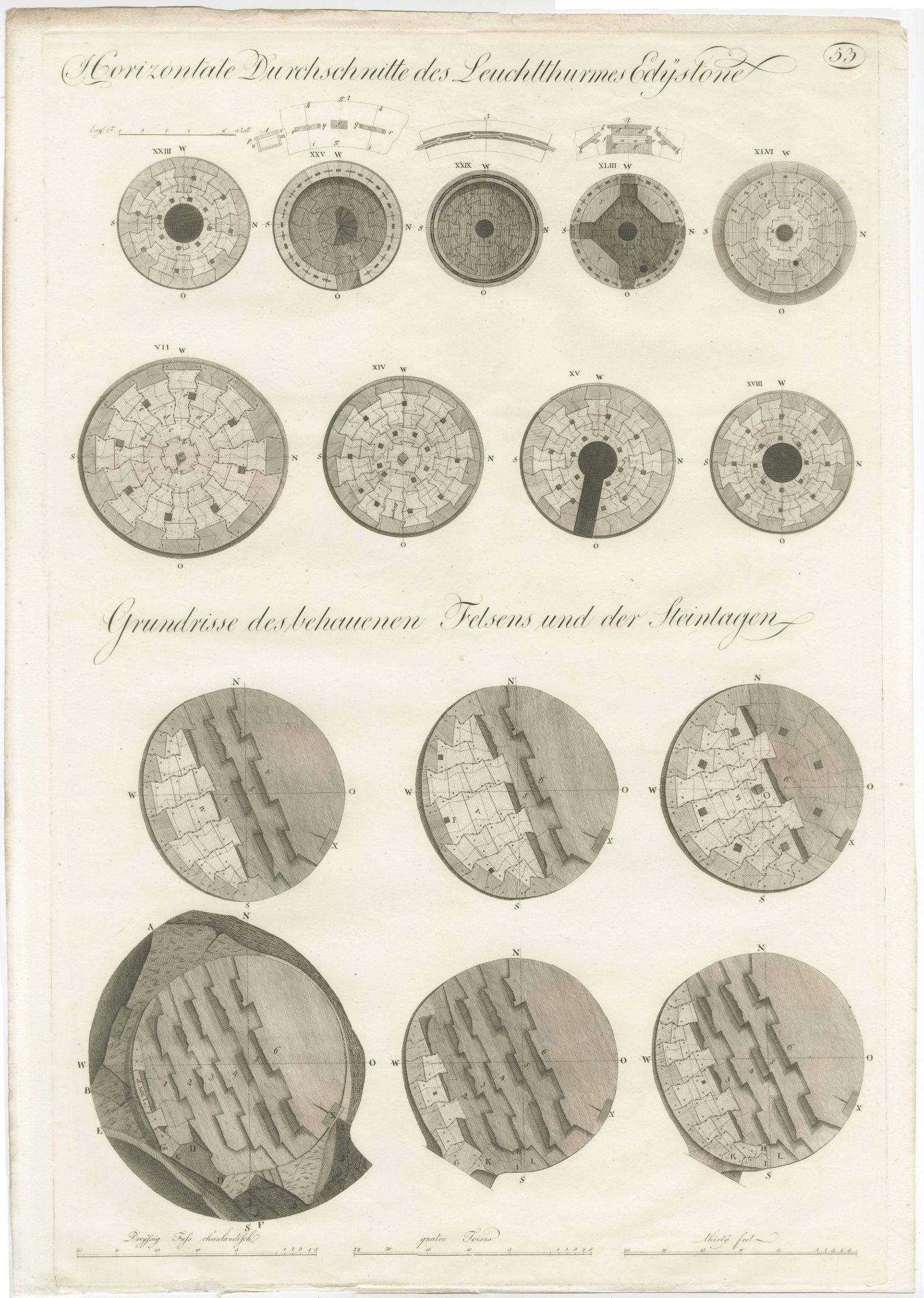
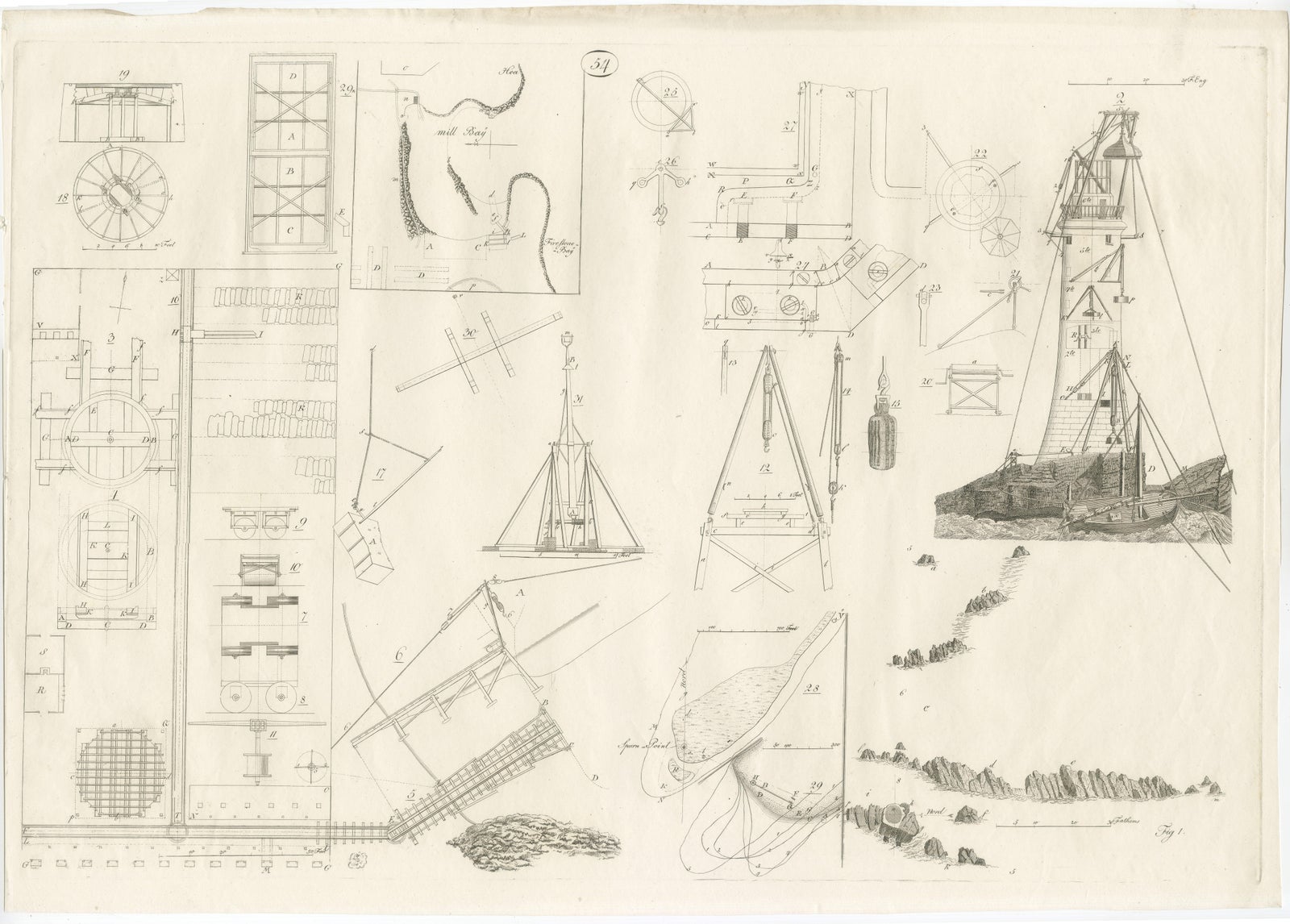
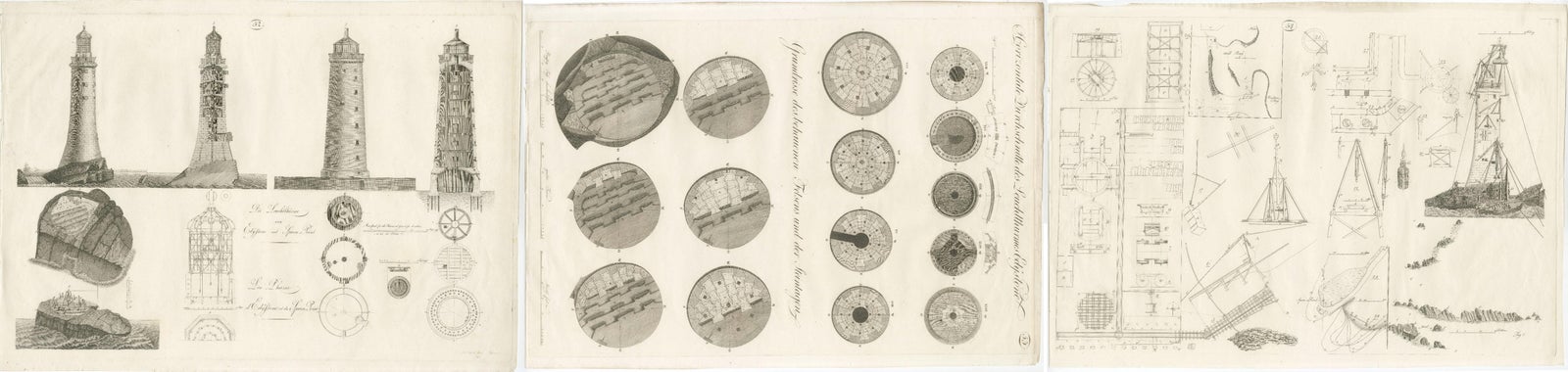
This set of three large-format engravings depicts the design and construction of a lighthouse at sea, drawn from Karl Friedrich von Wiebeking’s influential engineering treatise Allgemeine auf Geschichte und Erfahrung gegründete theoretisch-practische Wasserbaukunst, published in Darmstadt between 1798 and 1807. Intended for professional use rather than decoration, these plates document late eighteenth-century approaches to maritime and hydraulic engineering at a moment when lighthouse construction was becoming increasingly systematic and scientifically grounded.
The plates are titled Die Leuchtthürme von Edystone und Spurn-Point and present comparative engineering studies relating to the Eddystone and Spurn Point lighthouses.
The engravings present an idealized lighthouse tower together with detailed elevations, sectional views, foundation systems, and construction methods. Shown are tapered stone structures designed to resist wind and wave action, interlocking masonry courses for structural stability, and complex foundations engineered for exposed marine settings. Additional diagrams illustrate construction apparatus and building sequences, offering insight into how such towers were practically erected before the advent of modern industrial machinery.
Rather than representing a specific, named lighthouse, the imagery reflects best practice in late eighteenth-century lighthouse engineering, synthesizing knowledge derived from successful British and Continental precedents. The plates exemplify the transition from empirical coastal building traditions to a more analytical, experience-based engineering discipline, making them both historically informative and visually compelling.
As a complete set, the three sheets form a coherent and balanced ensemble, unified by subject, scale, and period. Their restrained monochrome palette, precise engraved line work, and generous margins make them highly suitable for framing and display, whether in a coastal residence, maritime office, library, or design-led commercial interior. Displayed side by side, they offer both decorative impact and intellectual depth.
Condition:
Consistent across the set, with light age-related toning and minor handling wear typical for engravings of this period. Plate impressions remain clear and well defined.
Framing tips:
Best presented as a horizontal triptych in matching frames. Natural walnut or ebonized wood frames with off-white or light parchment mats will complement the technical character of the engravings without overpowering them.
Technique: engraving
Maker: Karl Friedrich von Wiebeking, Germany, Darmstadt, 1798–1807
NOTE: we have more lighthouse related print, also a lot of three technical engravings.
EXPLORE