Close-ups
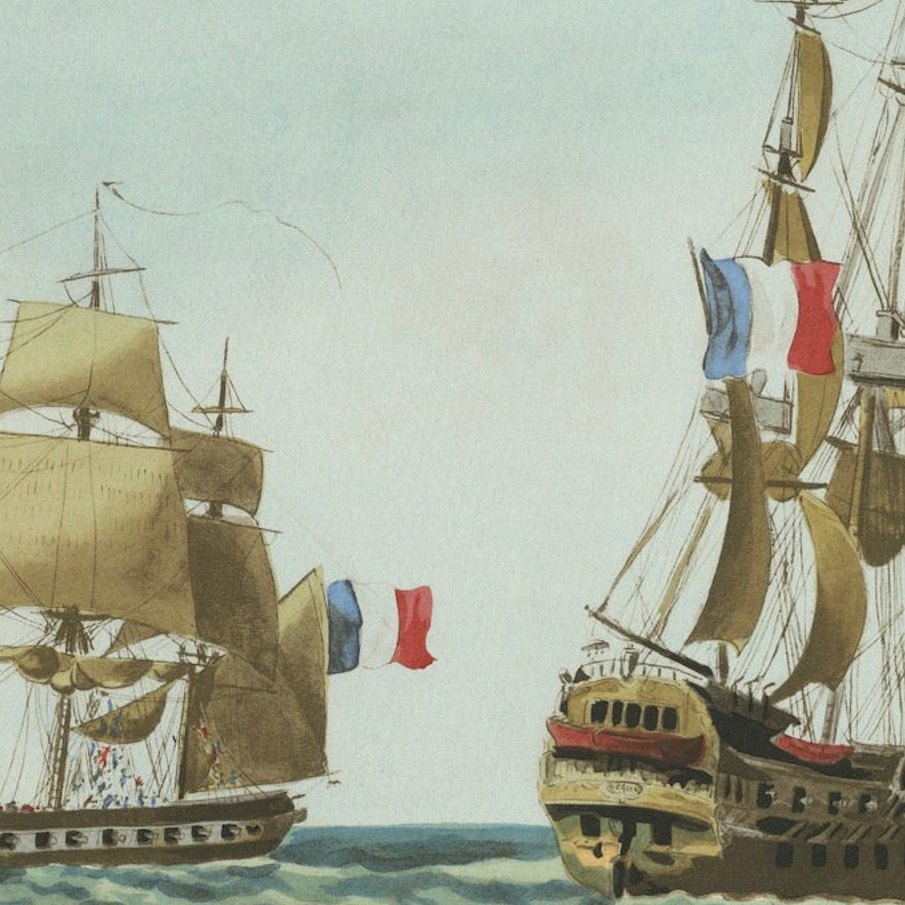
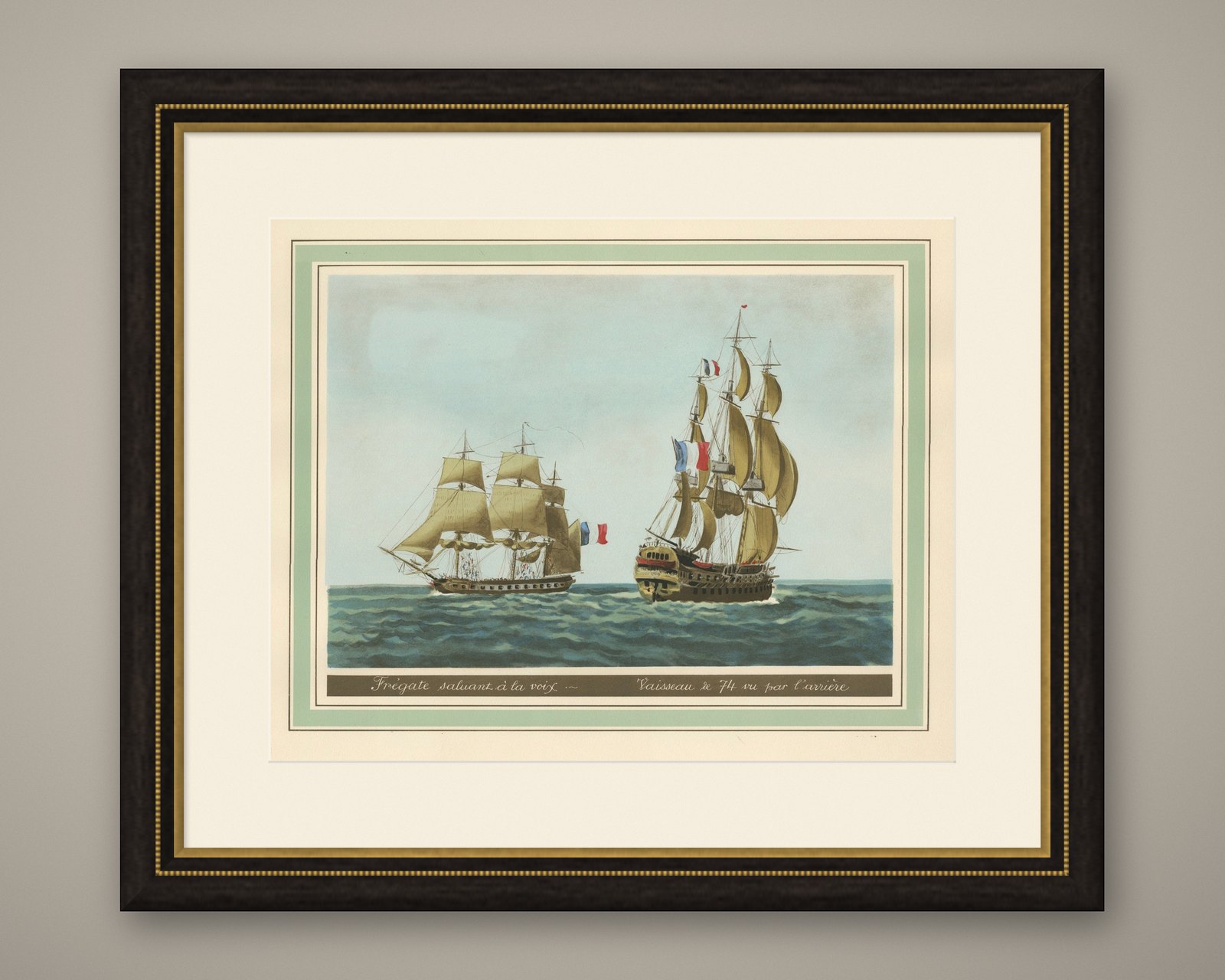
Framed and on the wall
Frame and rooms are illustrations of how the piece could look; it is sold unframed unless the description says otherwise.
Maritime Salute: The Elegance of 18th-Century Naval Grace, circa 1920
€840
$940 · £710
Original print, not a reproduction.
Ships worldwide from the Netherlands, flat, insured and tracked. 14-day returns. To buy, use Ask a question and we will reserve it for you.
- Date
- 1920
- Sheet size
- 18.5 × 23.2 in (47 × 59 cm)
- Condition
- Good. Very good. Some dust soiling in the sky above the ships, adding to its patina. Study the images carefully.
- Collection
- Ships & sea battles
- Era
- 1850 and after, Steam and steel
- Stock no.
- f_38219502
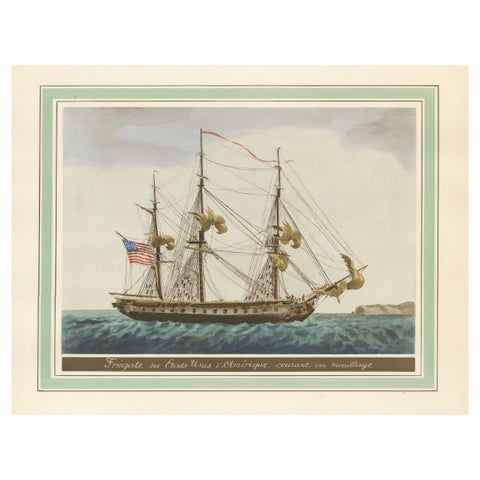
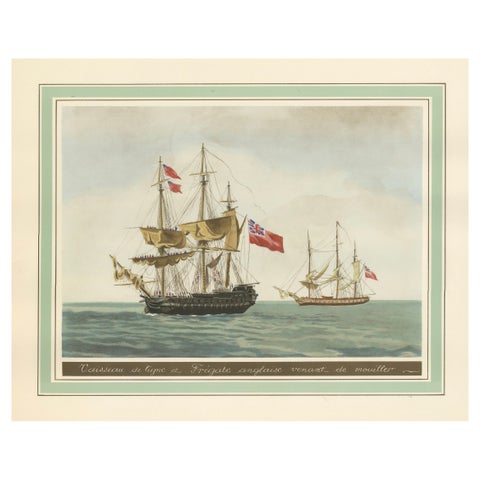
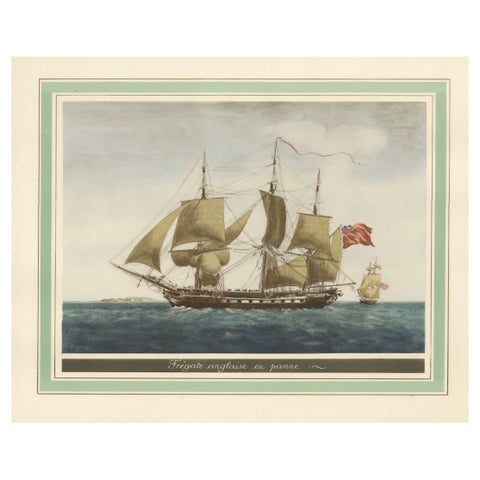
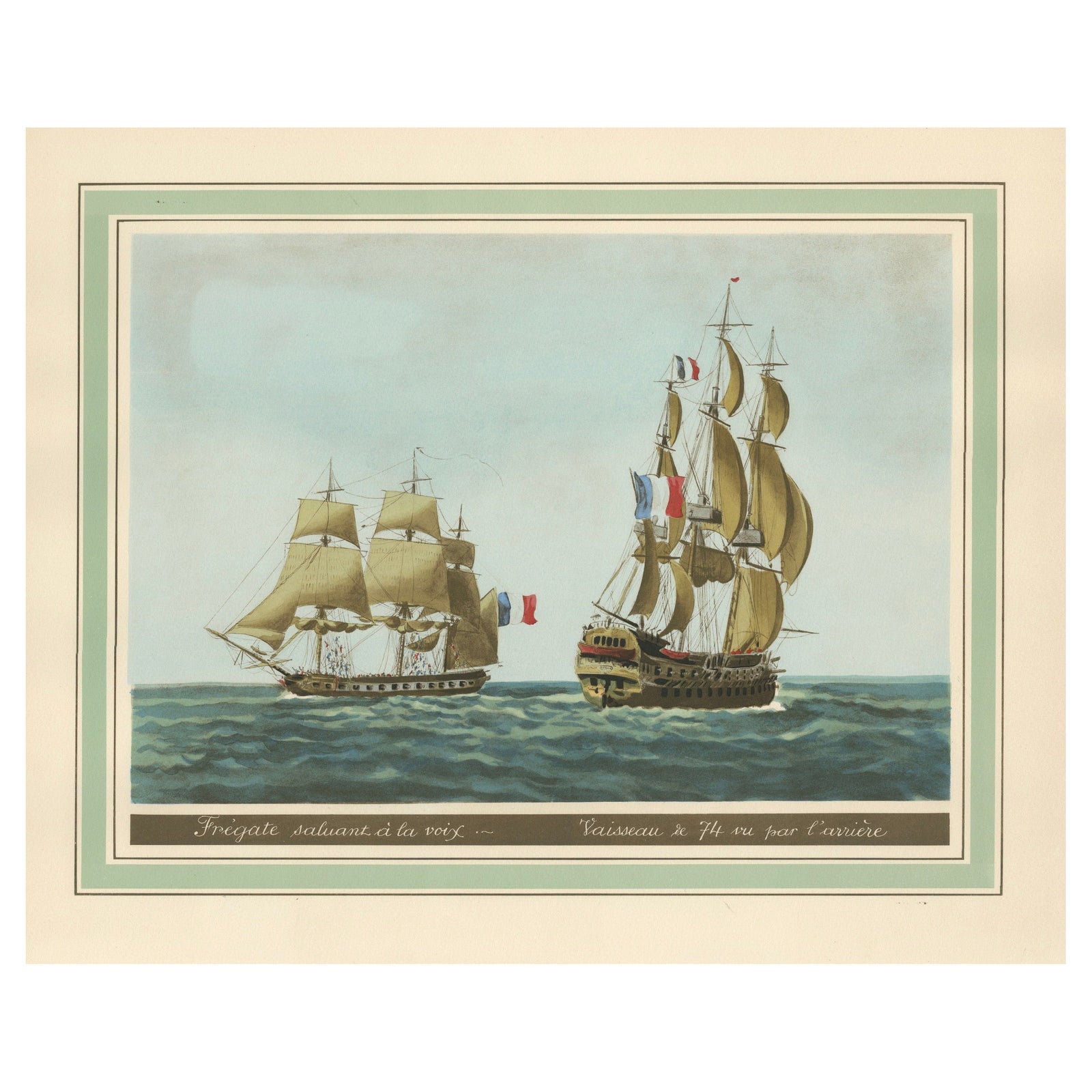
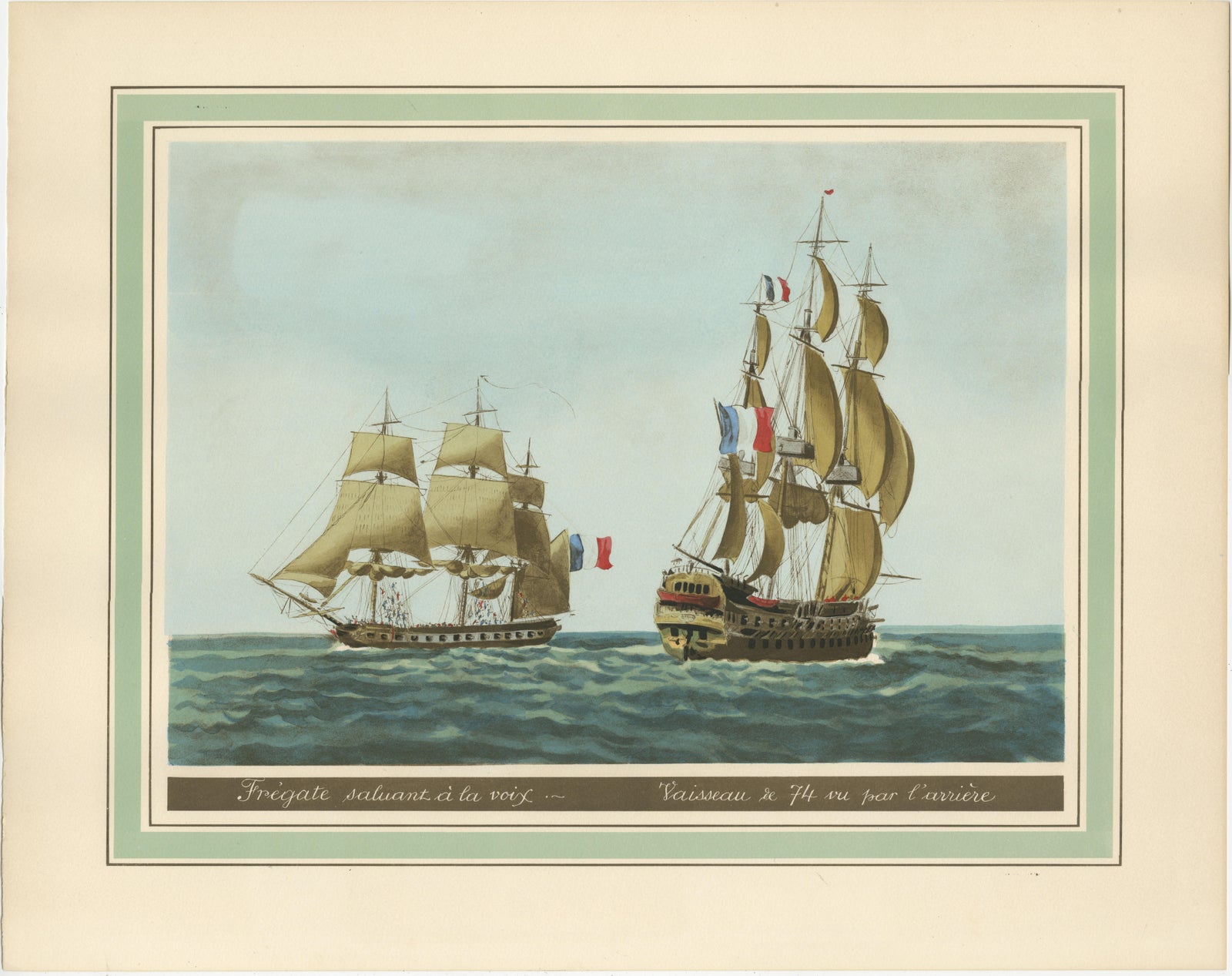
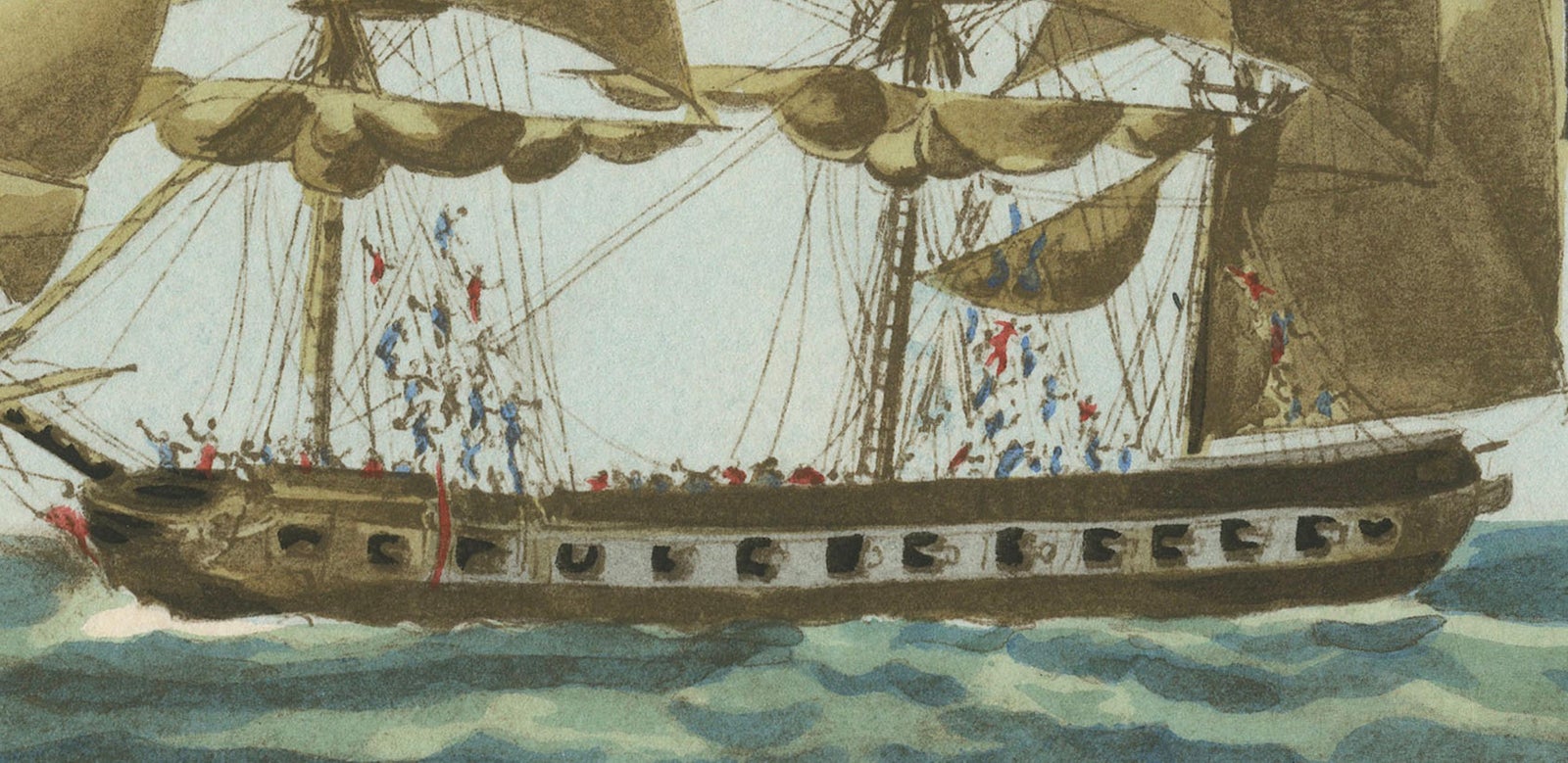
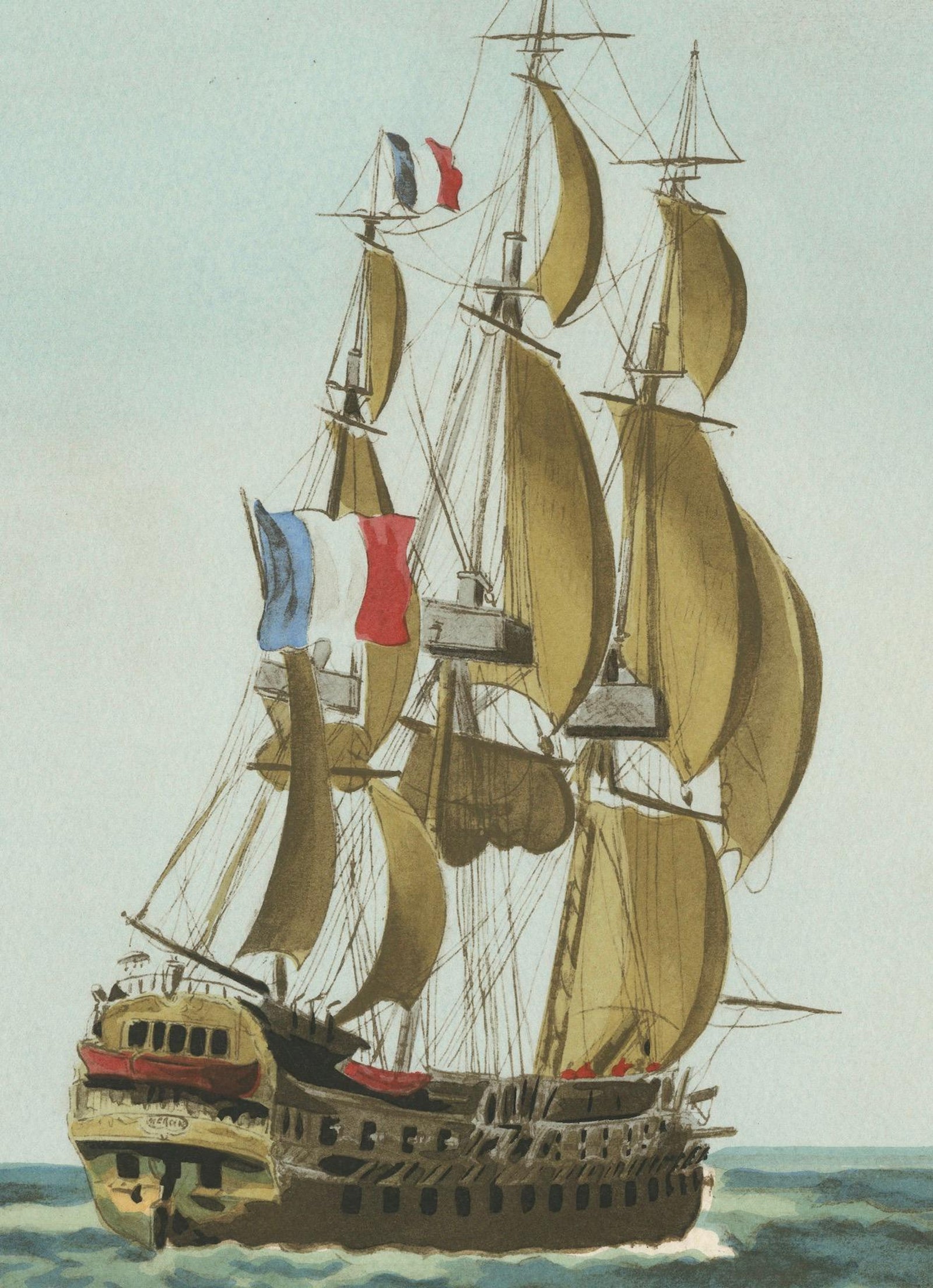
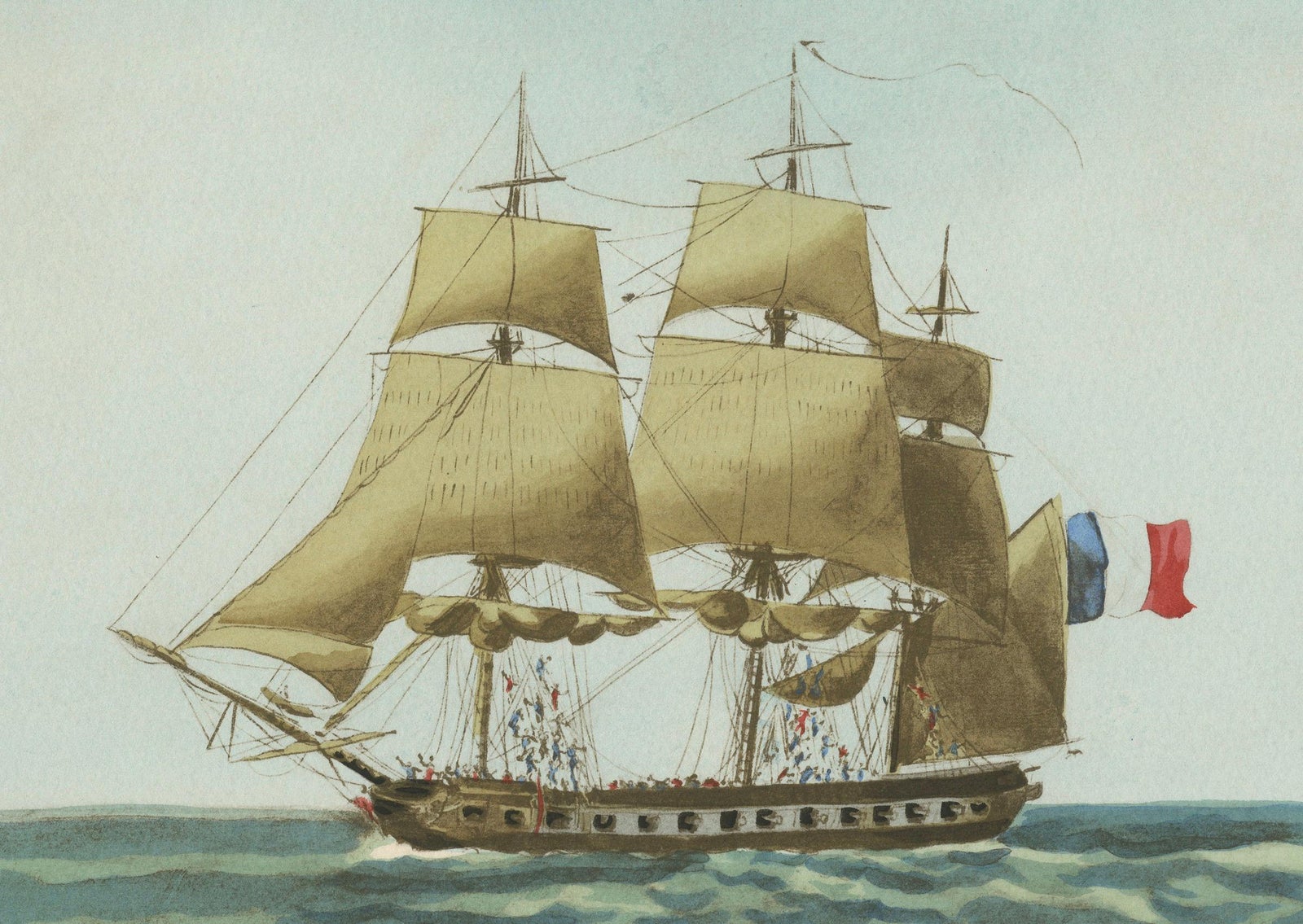
Handcolored heliotype of two French ships after a work of Jean-Jérôme Baugean, created in circa 1920.
This original print is described as a handcolored heliotype, a technique that was developed in the 19th century as a photo-mechanical process. It involves creating a lithographic plate from a photograph which can then be inked and used to print images onto paper. Heliogravure, or heliotype, was known for its ability to capture fine detail and subtle gradations of tone, making it a popular method for reproducing images before the advent of modern photographic printing techniques.
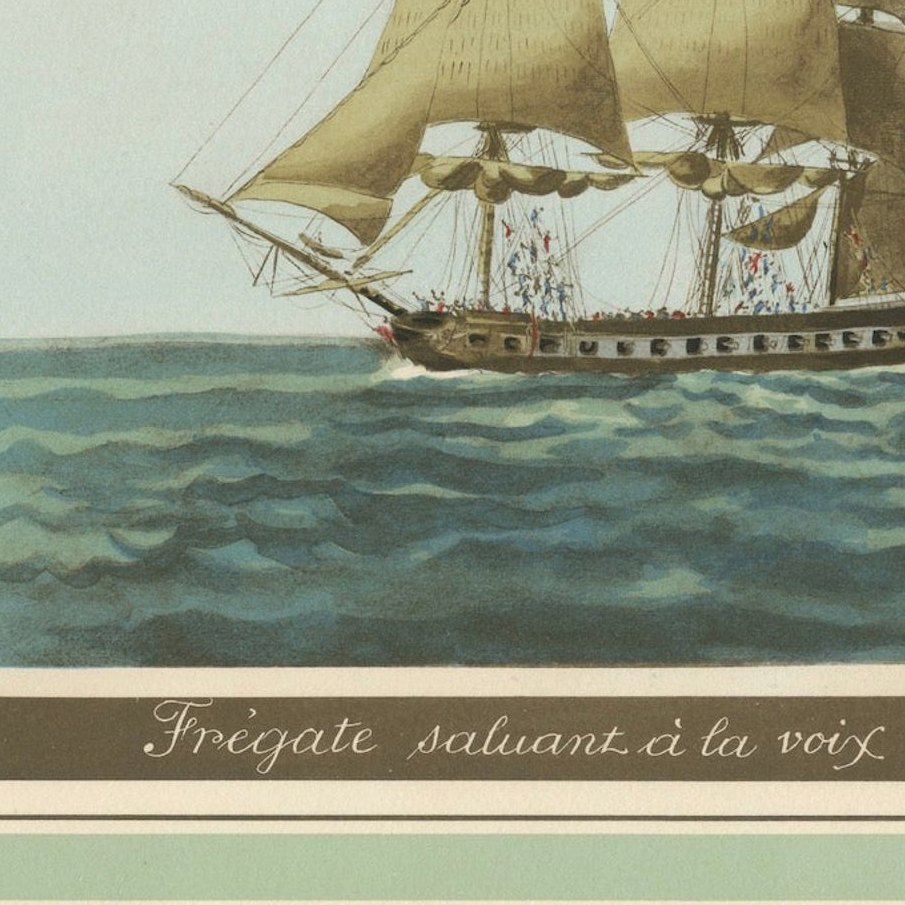
The ship in the foreground is sailing with the wind, which is indicated by the French caption "Frégate saluant à la voix," translating to "Frigate saluting by voice." The ship behind it, as described by the caption "vaisseau de 74 au loar l'arrière," is a '74-gun ship' falling behind or to the rear. The heliotype technique suggests a reproduction of an original artwork, and the print is likely from around 1920, providing a historical maritime scene with ships that could be from the late 18th or early 19th century, characterized by their full sails and the flags they bear. The quality of the hand-coloring adds to the authenticity and aesthetic of the period.
Jean-Jérôme Baugean was a French artist known for his maritime scenes and ship studies. If this print is made after his work, it would likely have captured the detailed and accurate depictions of ships that Baugean was known for. His works are valuable for their historical accuracy and artistic quality.
As for the time period, the print is said to be from around 1920, which would place it in the early 20th century, although Baugean passed away in 1819. This suggests that the print is a later reproduction of Baugean's original work, which was not uncommon as his work was highly regarded and sought after by enthusiasts of maritime history and art collectors.
The title of the print, is written within the print itself, indicating that it was part of a series or collection of similar works. The double border line adds a formal touch and frames the image, which is a typical presentation for prints of this era.
The paper has a water mark in the top right corner, not yet identified.