Close-ups
Framed and on the wall
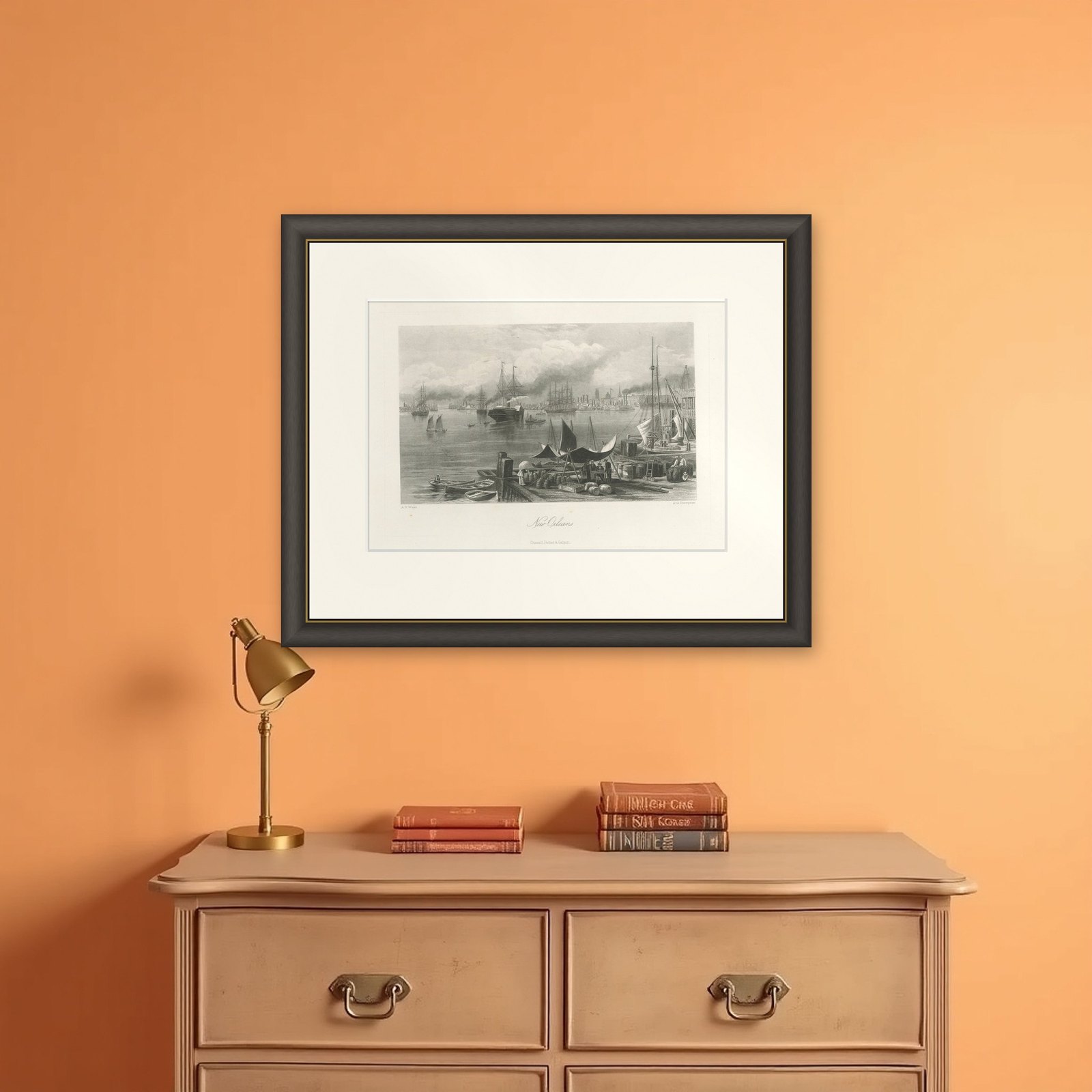
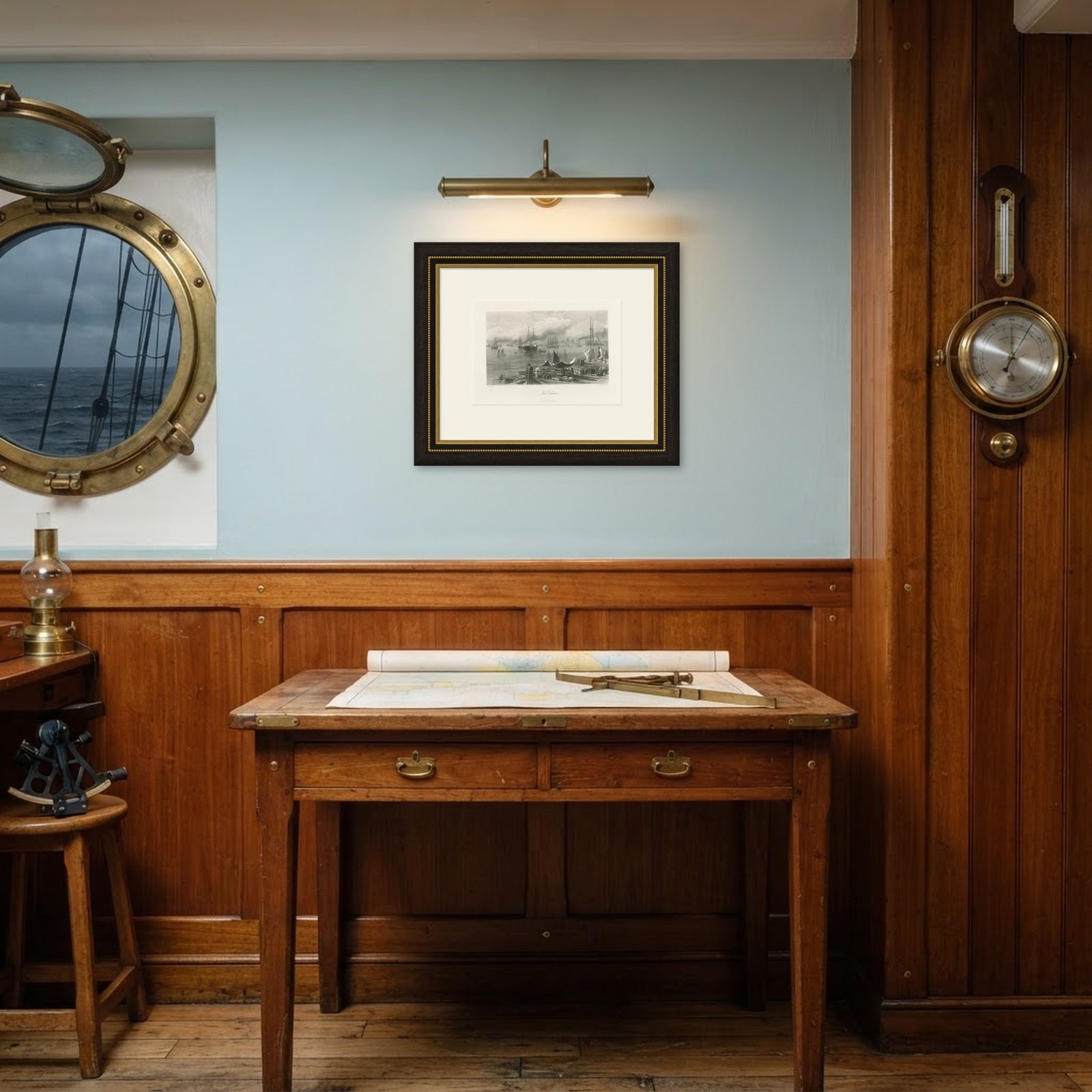

Frame and rooms are illustrations of how the piece could look; it is sold unframed unless the description says otherwise.
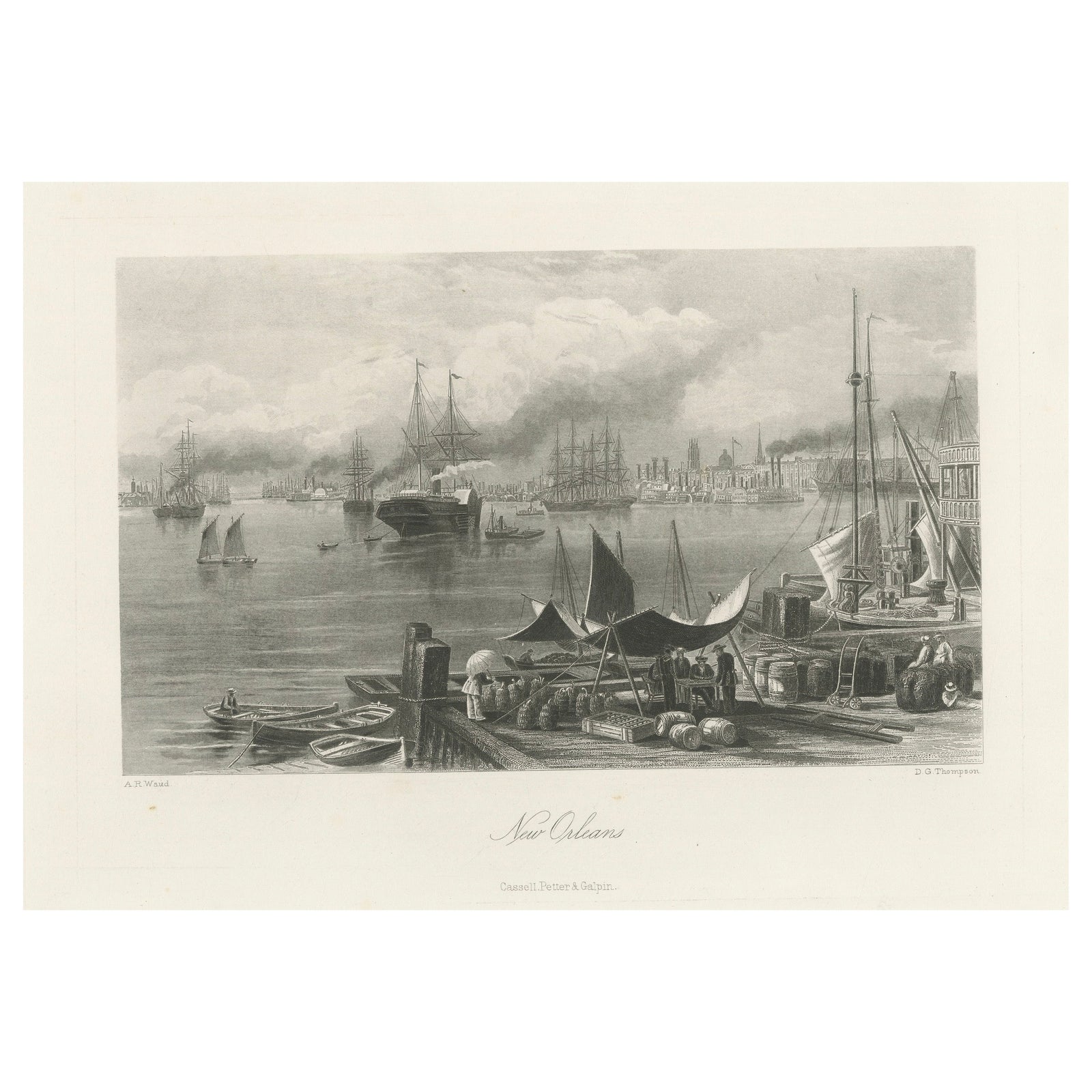
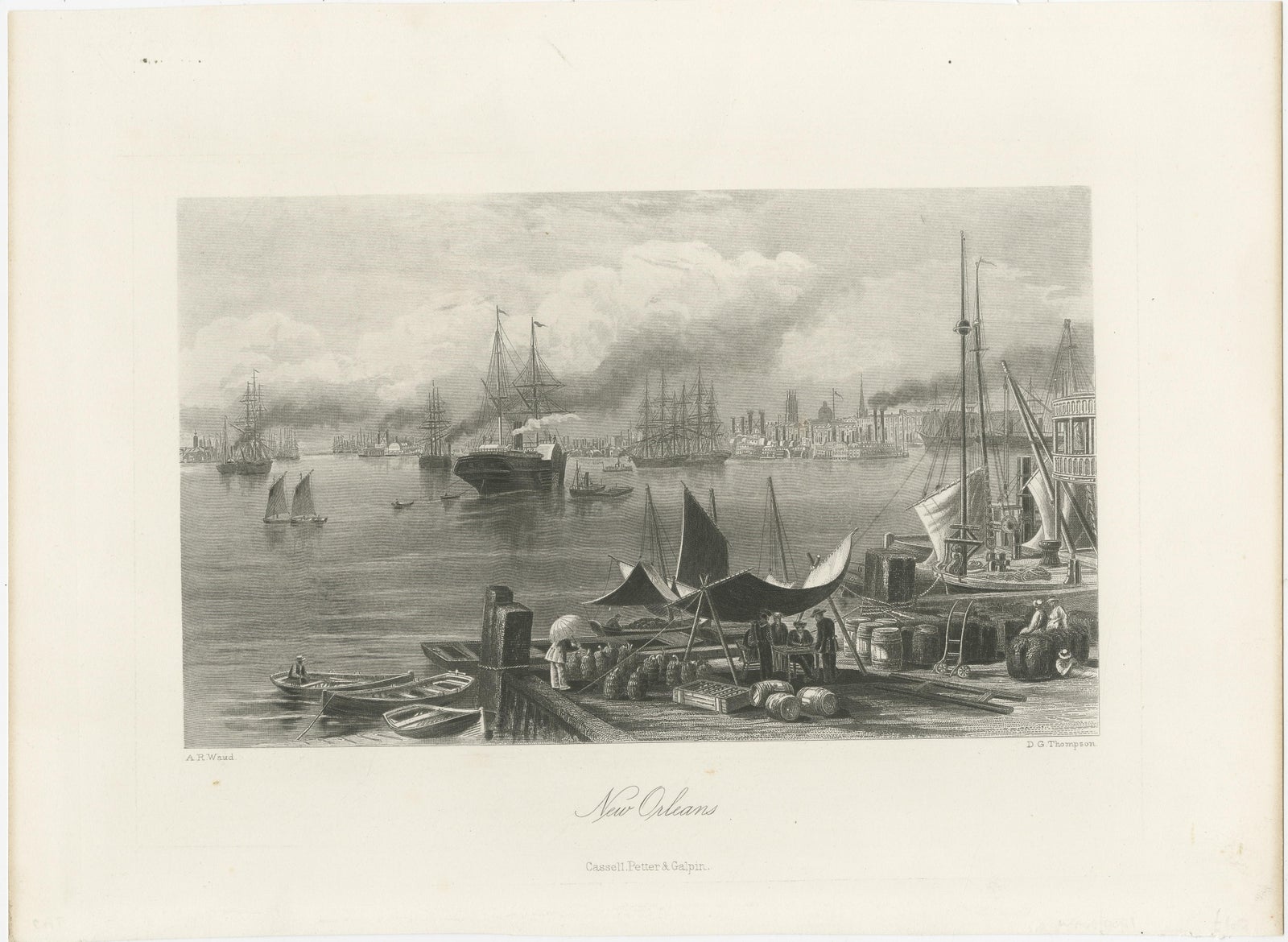
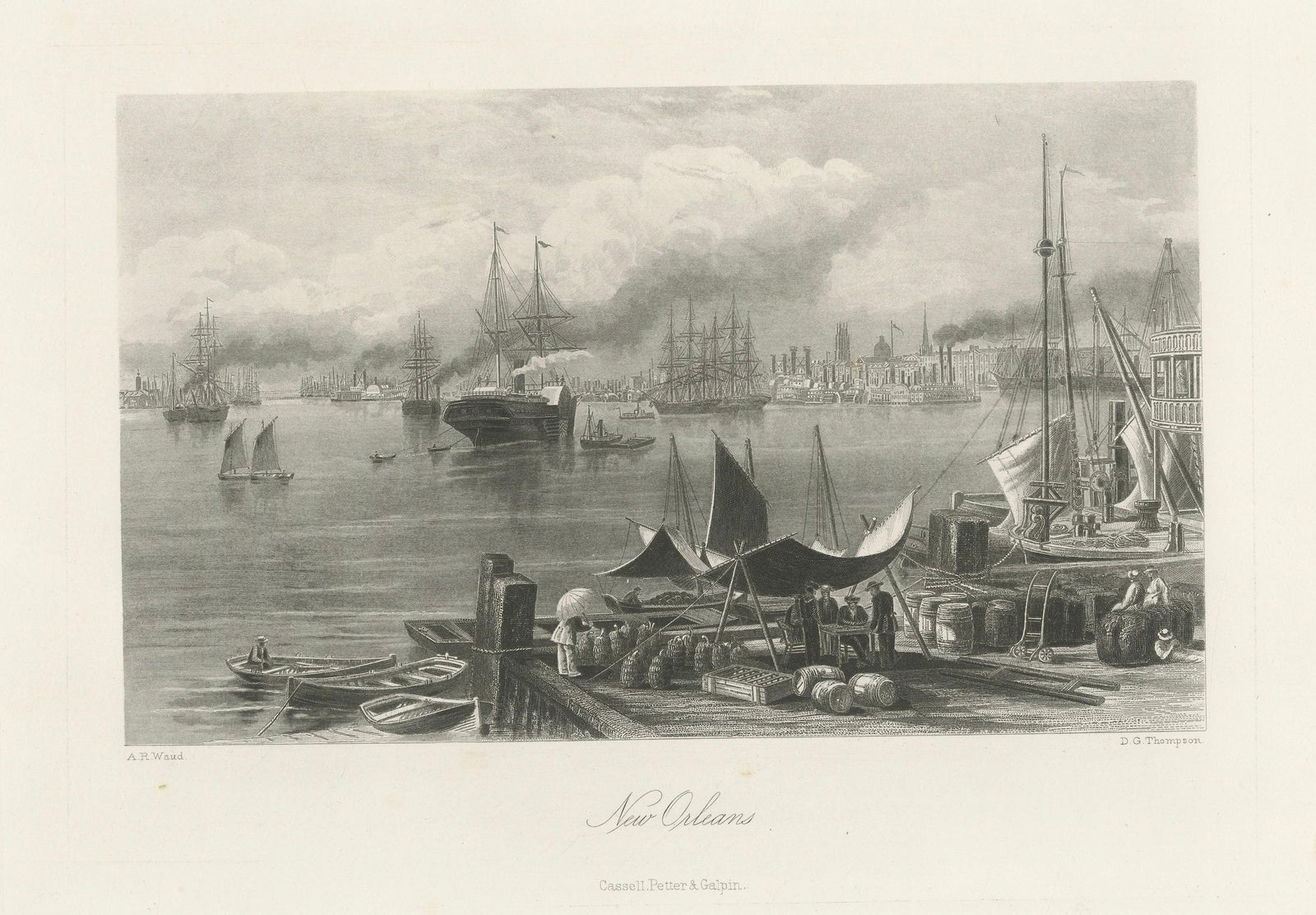
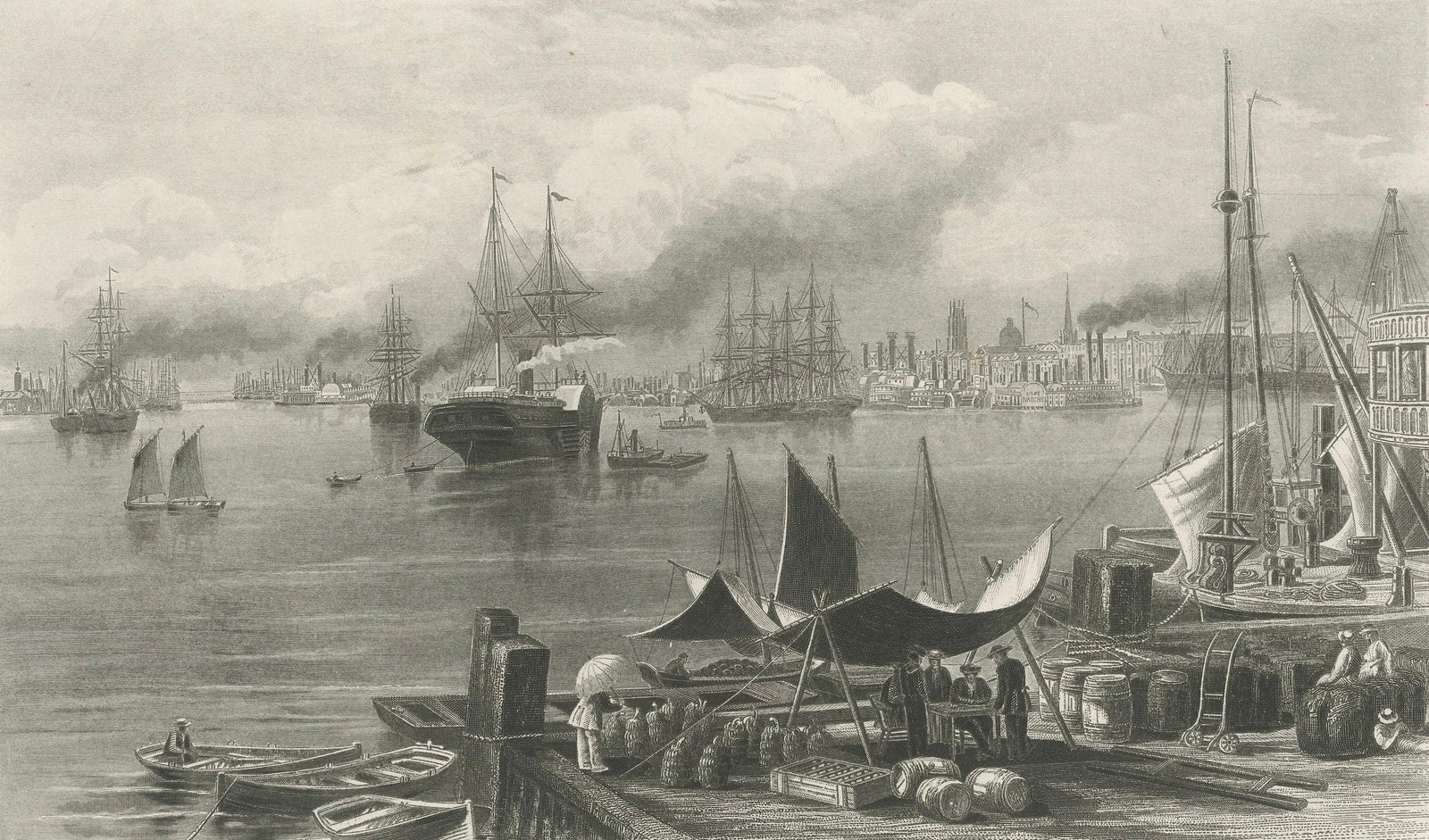
New Orleans Harbor, Mississippi River Shipping and Steamers, Engraving ca.1850
€350€24530% off
$270 · £205
Original print, not a reproduction.
Ships worldwide from the Netherlands, flat or rolled, insured and tracked. 14-day returns.
- Date
- 1850
- Sheet size
- 9.2 × 12.4 in (23.3 × 31.6 cm)
- Condition
- Good. Good antique condition. Light age toning and faint spotting in the margins, consistent with age. The image itself is strong and clear, with good contrast. A visible plate mark is present. No major tears or losses observed.
- Collection
- Harbours & ports
- Era
- 1850 and after, Steam and steel
- Stock no.
- BG-14129-25
What the condition grades mean
- Excellent
- Bright and clean, with no faults worth mentioning.
- Very good
- Only light signs of age, such as faint toning.
- Good
- Normal signs of age for a sheet of this period: toning, some foxing, small marks or neat old repairs.
- Fair
- Clear faults such as staining, tears or repairs, priced to match.
Every fault we see is written in the condition note, and the whole sheet is shown uncropped in the photos.
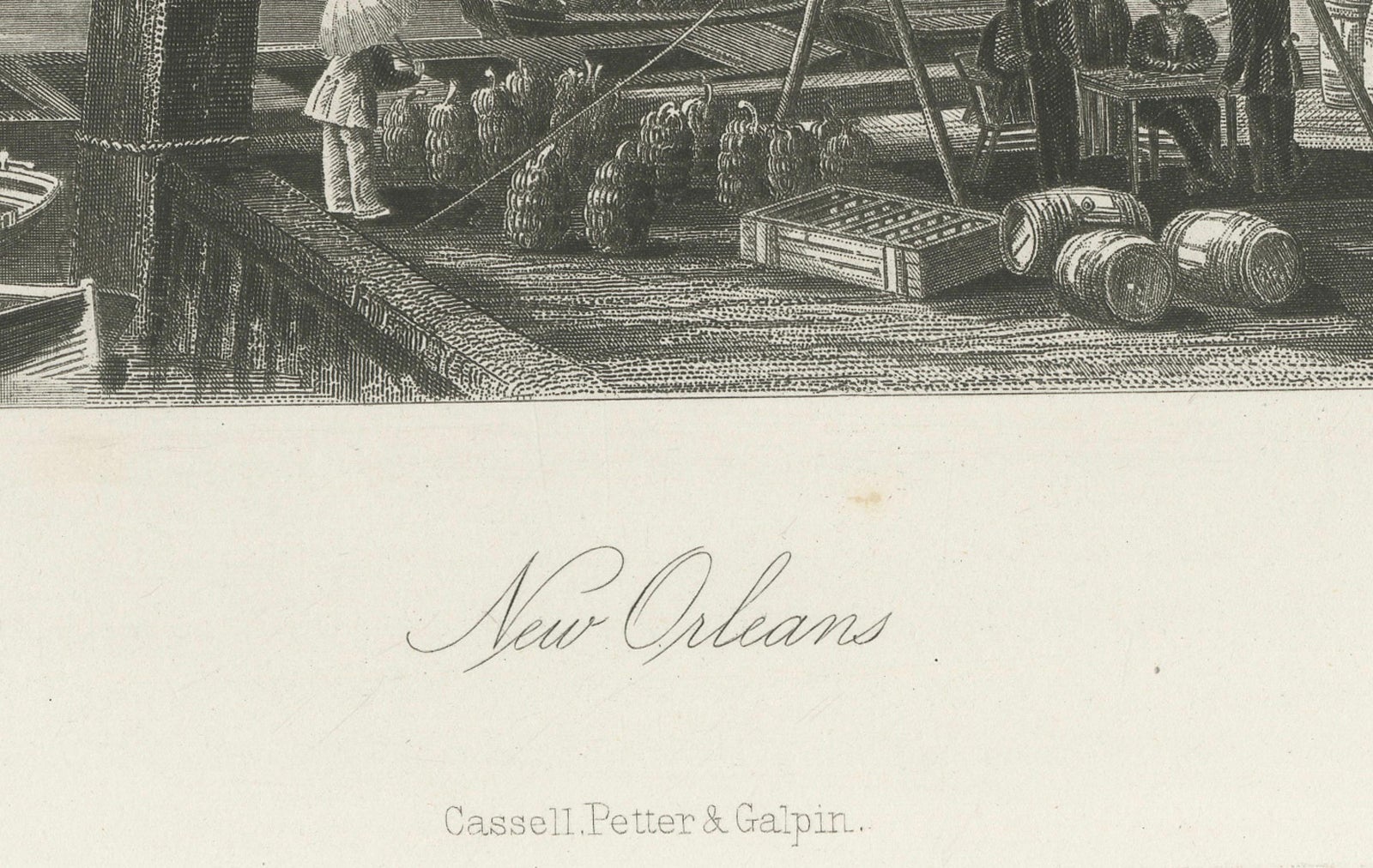
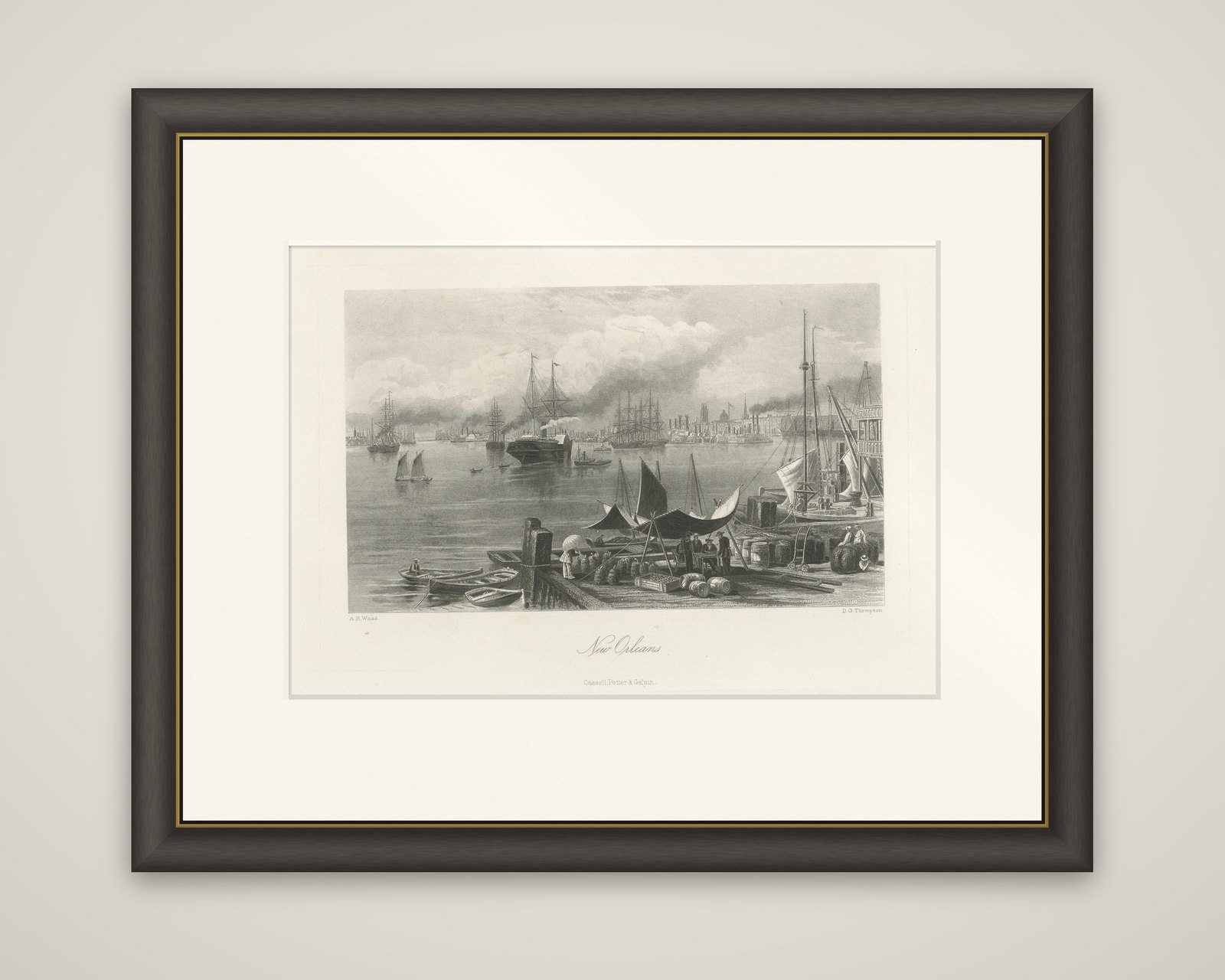
New Orleans from the river, a steel engraving after a drawing by A. R. Waud, engraved by D. G. Thompson and published in London by Cassell, Petter and Galpin. The plate title "New Orleans" is lettered in script below the image.
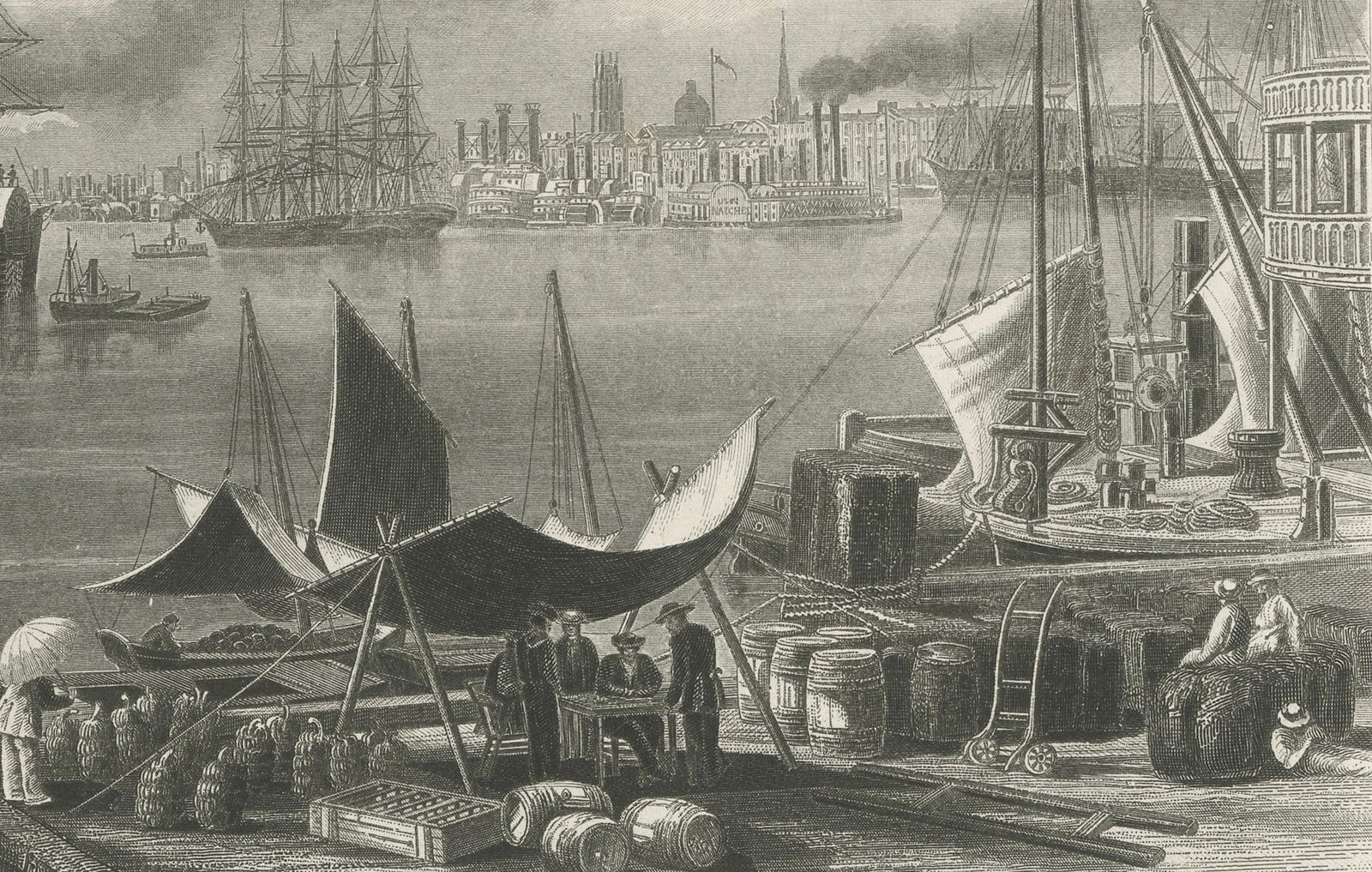
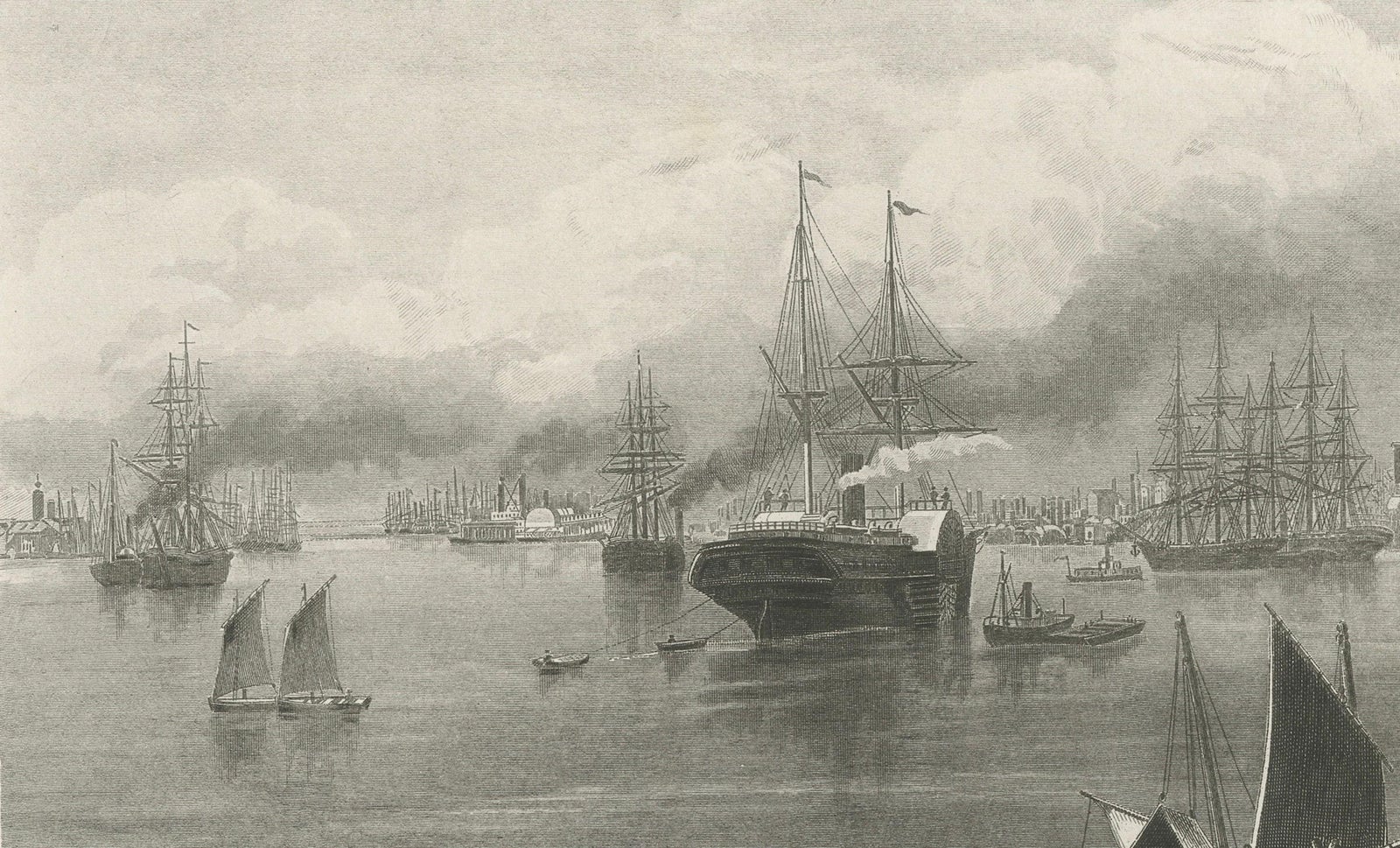
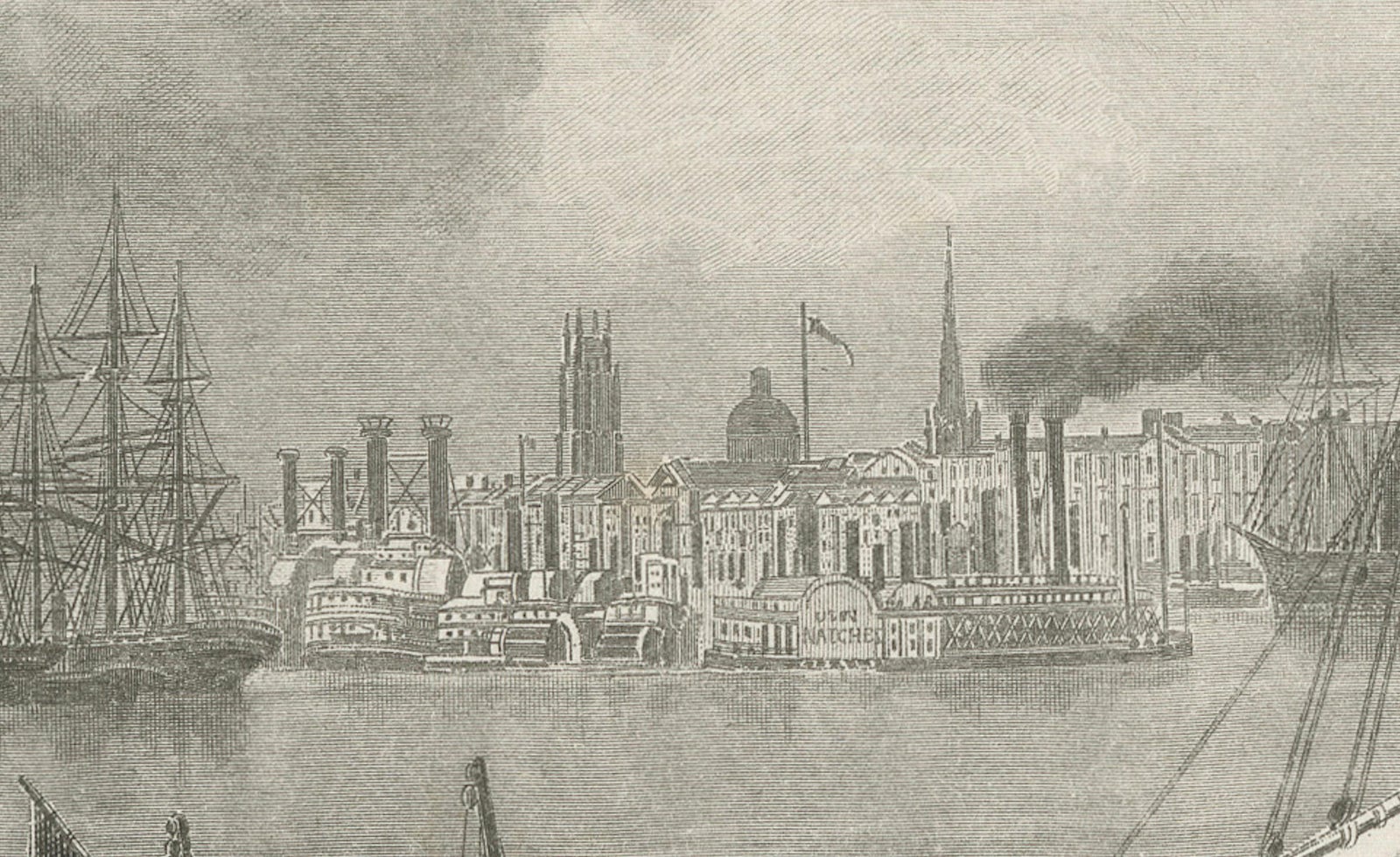
In the foreground a wharf is piled with barrels and bales, and men work in the shade of improvised canvas awnings. Rowboats and small sailing craft lie alongside. Beyond them the Mississippi opens into a wide harbor crowded with ships: tall-masted sailing vessels, a large steamer throwing out a heavy column of smoke, and riverboats with tall chimneys. A long skyline of warehouses, chimneys and church towers stretches along the far bank under a clouded sky.
Alfred Waud was an American illustrator known for his on-the-spot drawings of American scenes. The view shows the port that carried the cotton and goods of the lower Mississippi valley, with sail and steam working side by side.
EXPLORE