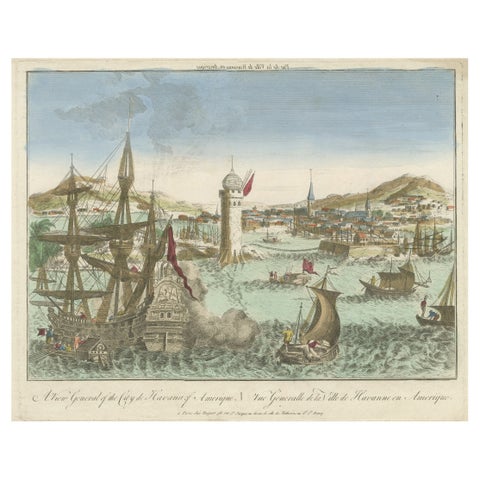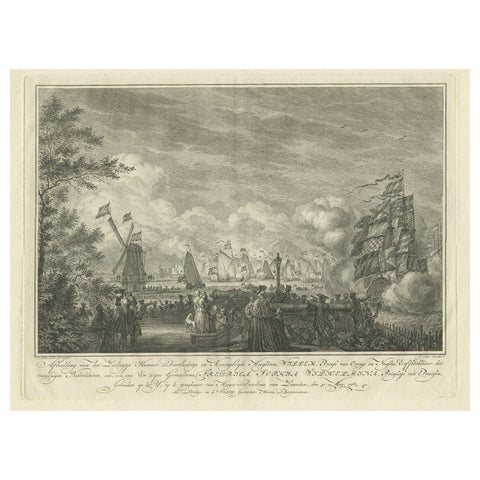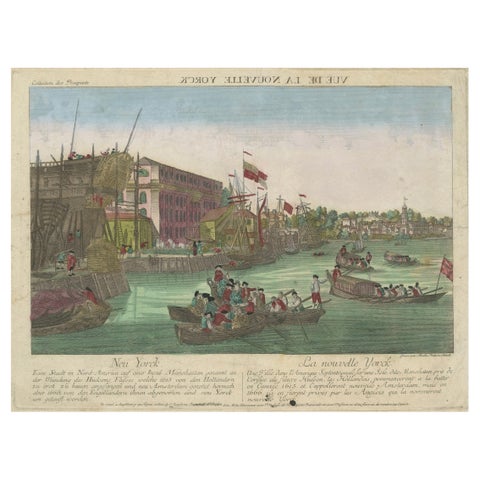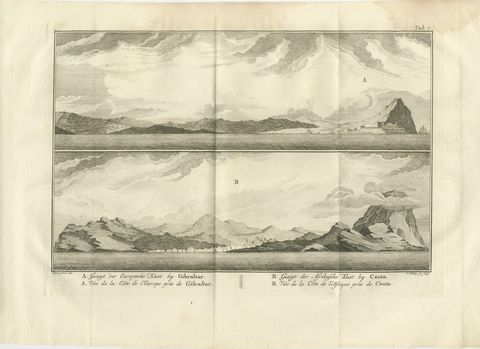
Close-ups
Framed and on the wall
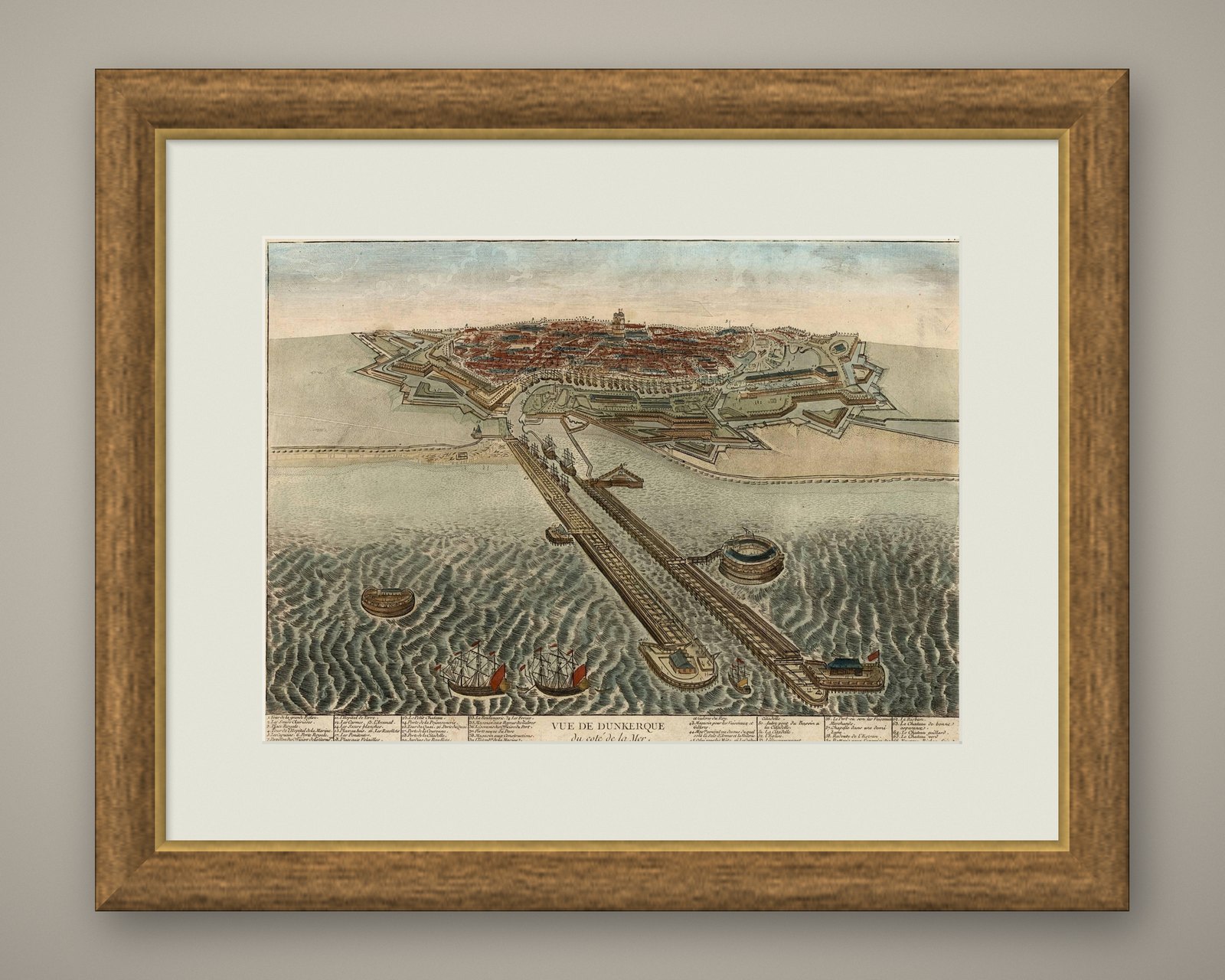
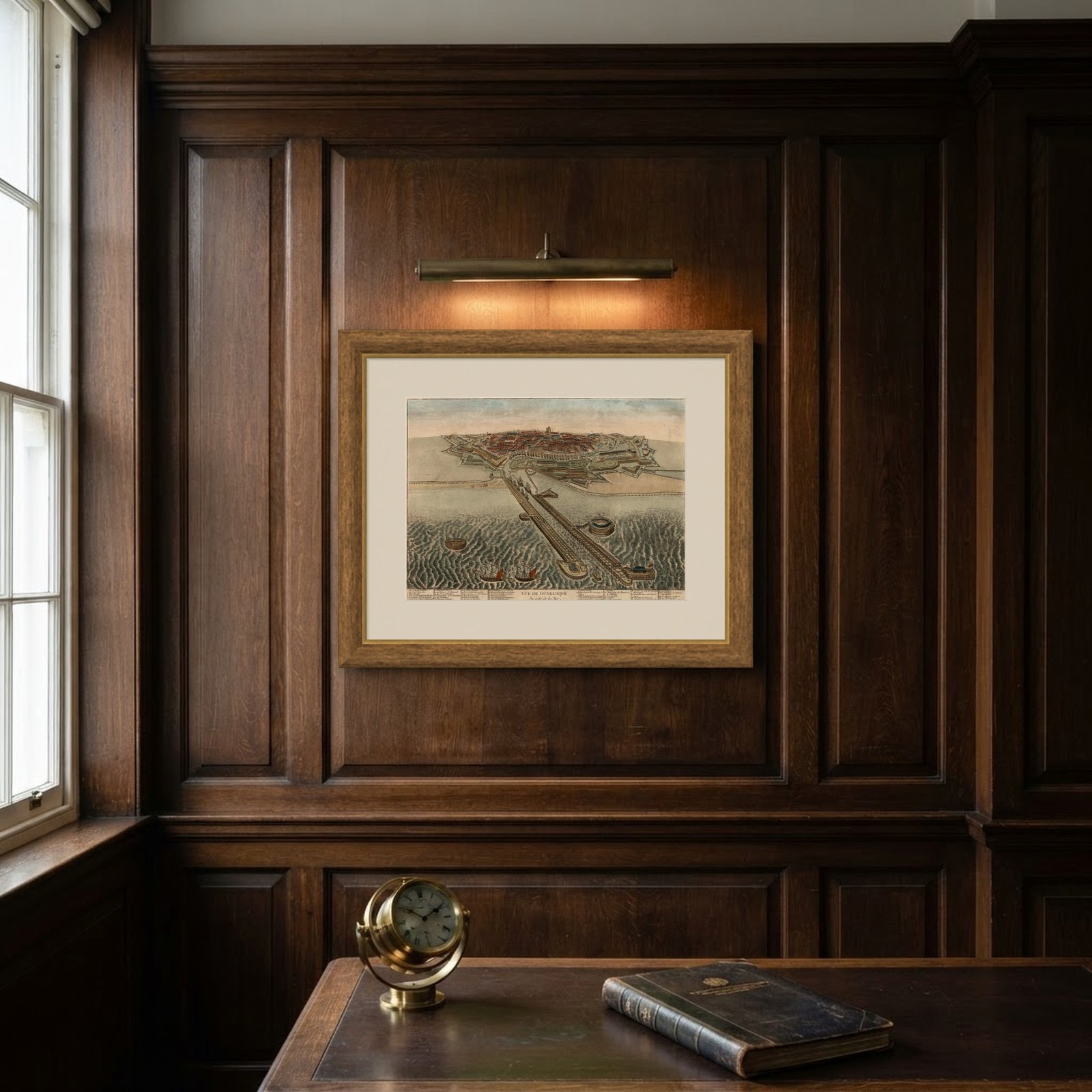
Frame and rooms are illustrations of how the piece could look; it is sold unframed unless the description says otherwise.
Spectacular 1770 Bird's-Eye View of Dunkirk Harbor by Basset, with 66 Landmarks
£410£28530% off
$375 · €343
Original print, not a reproduction.
Ships worldwide from the Netherlands, flat or rolled, insured and tracked. 14-day returns.
- Date
- 1770
- Sheet size
- 13 × 19.3 in (33 × 49 cm)
- Condition
- Good, given age. General age-related soiling and/or toning and/or occasional minor defects from handling around the borders. Please study scans carefully.
- Collection
- Harbours & ports
- Era
- 1700 to 1789, Age of discovery
- Stock no.
- BG-13770
What the condition grades mean
- Excellent
- Bright and clean, with no faults worth mentioning.
- Very good
- Only light signs of age, such as faint toning.
- Good
- Normal signs of age for a sheet of this period: toning, some foxing, small marks or neat old repairs.
- Fair
- Clear faults such as staining, tears or repairs, priced to match.
Every fault we see is written in the condition note, and the whole sheet is shown uncropped in the photos.
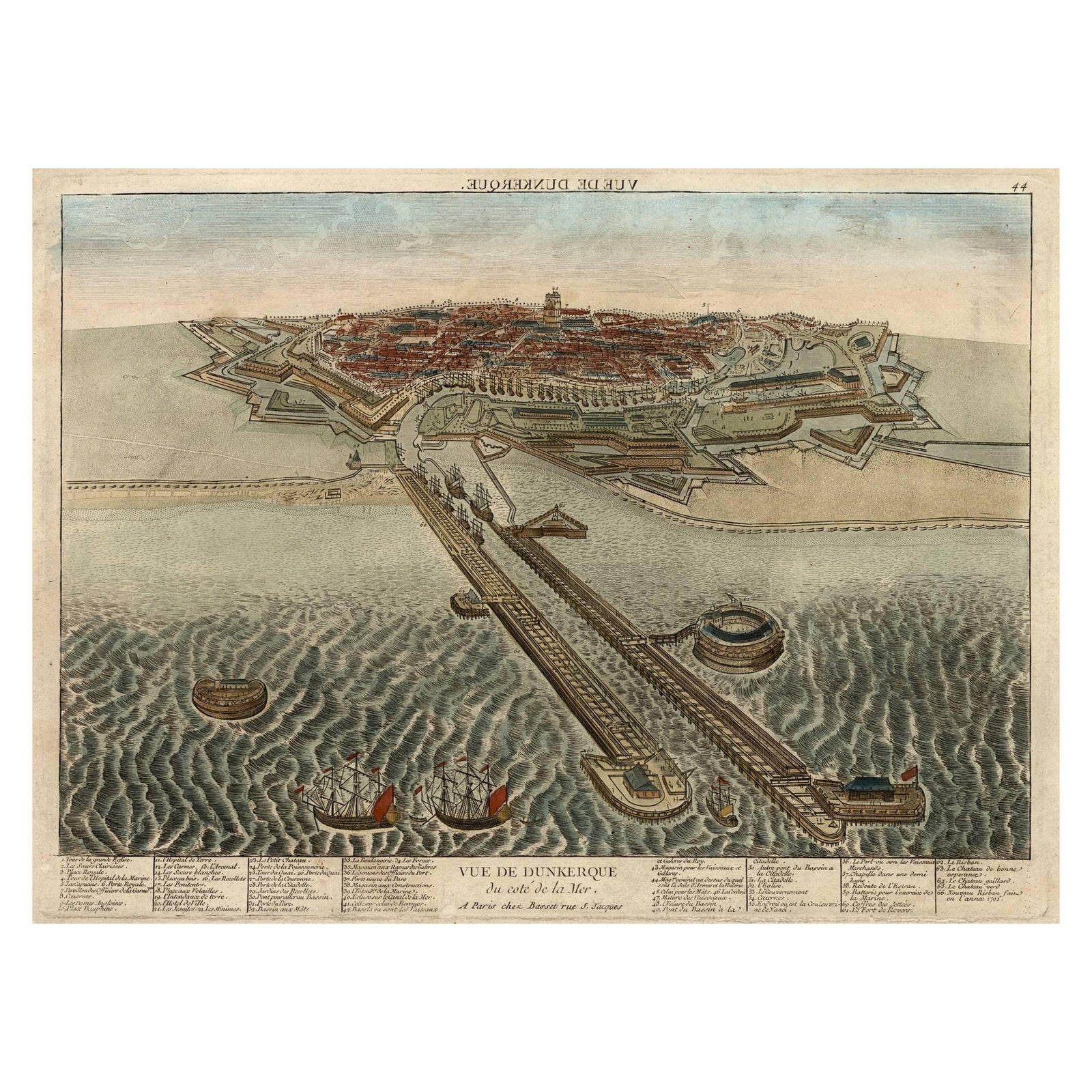
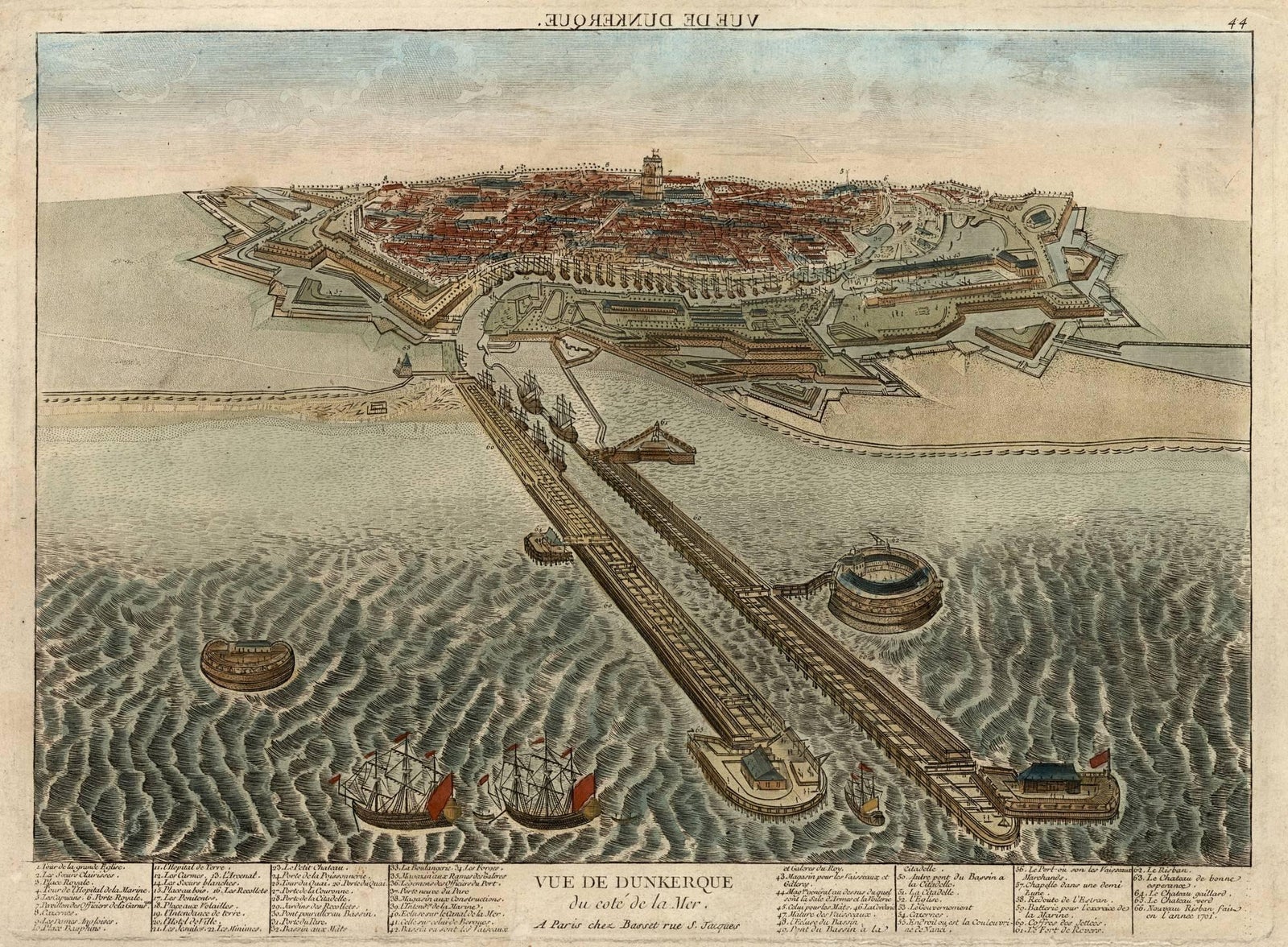
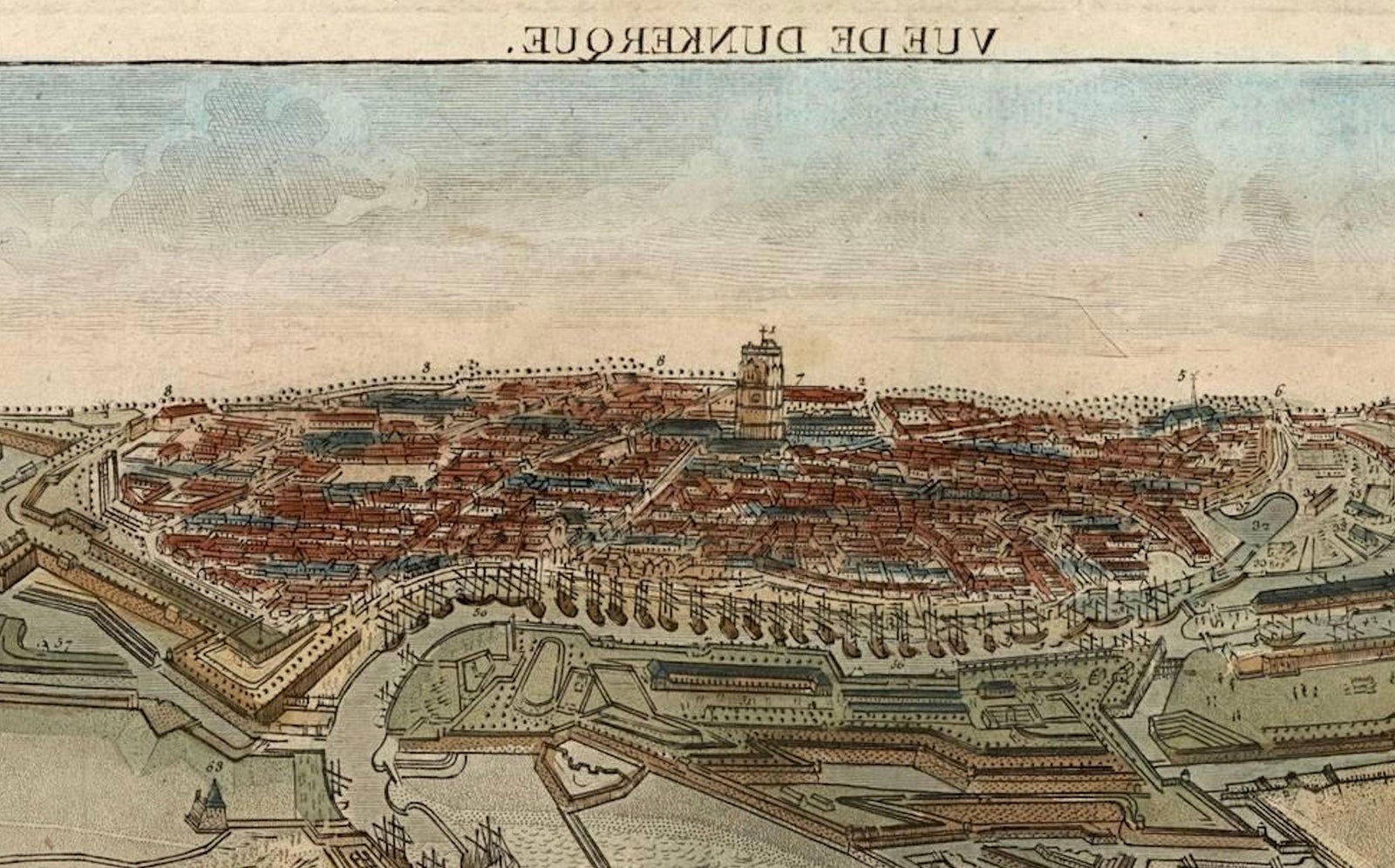
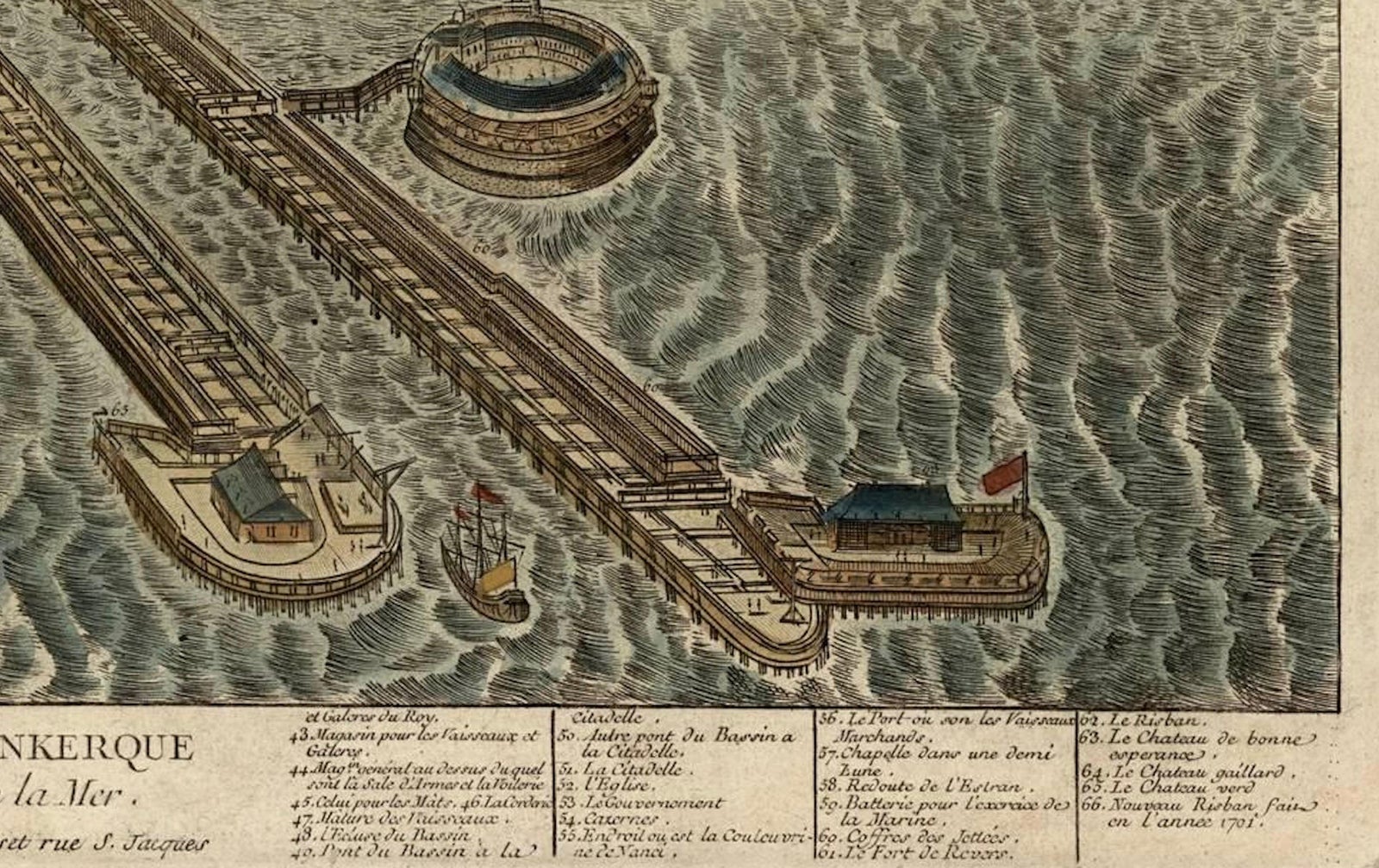
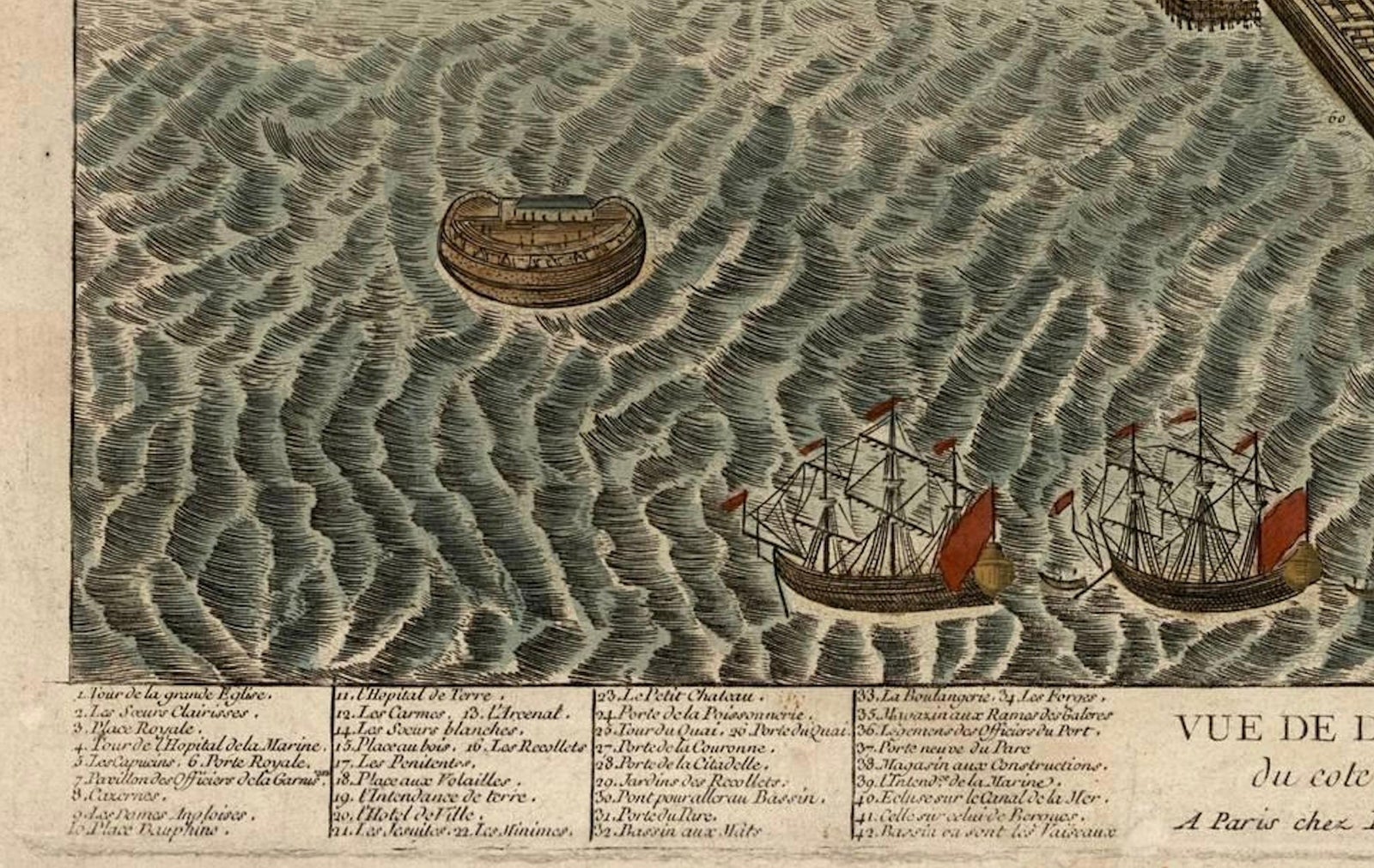
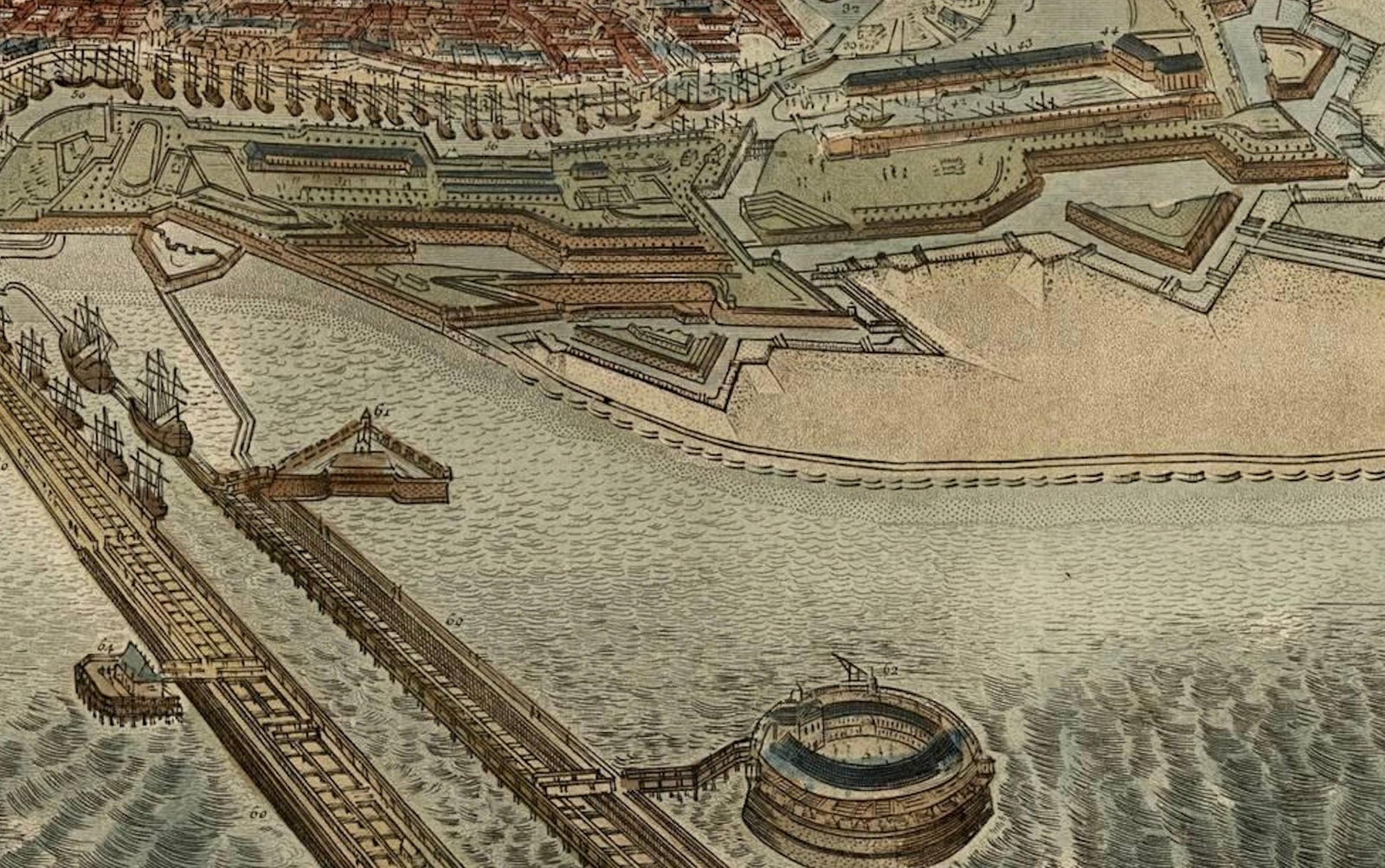
This engraving, titled Vue de Dunkerque du coté de la Mer, is a spectacular bird's-eye view of Dunkirk from the sea, published by Basset around 1770.
It provides a detailed panoramic perspective of the fortified town and its harbor, showcasing ships, fortifications, and jetties. The engraving includes a French legend with 66 numbered buildings, offering a comprehensive view of the key landmarks. The hand-colored optical print was made for use in perspective machines, giving viewers a dramatic, immersive experience of Dunkirk's port.
The artwork exemplifies the 18th-century fascination with military ports and strategic towns, reflecting Dunkirk's historical importance as a military and trading hub during this period.
This is an optical print, also known as a "vue d'optique." These types of engravings were designed to be viewed through a perspective machine, which would enhance the illusion of depth and create a three-dimensional effect. The hand-colored details and the bird's-eye perspective further added to the immersive experience, making it popular for entertainment in the 18th century. The print was often used in salons or theaters for visual storytelling and travel.
EXPLORE