Close-ups
Framed and on the wall
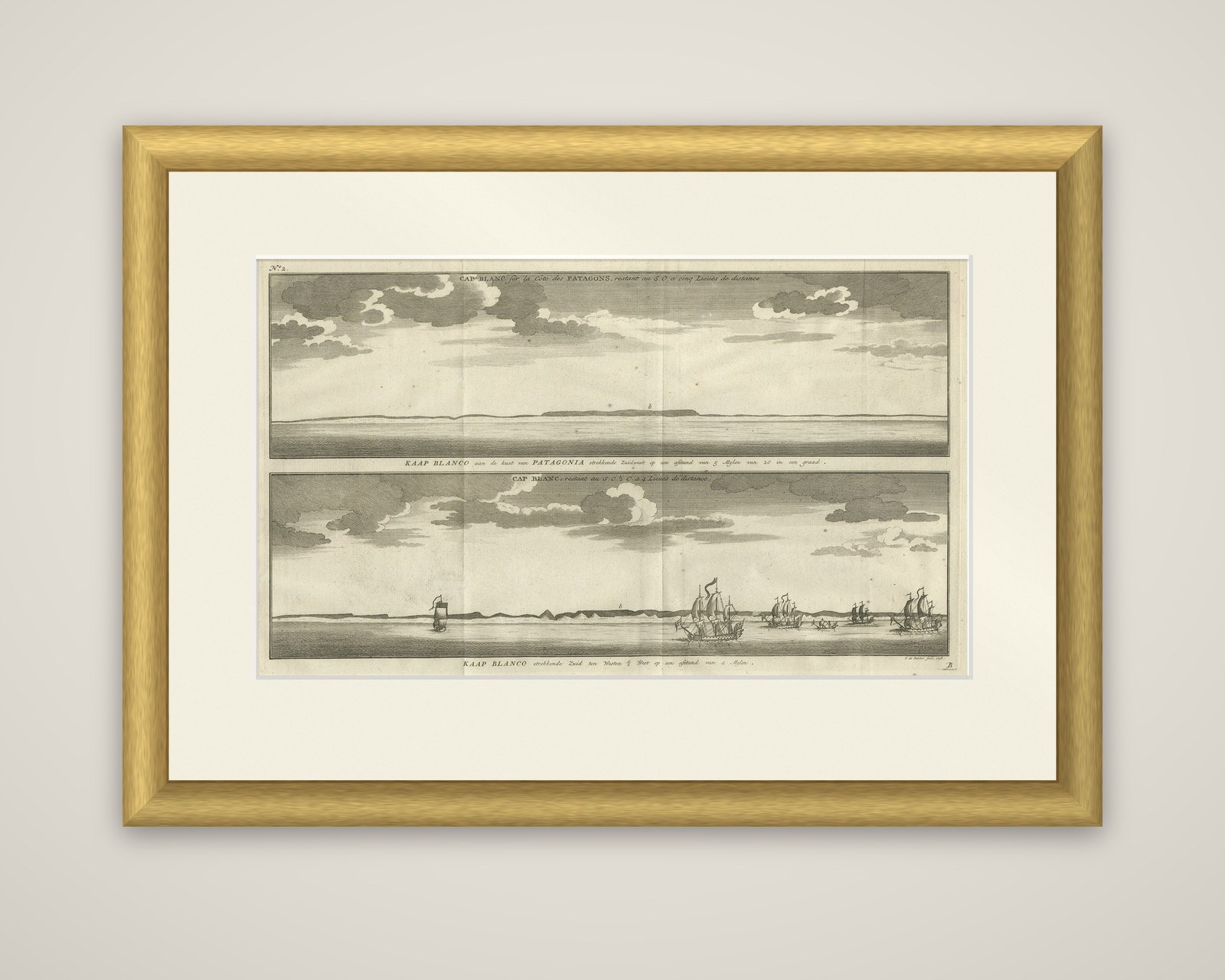
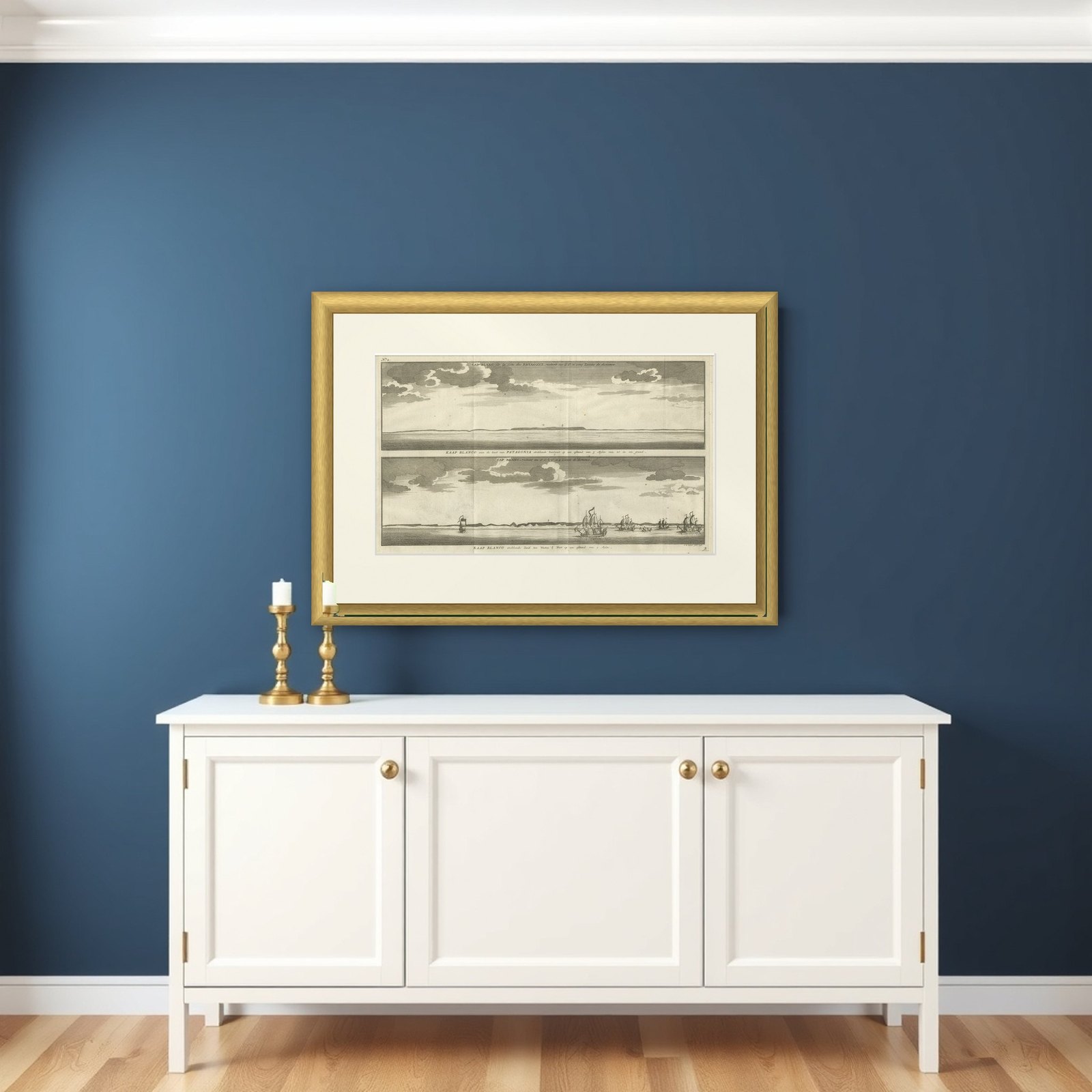
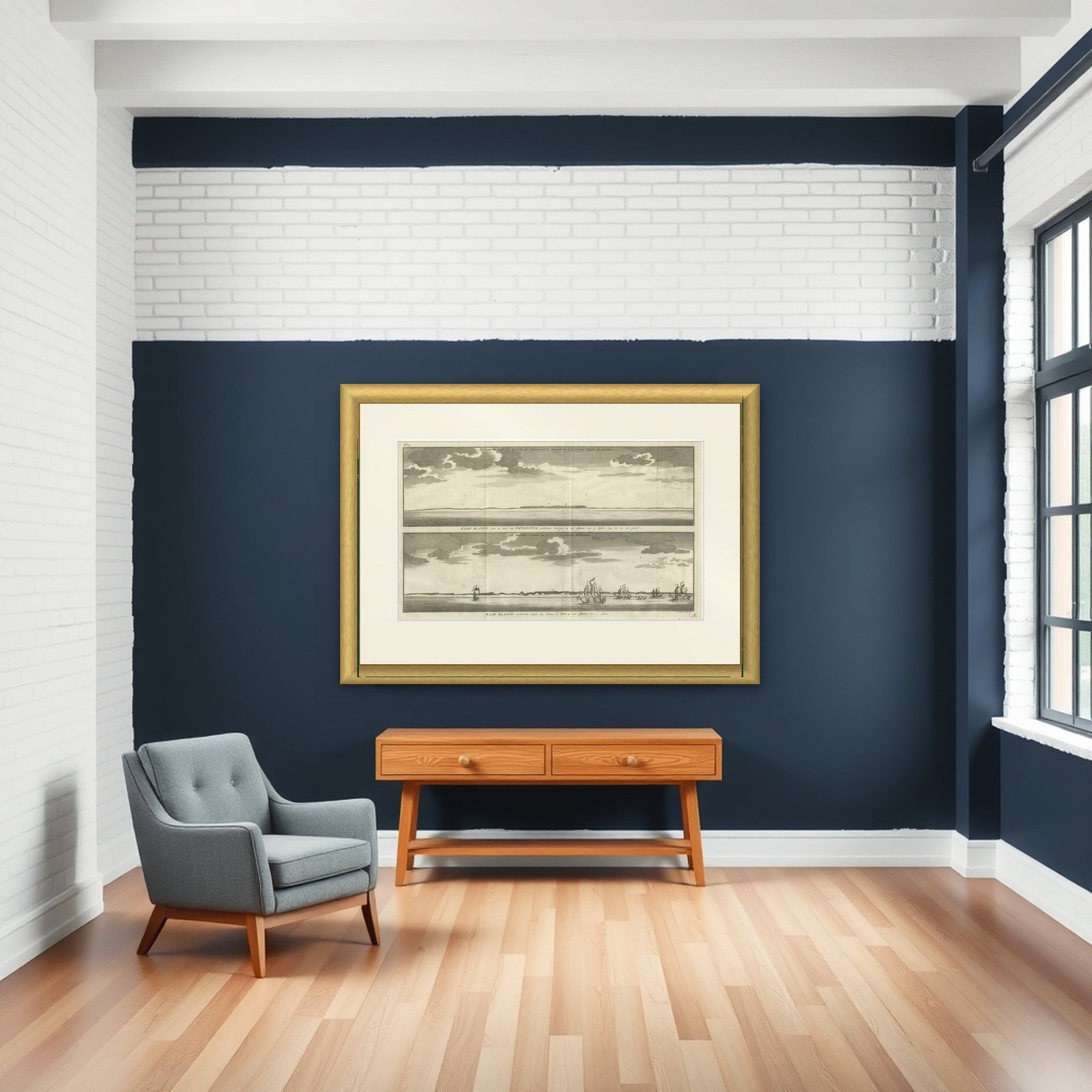
Frame and rooms are illustrations of how the piece could look; it is sold unframed unless the description says otherwise.
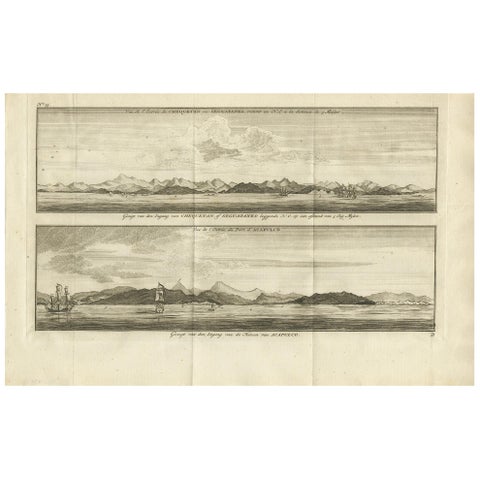
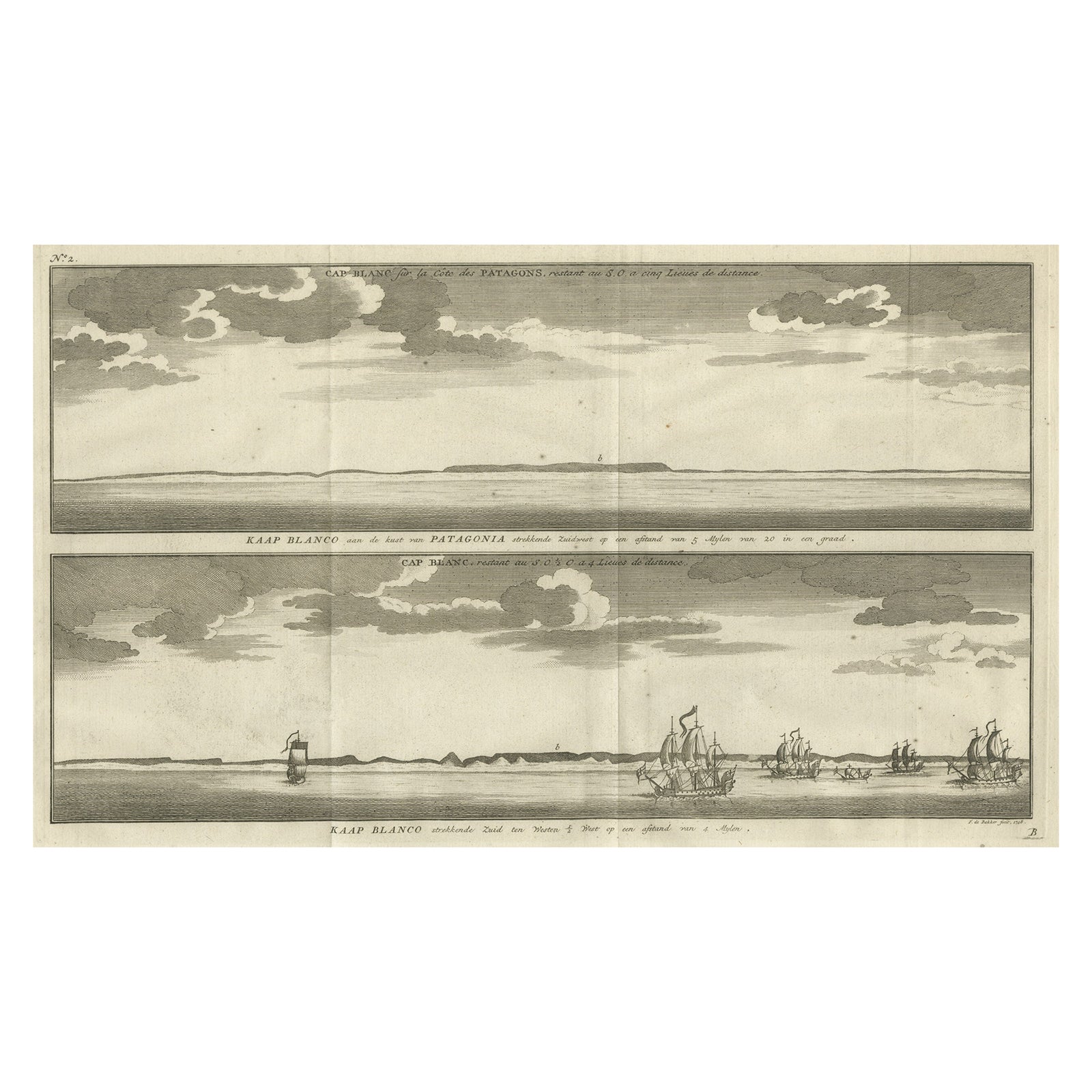
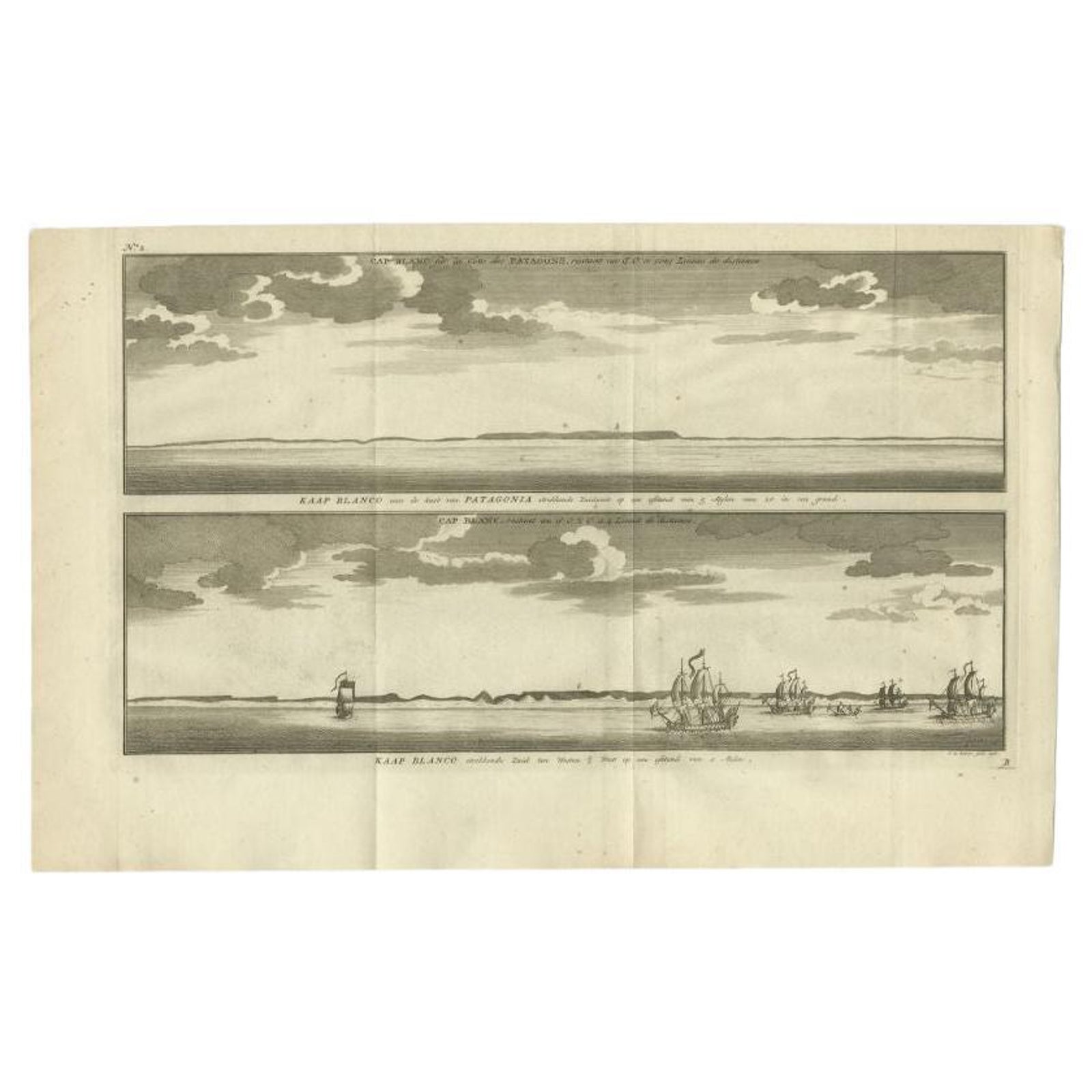
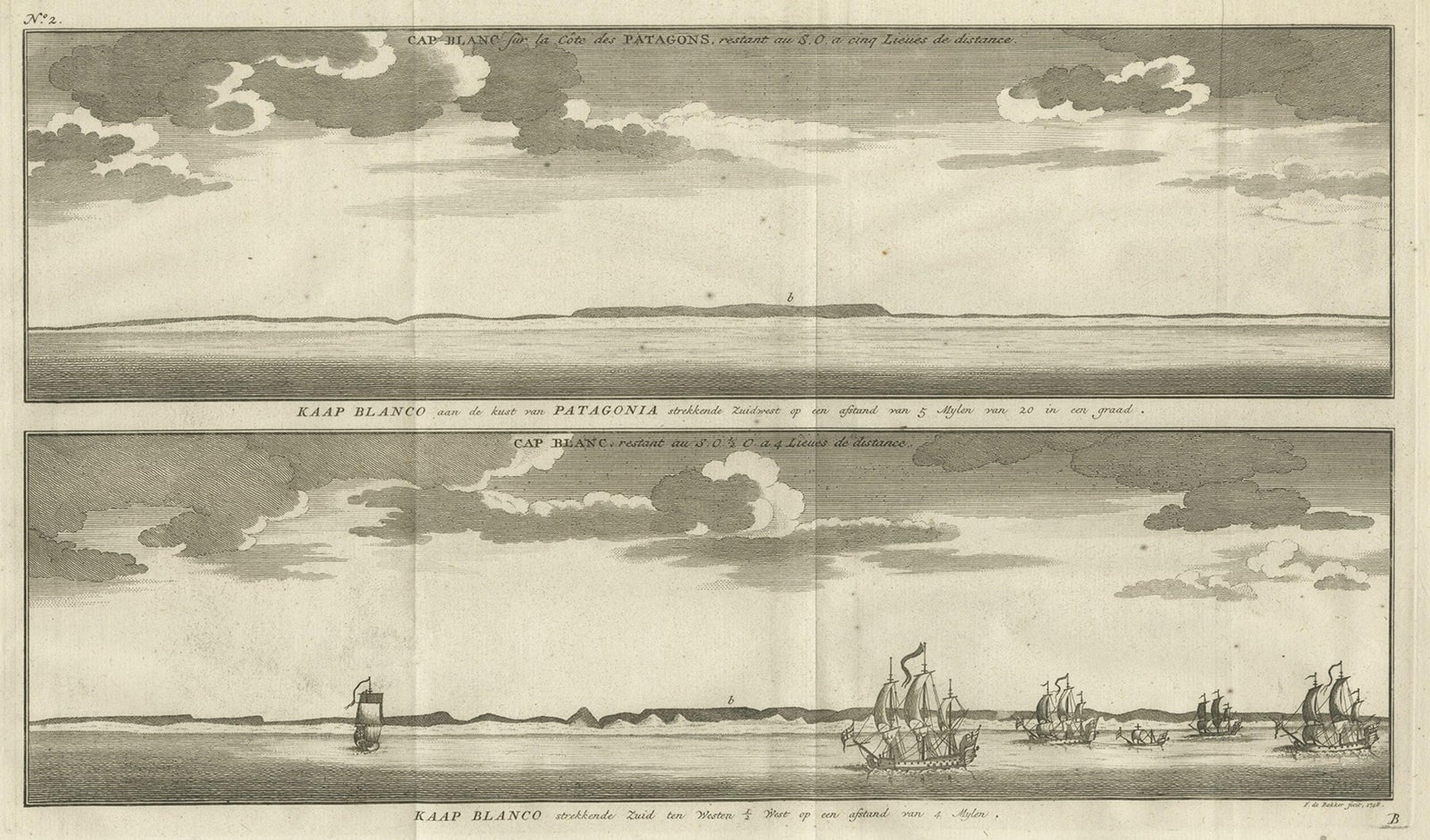
Antique Print with Views of Cape Blanco on the Patagonia / Argentina Coast, 1749
€220
$245 · £185
Original print, not a reproduction.
Ships worldwide from the Netherlands, flat, insured and tracked. 14-day returns. To buy, use Ask a question and we will reserve it for you.
- Date
- 1749
- Sheet size
- 10.6 × 16.7 in (27 × 42.5 cm)
- Condition
- Good. General age-related toning. Original folding lines. Minor wear. Blank verso, please study image carefully.
- Collection
- Voyages of discovery
- Era
- 1700 to 1789, Age of discovery
- Stock no.
- f_29334532
Cape Blanco on the coast of Patagonia, in two views with ships of George Anson's squadron, an original copper engraving from the Dutch edition of his voyage, Reize rondsom de Werreld, published in 1749. Each panel is lettered in French and Dutch: the upper "Cap Blanc sur la Cote des Patagons, restant au S.O. a cinq Lieues de distance" with "Kaap Blanco aan de kust van Patagonia", and the lower a second "Cap Blanc" view in which the headland bears south west by south.
The upper panel is almost empty: a low flat headland lies along the horizon, beneath a sky of heavy cloud. In the lower panel the same shore stretches across the sheet as a thin ridge beyond several ships under sail, with a small boat nearby in the right foreground. The plate shows how little there was to see of this coast from the sea, and the engraver used the sky as the main source of interest.
Such profiles were drawn so that later navigators could recognize their landfall. Cape Blanco, on the Argentine coast, was one of the marks on the way south toward the Strait of Le Maire and Cape Horn.
EXPLORE