Close-ups
Framed and on the wall
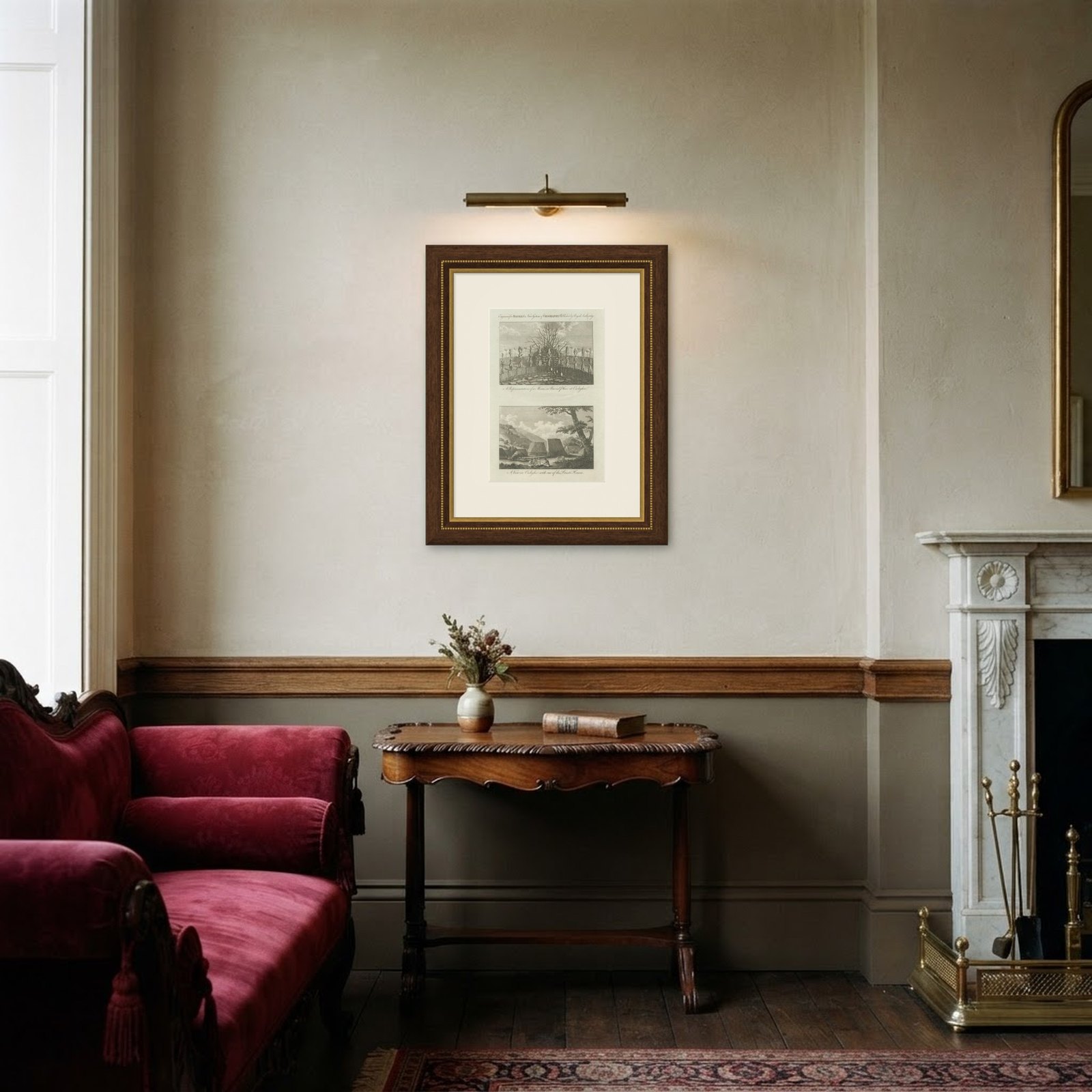
Frame and rooms are illustrations of how the piece could look; it is sold unframed unless the description says otherwise.
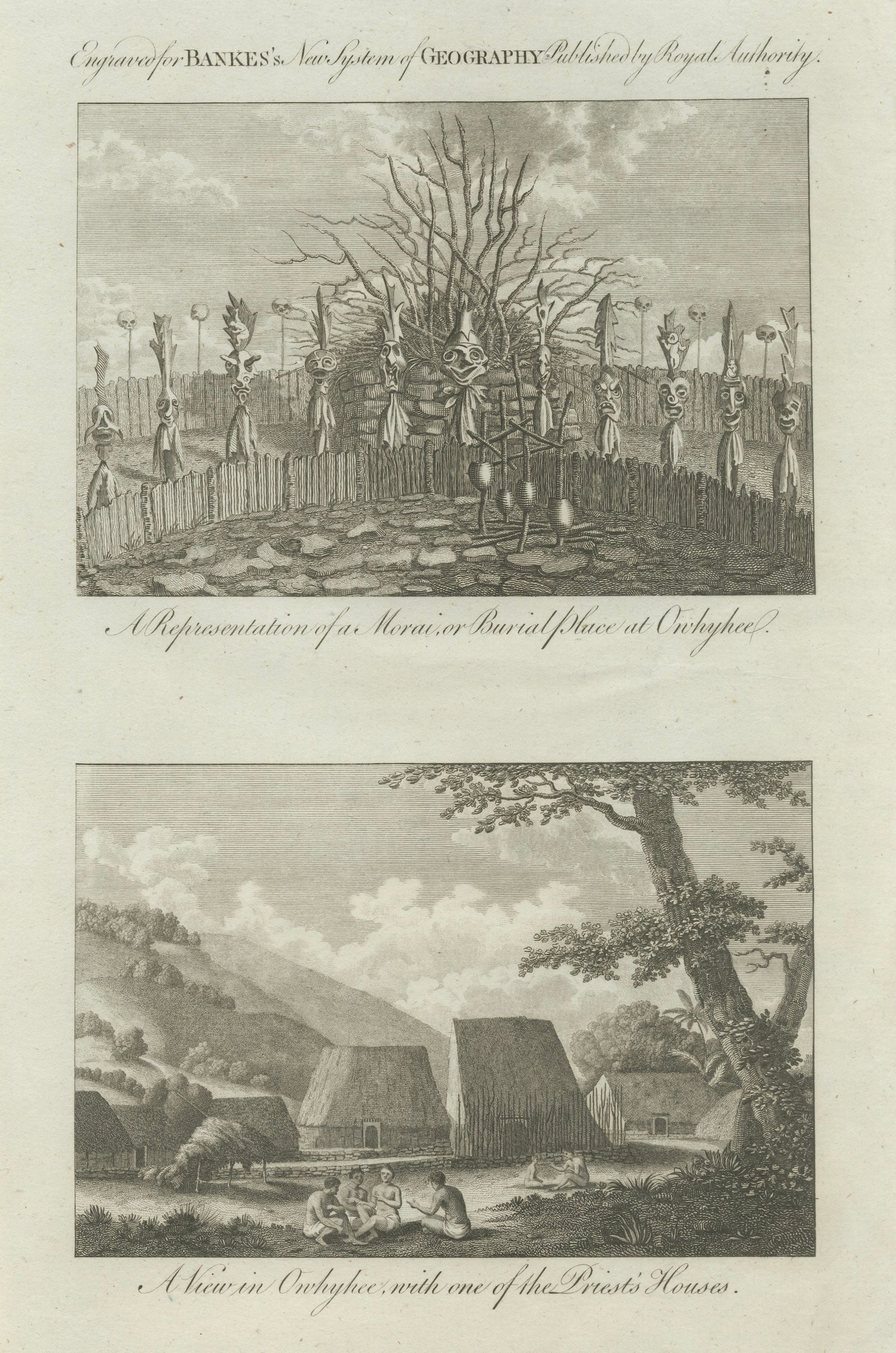
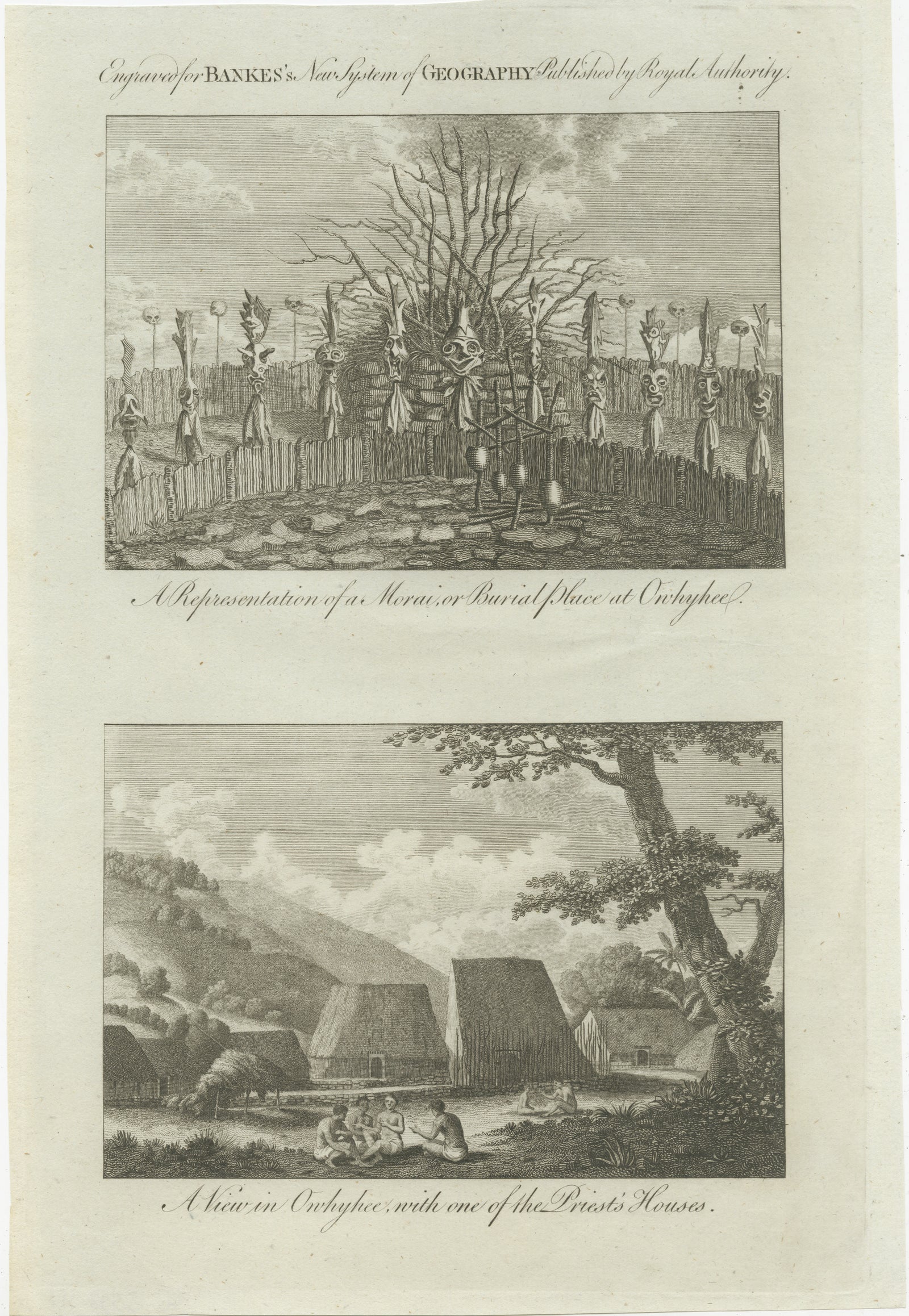
Hawaii Religious Site & Village Engravings, Owhyhee, Cook Voyage, c.1790
£185
$245 · €219
Original print, not a reproduction.
Ships worldwide from the Netherlands, flat, insured and tracked. 14-day returns. To buy, use Ask a question and we will reserve it for you.
- Date
- 1790
- Sheet size
- 13.2 × 9 in (33.5 × 22.8 cm)
- Condition
- Good. Condition for its age, with light age-related toning and minor spotting, mainly in the margins. The impressions remain clear and well-defined. Plate marks visible.
- Collection
- Voyages of discovery
- Era
- 1790 to 1849, Age of sail
- Stock no.
- f_49258192
Hawaii Religious Site & Village Engravings, Owhyhee, Cook Voyage, c.1790
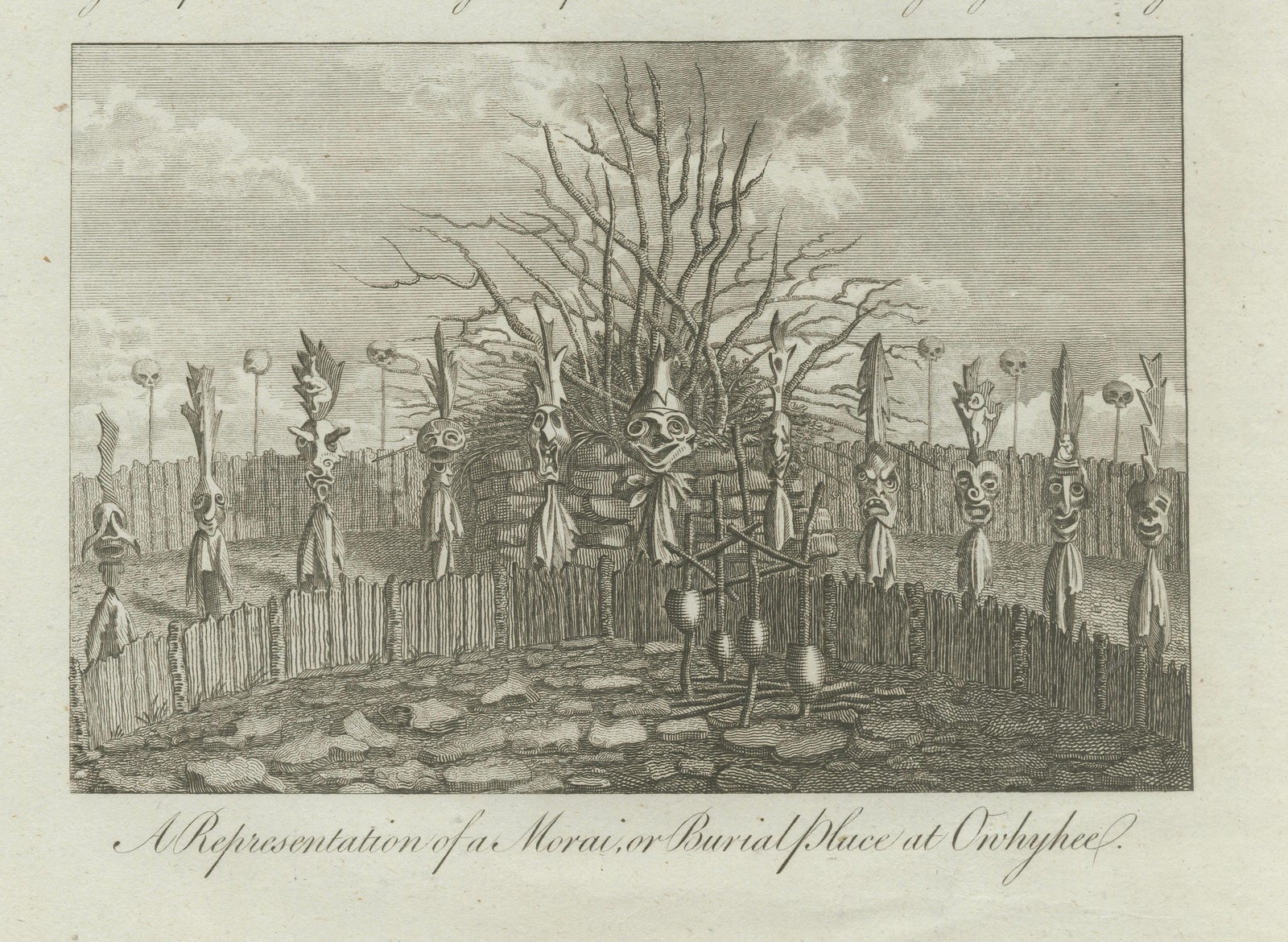
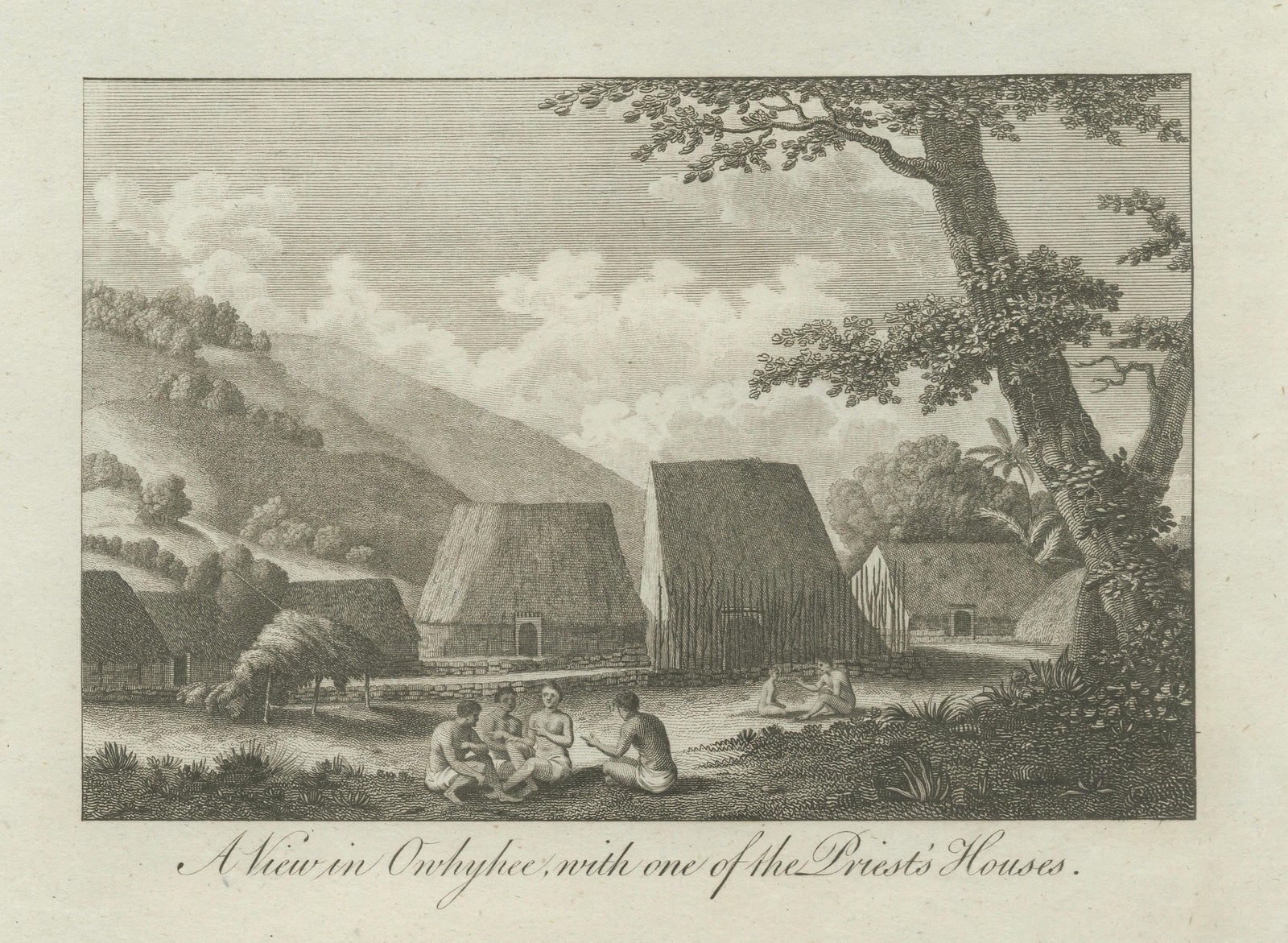
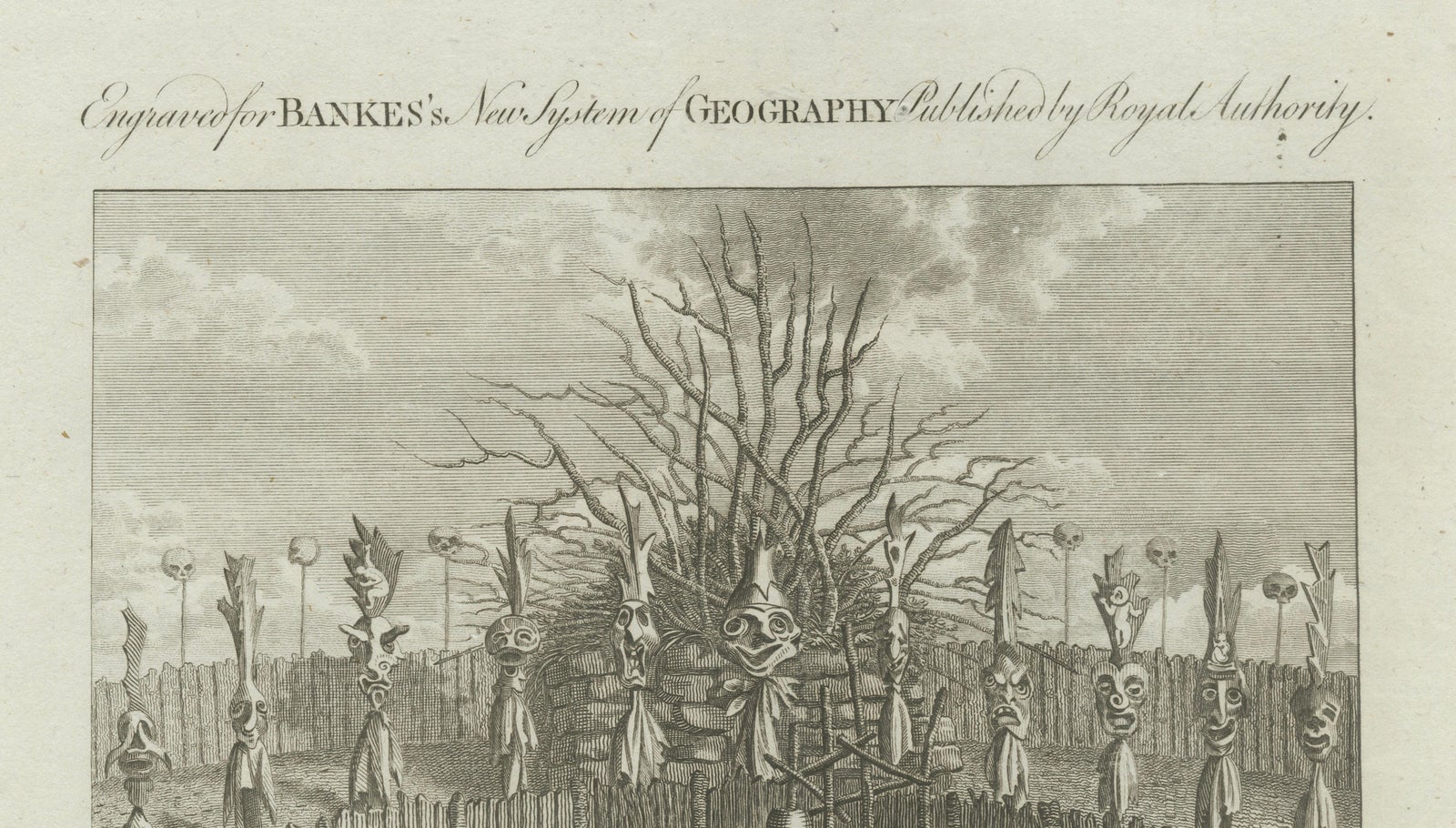
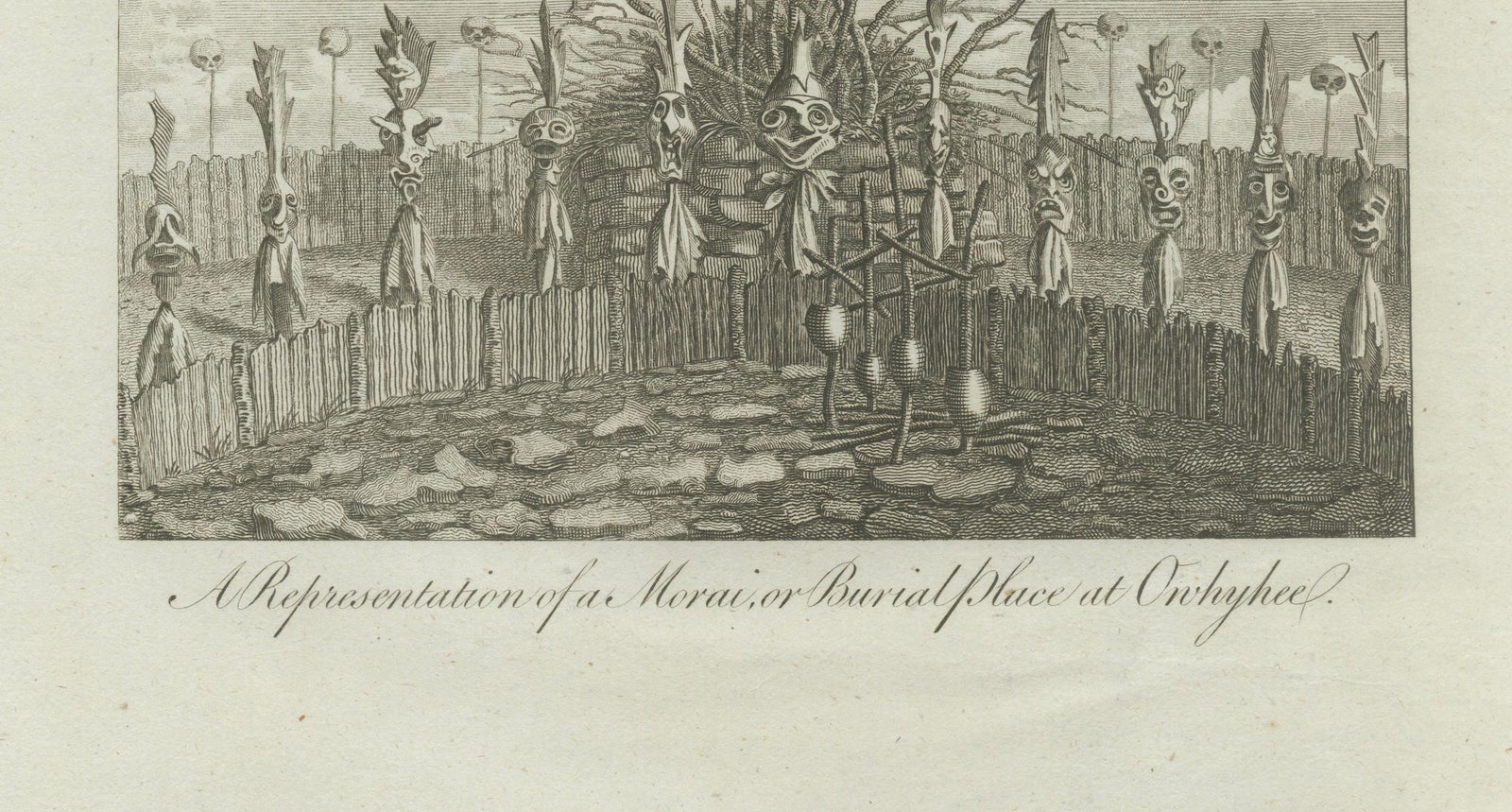
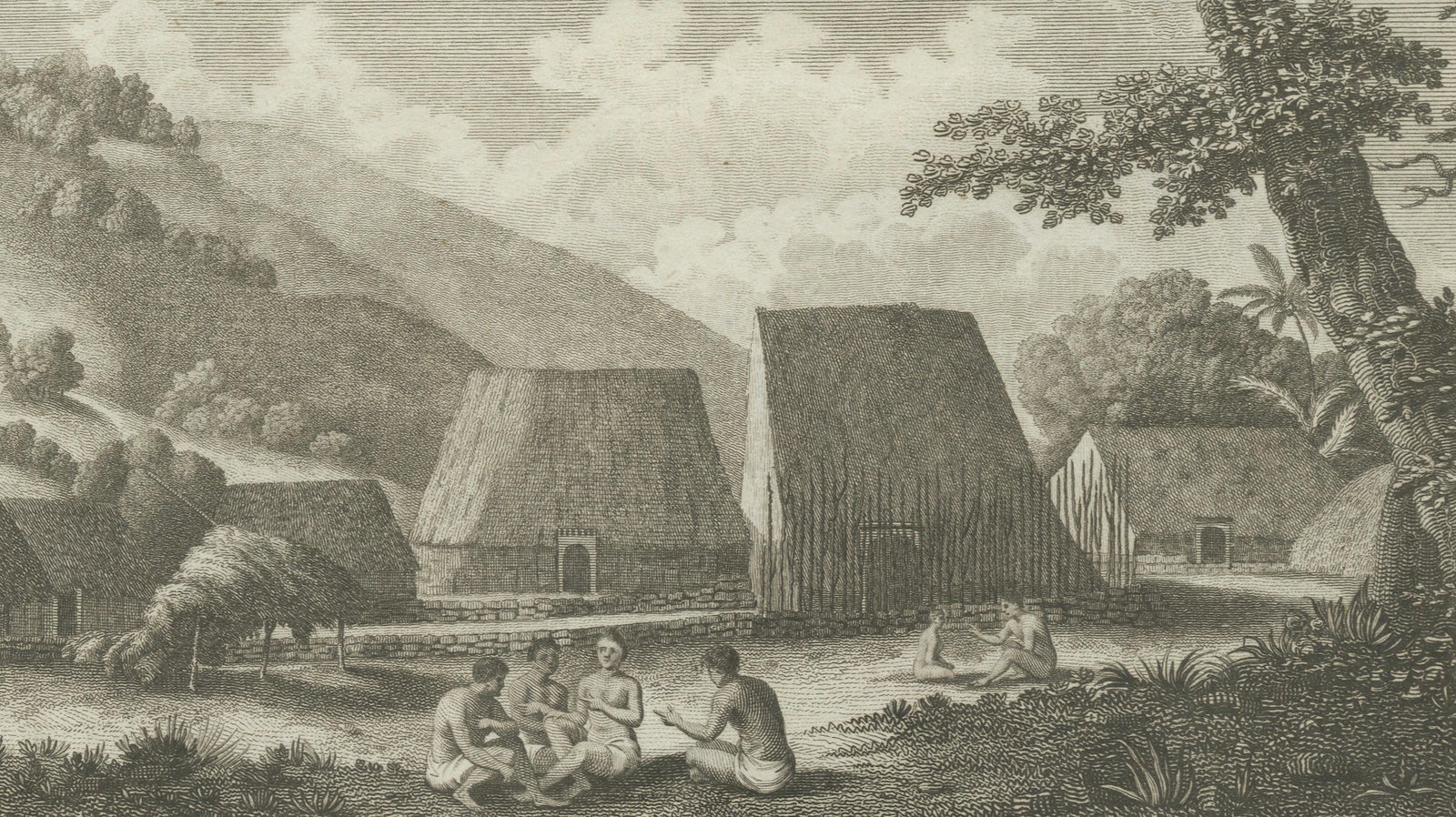
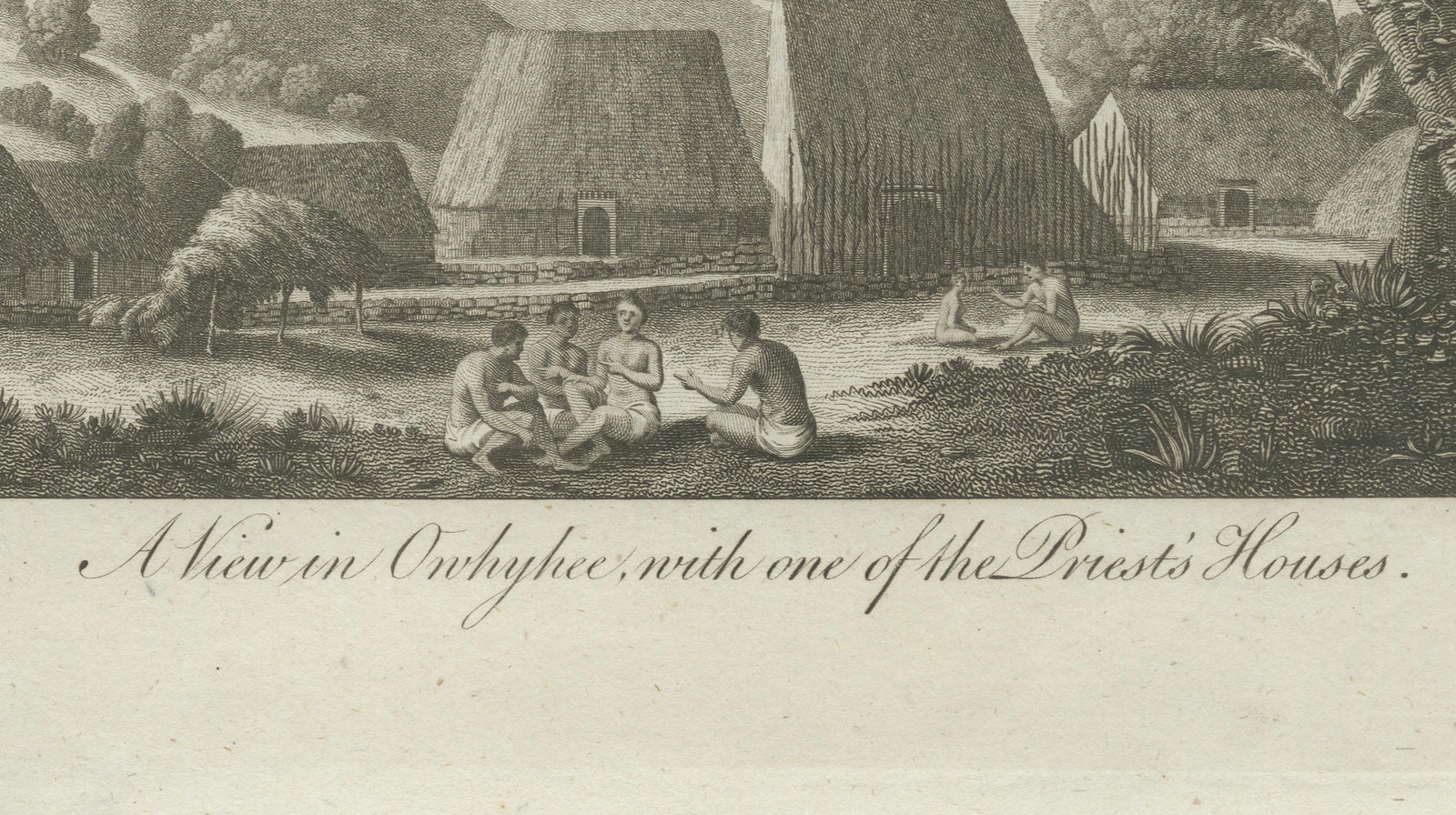
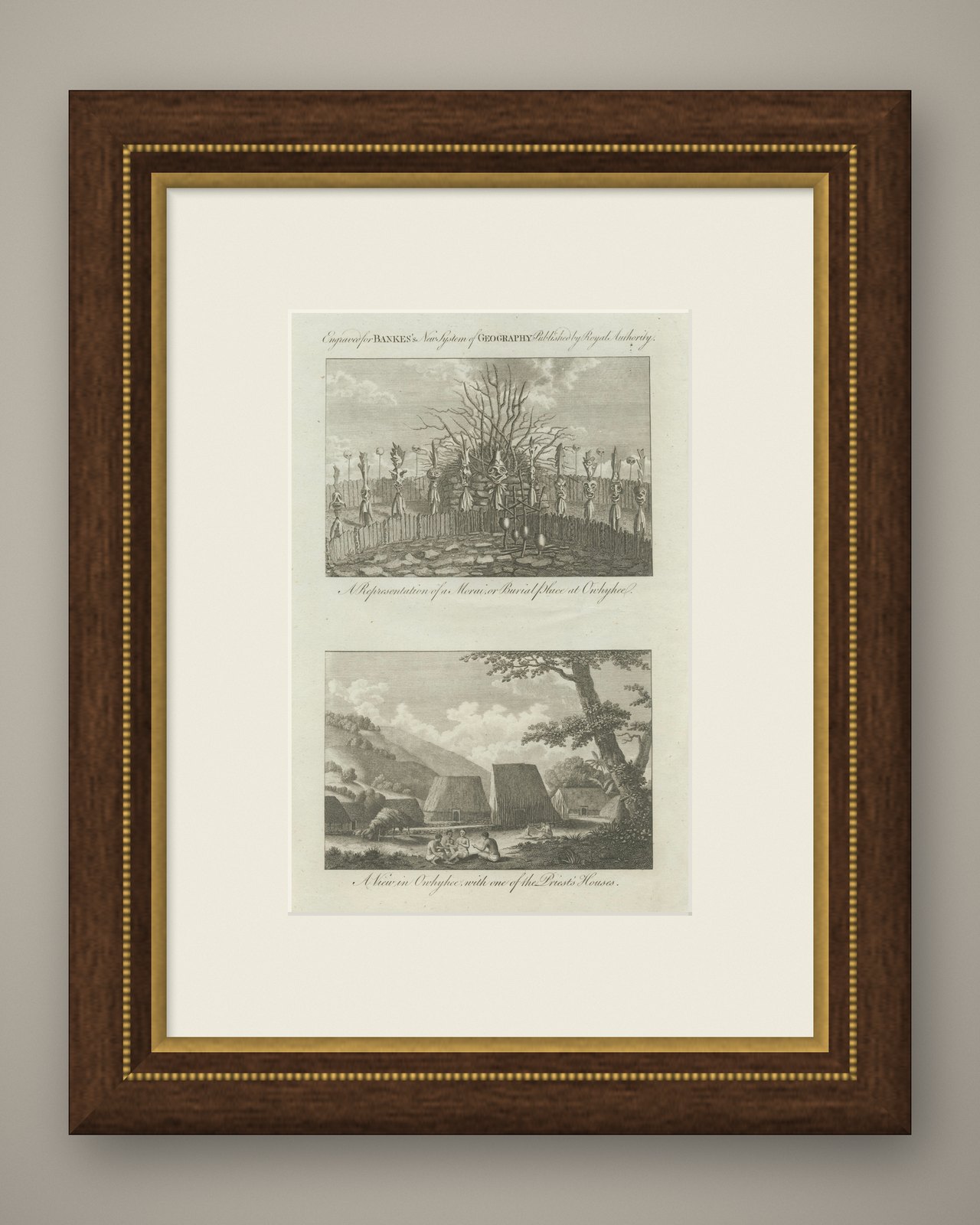
This refined and historically important late 18th-century engraving sheet presents two detailed views of Hawaiian life and sacred spaces, titled “A Representation of a Morai, or Burial Place at Owhyhee” and “A View in Owhyhee with one of the Priest’s Houses.” Published in London circa 1787–1790 as part of Thomas Bankes’s New System of Geography, the sheet reflects European attempts to document and interpret the cultures encountered during Captain James Cook’s third Pacific voyage.
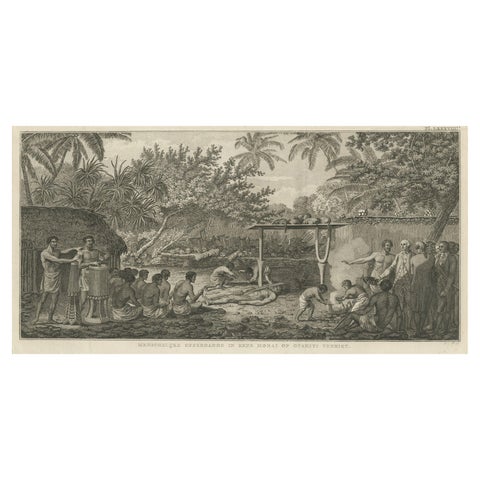
The upper scene offers a rare and compelling depiction of a Hawaiian morai (heiau), a sacred religious enclosure associated with burial practices and ritual activity. The composition is striking: carved figures, ceremonial posts, and human remains are arranged around a central structure, conveying both the spiritual significance of the site and the European fascination with what they perceived as exotic religious customs. The symmetrical layout and carefully rendered details give the scene a powerful visual presence.
The lower scene provides a calmer, pastoral contrast, showing a village setting with traditional thatched structures, including a priest’s house. Figures are depicted in a moment of daily life, seated and conversing in the foreground, while the surrounding landscape of trees and mountains creates a serene tropical atmosphere. This image offers insight into the architectural and social environment of Hawaii as observed by European visitors in the late 18th century.
Both engravings are based on the work of John Webber, the official artist on Cook’s third voyage (1776–1780), whose drawings formed one of the earliest visual records of the Hawaiian Islands available in Europe. The engravings translate these observations into the refined visual language of late 18th-century printmaking, combining documentary intent with decorative elegance.
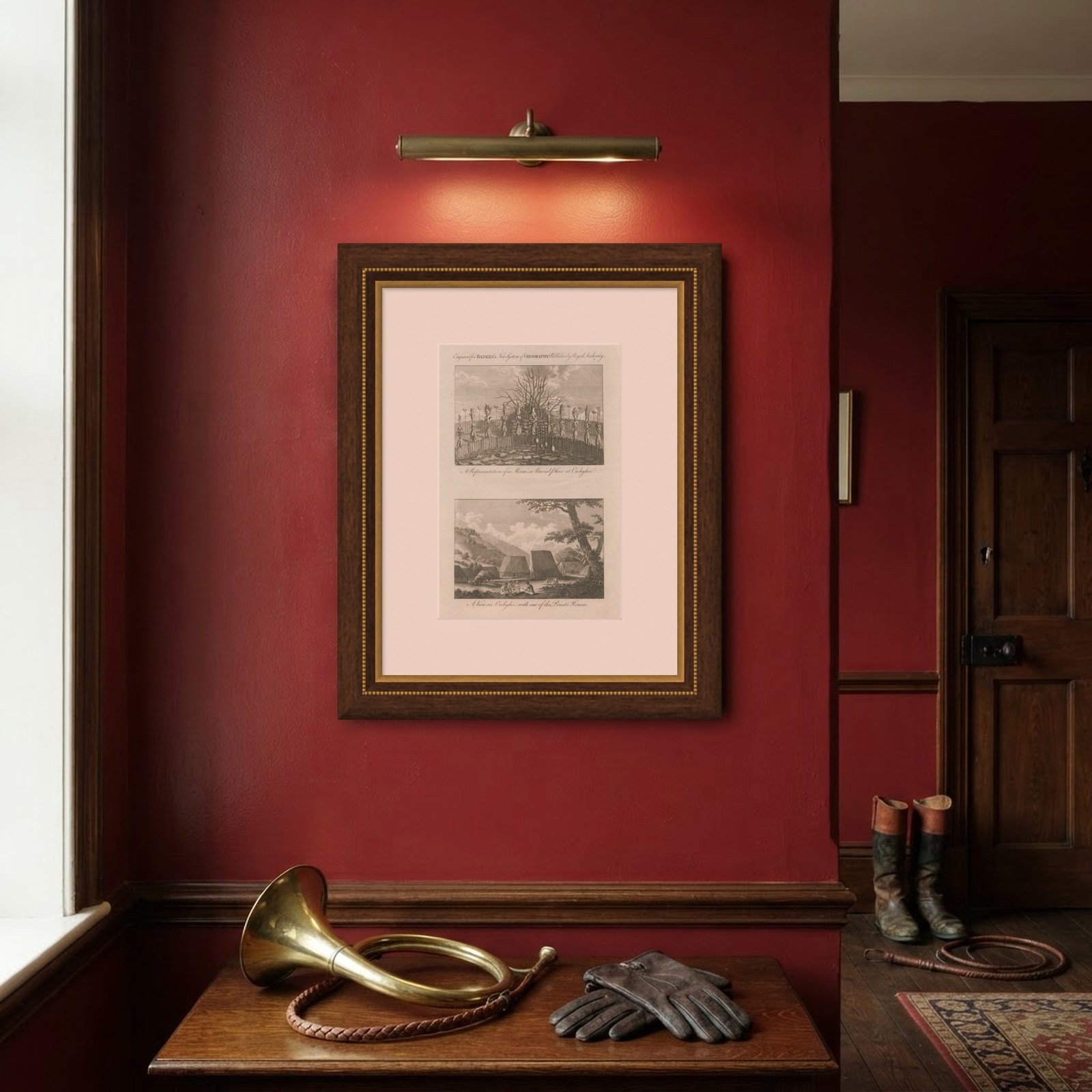
As a decorative piece, this sheet is particularly versatile. The dual composition balances dramatic ethnographic imagery with tranquil landscape, making it suitable for a wide range of interiors, from classic and scholarly settings to globally inspired contemporary spaces. It pairs especially well with other Pacific exploration prints or natural history works.
Condition: Good condition for its age, with light age-related toning and minor spotting, mainly in the margins. The impressions remain clear and well-defined. Plate marks visible.
Framing tips: Best presented with a generous ivory or museum-white mat to separate the two scenes and highlight the engraved detail. A dark walnut or ebonized frame enhances contrast and complements the historical character of the work.
Technique: Copperplate engraving
Maker: Thomas Bankes (after John Webber), London, circa 1787–1790