Close-ups
Framed and on the wall


Frame and rooms are illustrations of how the piece could look; it is sold unframed unless the description says otherwise.
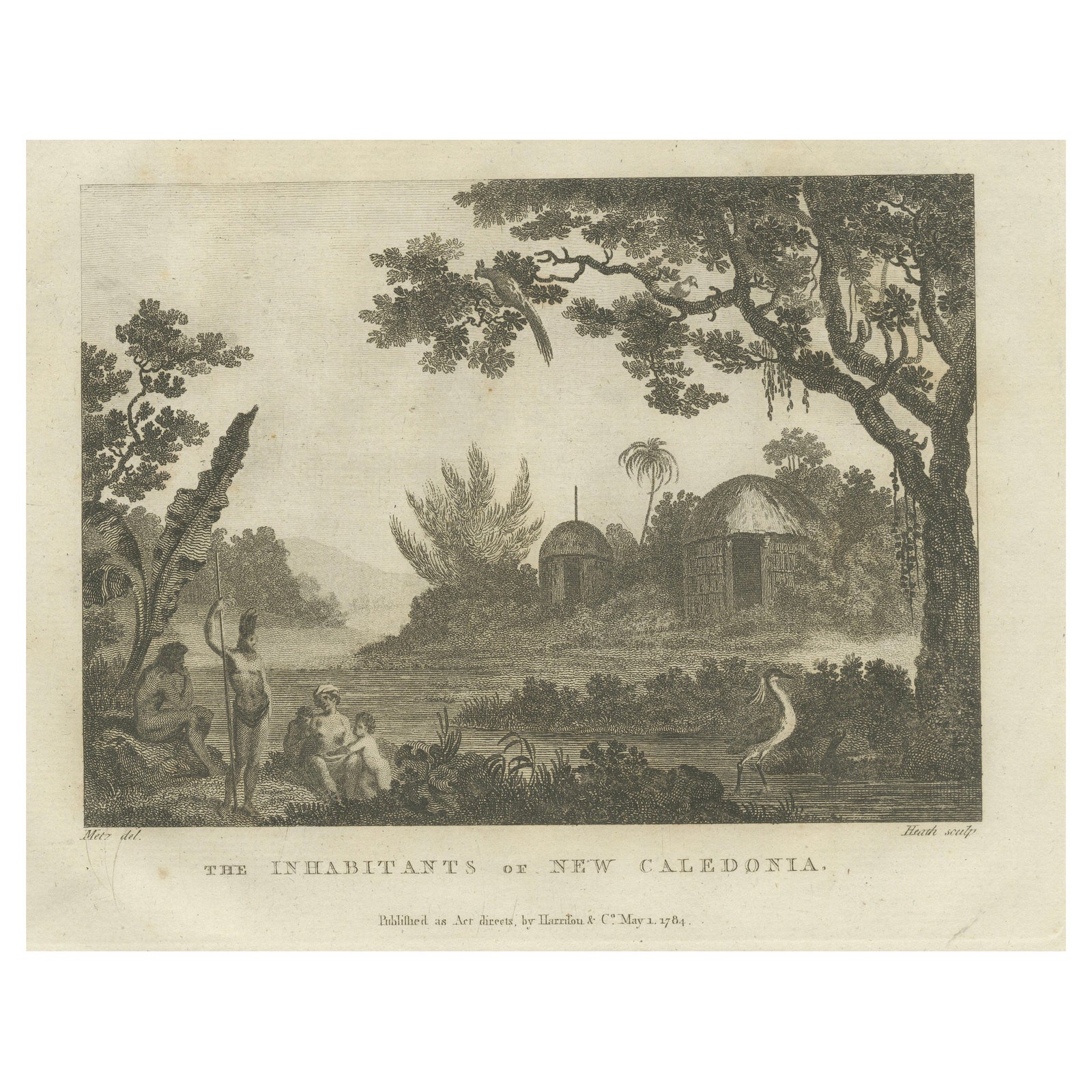
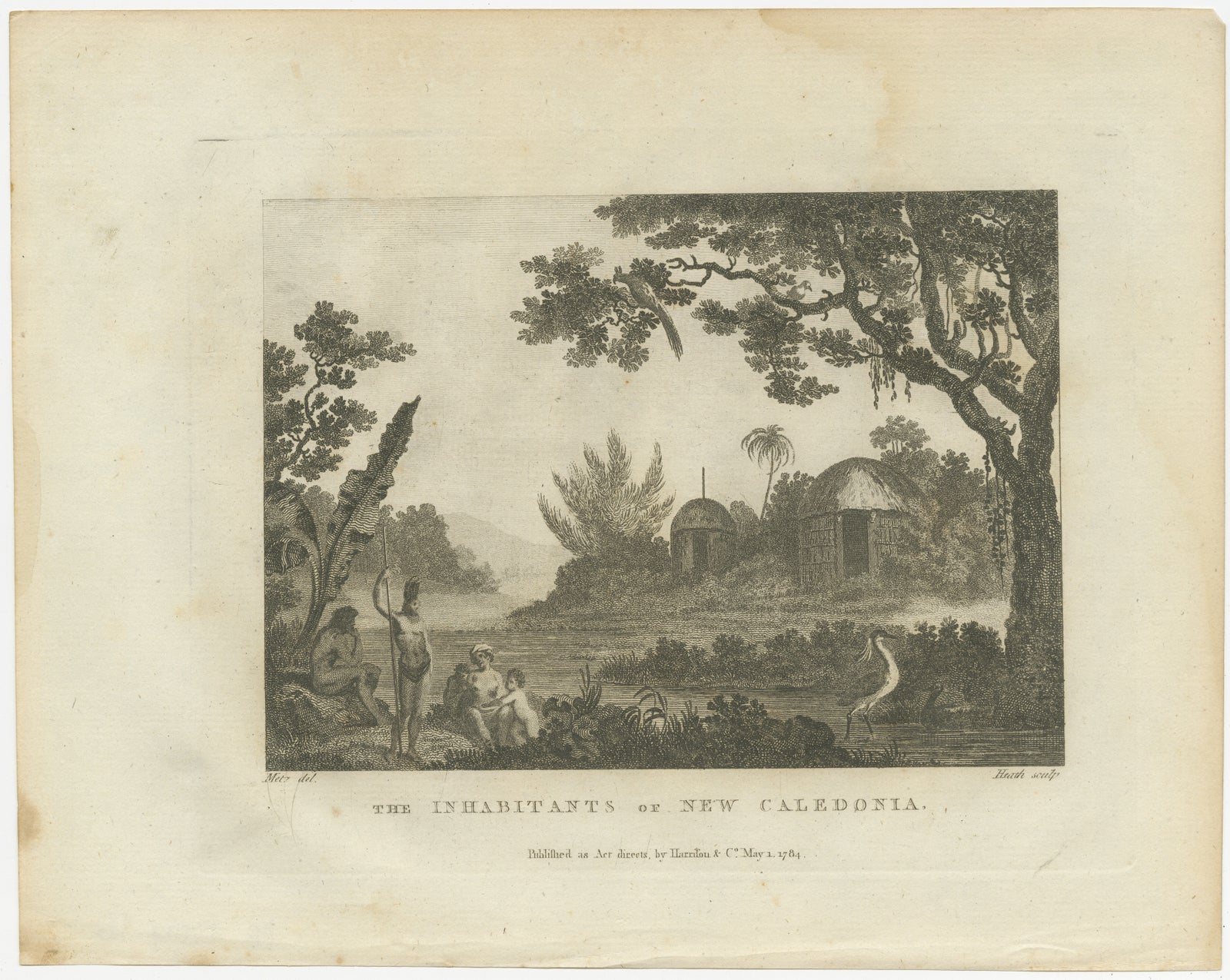
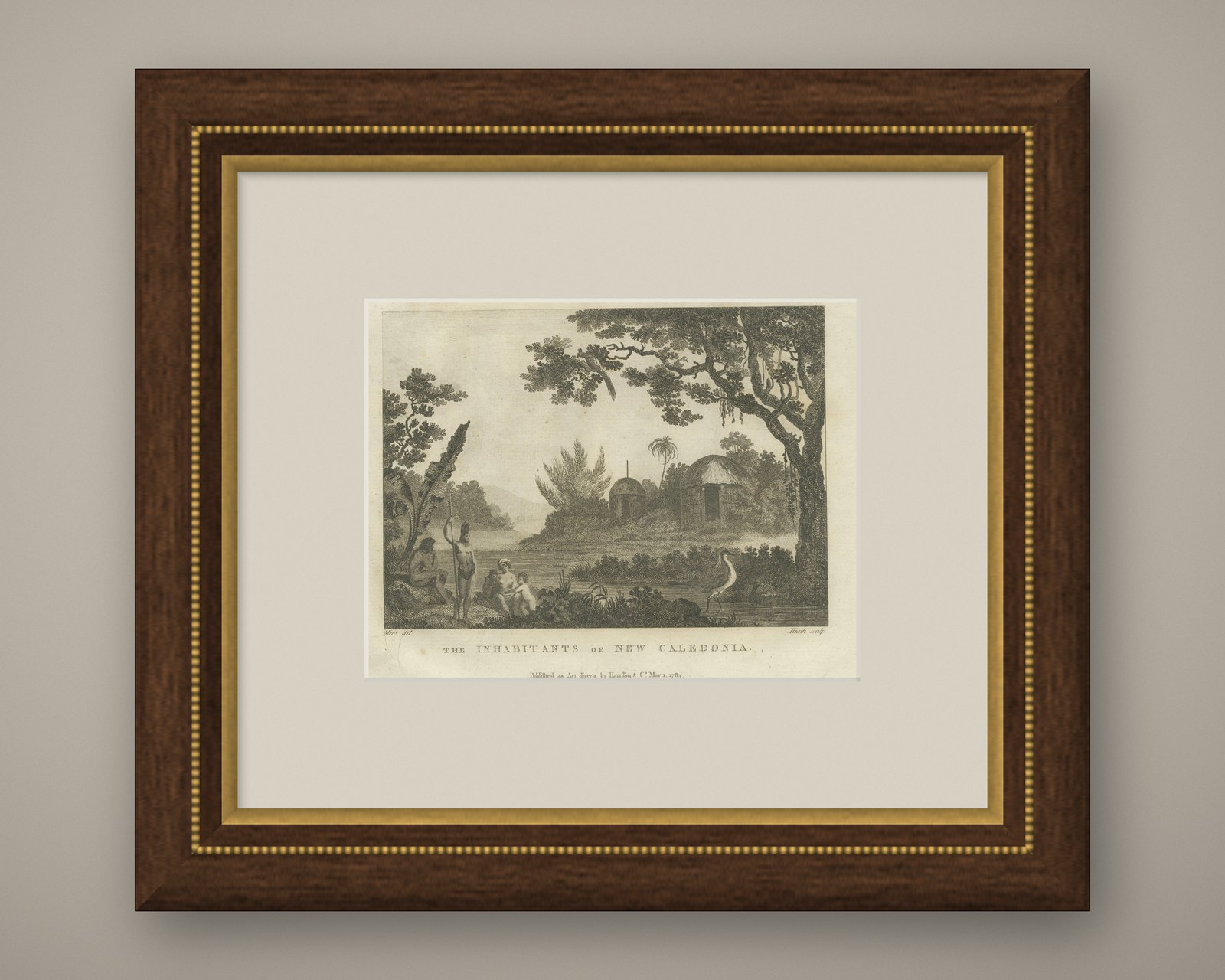
Serene Daily Life in New Caledonia: A Captured Moment from Cook's Voyages, 1784
$380
€340 · £290
Original print, not a reproduction.
Ships worldwide from the Netherlands, flat, insured and tracked. 14-day returns. To buy, use Ask a question and we will reserve it for you.
- Date
- 1784
- Sheet size
- 7.9 × 10.2 in (20 × 26 cm)
- Condition
- Good. Good. Overal light toning and light soiling but the image itself clean. Aged paper with typically warm, yellowish-brown hue, mostly around the edges. Study the images carefully.
- Collection
- Voyages of discovery
- Era
- 1700 to 1789, Age of discovery
- Stock no.
- f_37937602
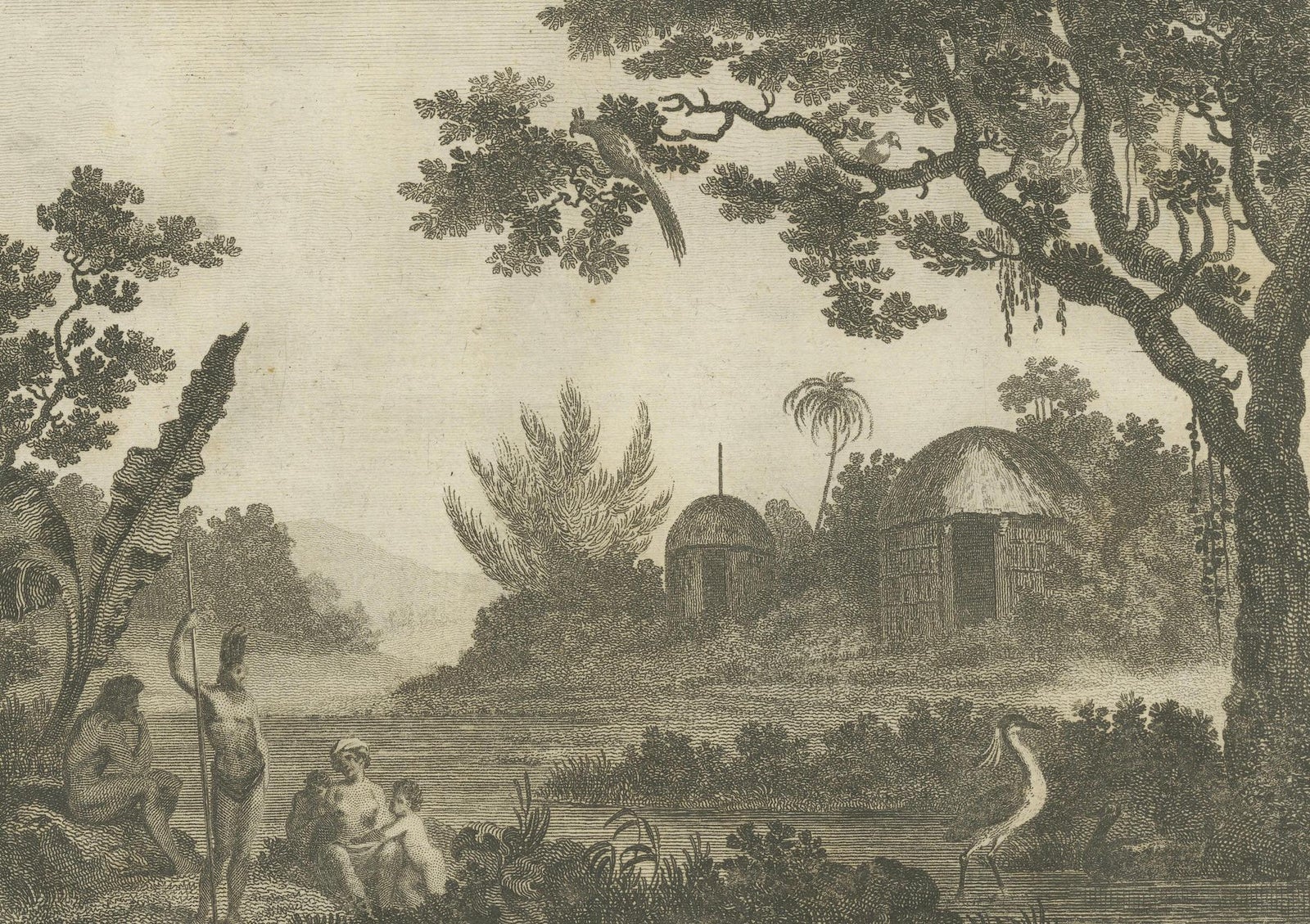
This antique engraving titled "The Inhabitants of New Caledonia" appears to be from the accounts of Captain James Cook's travels. The image depicts a scene from New Caledonia, an archipelago in the Pacific Ocean that was encountered by Cook during his voyages.
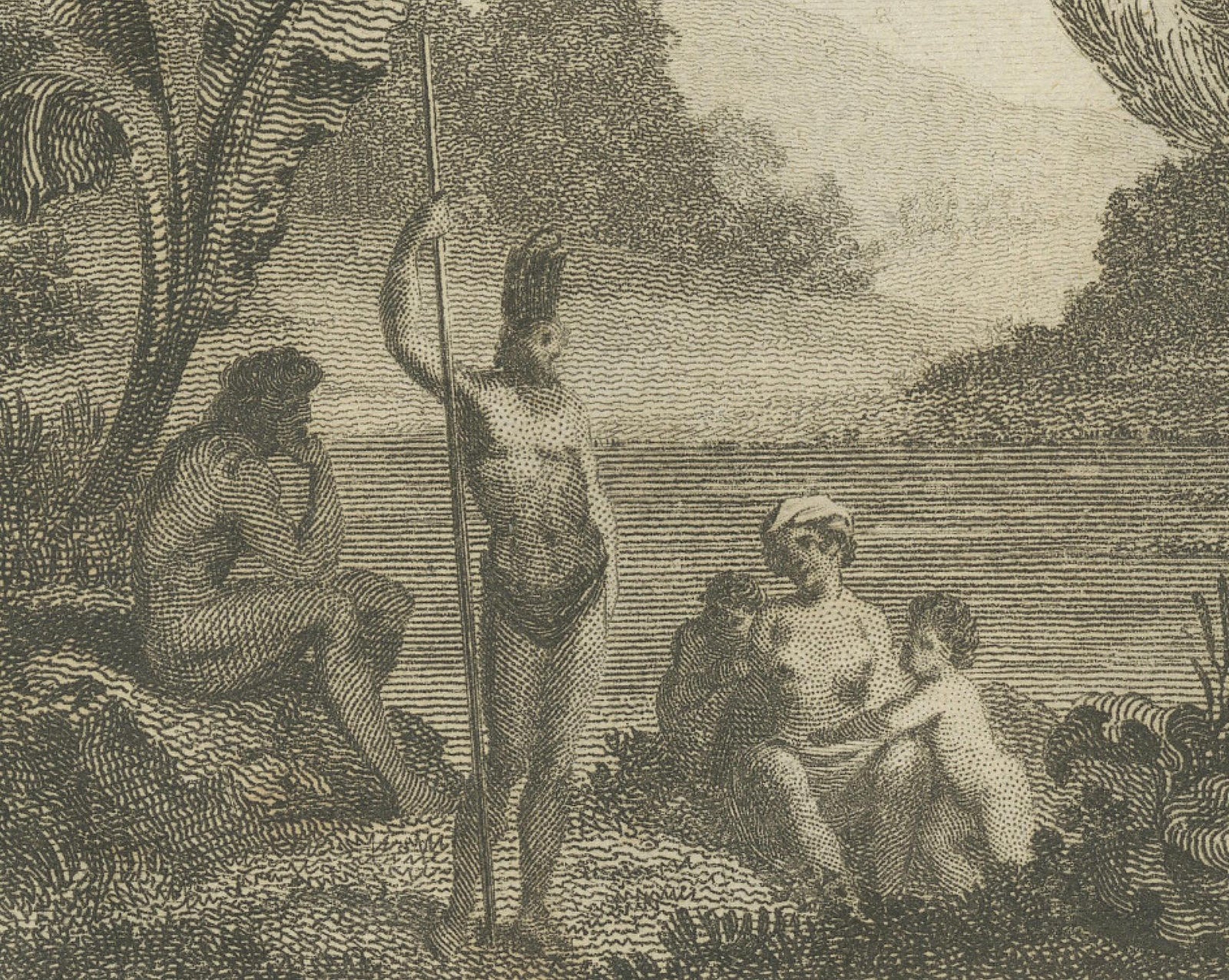
In the scene, we see a group of New Caledonian natives engaged in daily activities within a lush, tropical landscape. The indigenous people are portrayed in various states of activity and repose. One stands with a spear, looking out over the scene, possibly on the lookout or hunting, while others sit or recline near a fire, suggesting a communal living space or a moment of social gathering.
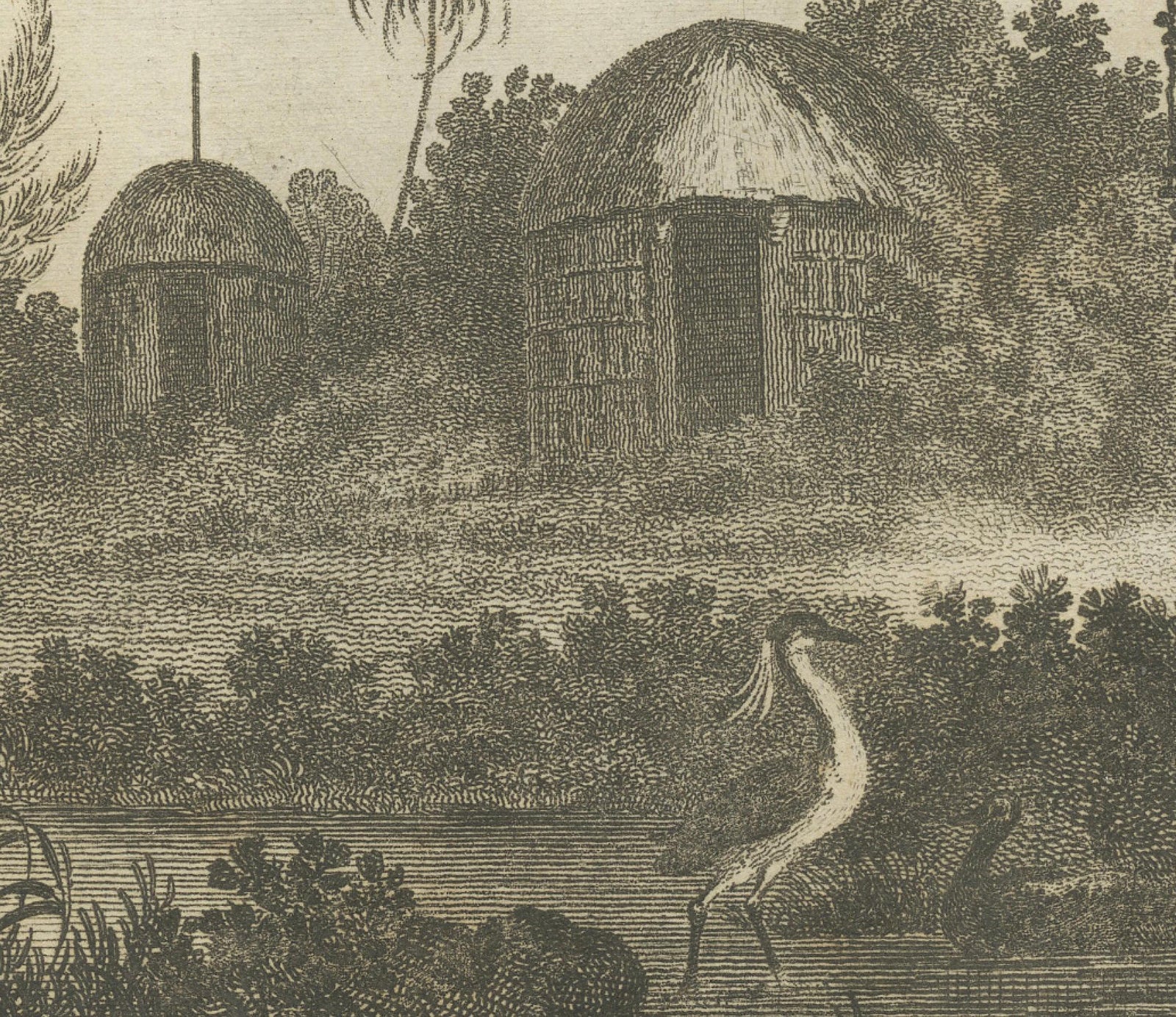
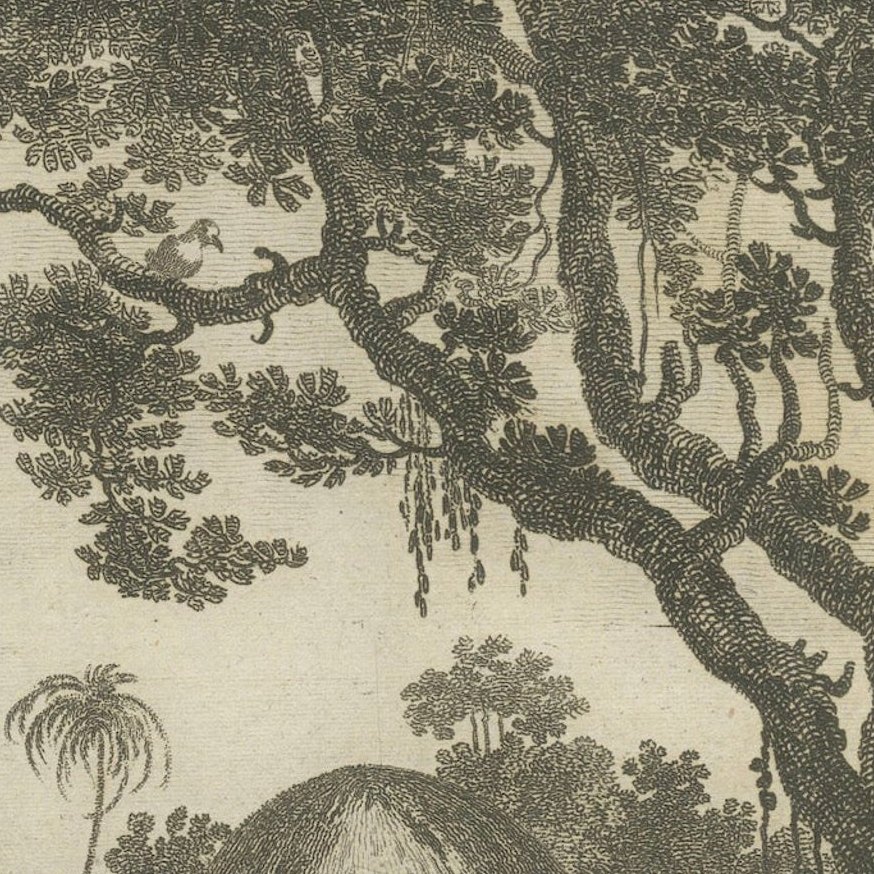
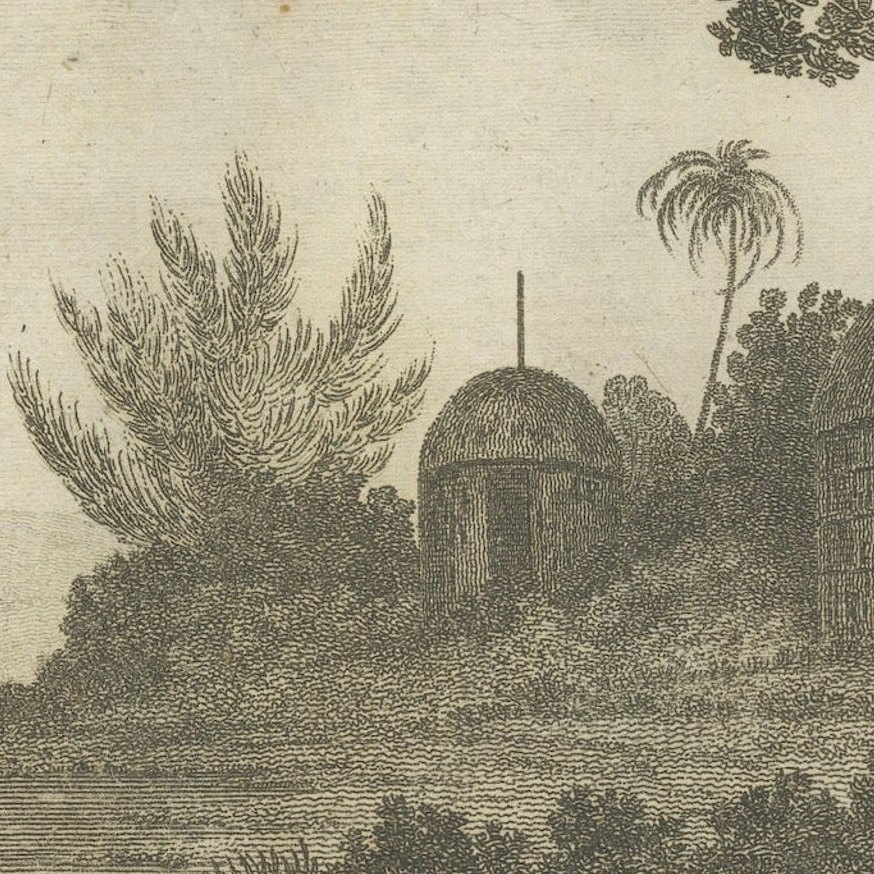
The background features traditional thatched structures, likely representing the homes of the inhabitants, set amongst the dense foliage of the island's vegetation, which includes palm trees and ferns, indicating the rich biodiversity of New Caledonia. A body of water can be glimpsed in the distance, emphasizing the island setting.
A crane-like bird stands prominently in the foreground, adding to the exotic and tranquil nature of the scene. The attention to detail in the foliage, the rendering of the figures, and the inclusion of local wildlife all serve to give the viewer a comprehensive depiction of life in New Caledonia as observed by Europeans of the era.
The engraving was published as per the Act directs by Hamilton & Co on May 1, 1784, making it a piece of historical documentation from the period shortly after Cook's voyages in the late 18th century. Such engravings were significant in shaping European perceptions of the Pacific and its people during the age of exploration.